Iran war clouds North Dakota oil outlook, Stutsman County economy at risk
Iran-war volatility has pushed North Dakota crude nearly $7 above a U.S. benchmark, while Jamestown-area leaders watch fuel costs, spending and state revenue.
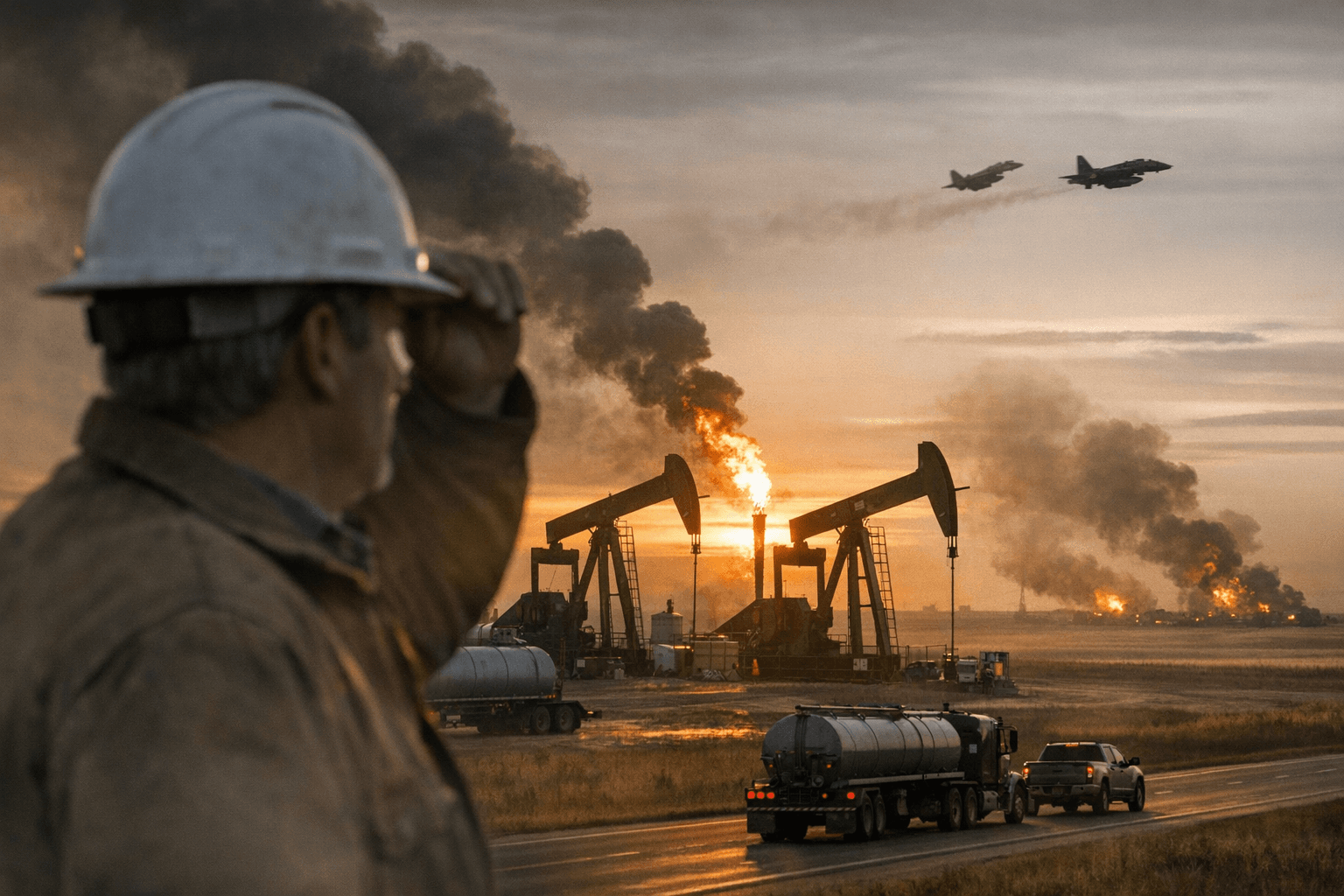
North Dakota oil is still moving at more than 1.13 million barrels a day, but the Iran war has already lifted prices enough to send a warning signal for Stutsman County, where higher diesel, gasoline and heating costs can ripple straight into farm bills, delivery costs and local spending.
State oil experts said at the North Dakota Department of Mineral Resources’ monthly Director’s Cut briefing in Bismarck on Tuesday, April 21, that more than 50 days into the U.S. and Israel’s war with Iran, the full effect on North Dakota oil production and the state budget still was not clear. Even so, North Dakota oil shipped on the Dakota Access Pipeline was fetching nearly $7 more per barrel than a U.S. benchmark price because of the volatility tied to the conflict. State data reported by Reuters showed February 2026 crude output at 1,130,000 barrels per day, up 4,000 barrels per day from January, with Bakken and Three Forks production at 1,101,000 barrels per day.
The broader economic stakes reach well beyond the oil patch. A March 11, 2025 state release said North Dakota’s oil and gas industry generated more than $48.8 billion in gross business volume in 2023 and supported more than 63,000 jobs, including 30,100 direct jobs and 33,730 indirect and induced jobs. The same study said compensation totaled $5 billion, and oil and gas tax revenues from fiscal years 2008 through 2024 exceeded $32 billion, money that has flowed into local communities, education, water projects and property tax relief. If the war keeps rattling prices, those revenue streams could become less predictable for counties and school districts that rely on them.
Drivers in Jamestown are already feeling part of the pressure. A North Dakota News Cooperative fact brief said oil prices are globally traded, so domestic production does not insulate North Dakota from overseas shocks. It said the Strait of Hormuz carries about one-fifth of the world’s oil, and it found North Dakota gas prices were 57 cents higher on April 20, 2026 than they were a year earlier. That kind of increase hits commuters first, then farm fuel accounts, then the cash flow of restaurants, retailers and other businesses that depend on steady local spending.
For Stutsman County, the risk is not an immediate collapse in oil output. The risk is a slower squeeze, with energy volatility pushing costs up before any benefit from stronger oil prices can be counted on. The Jamestown/Stutsman Development Corporation, the lead economic development organization for Jamestown and Stutsman County, sits in the middle of that uncertainty, where the next move in world oil markets can still change the outlook for jobs, budgets and household spending across the region.
This article was produced by Prism’s automated news system from verified source data, official records, and press releases, then run through automated quality and moderation checks before publishing. The system is built and supervised by the people who set the standards it runs under. Read our full AI policy.
Did this article answer your question?