Jamestown City Council to Vote on Aerial Mosquito Spraying Contract April 7
Jamestown City Council will vote April 7 on a three-year aerial spraying deal that could cost over $28,000 per application — with Stutsman County having confirmed West Nile cases as recently as last summer.
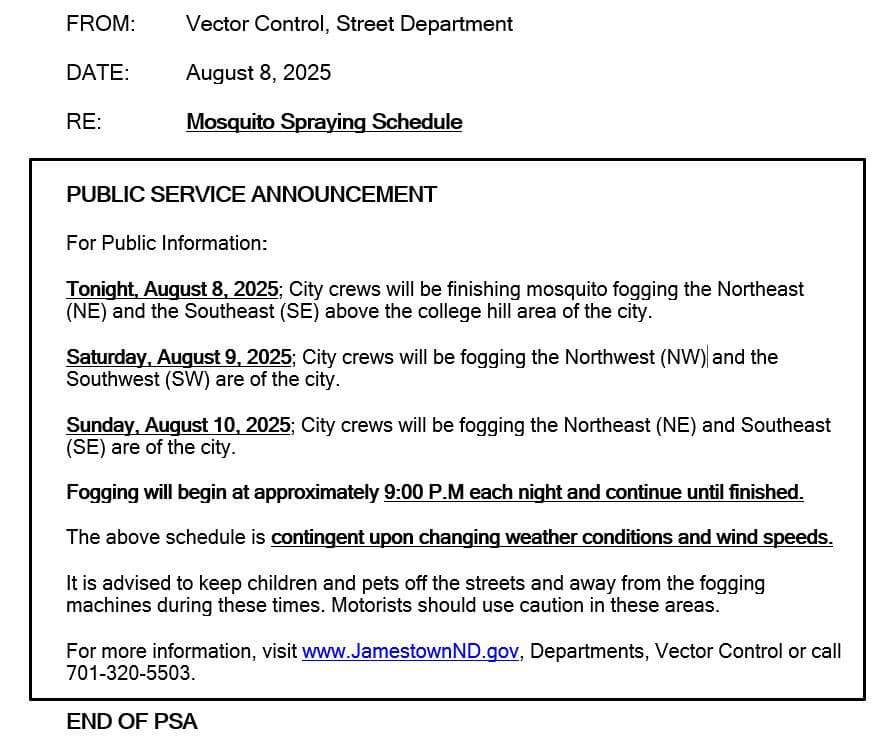
Councilman David Schloegel put it plainly at the Jamestown Public Works Committee meeting: "The money may be used better there instead of maybe sitting in retainer where we may not use it at all, and if we do use it, it might not be as effective as it could be if we did preventable things." That skepticism, shared in varying degrees by other officials, frames the debate heading into the April 7 Jamestown City Council meeting, where members will decide whether to sign a three-year aerial mosquito spraying contract with Vector Disease Control International.
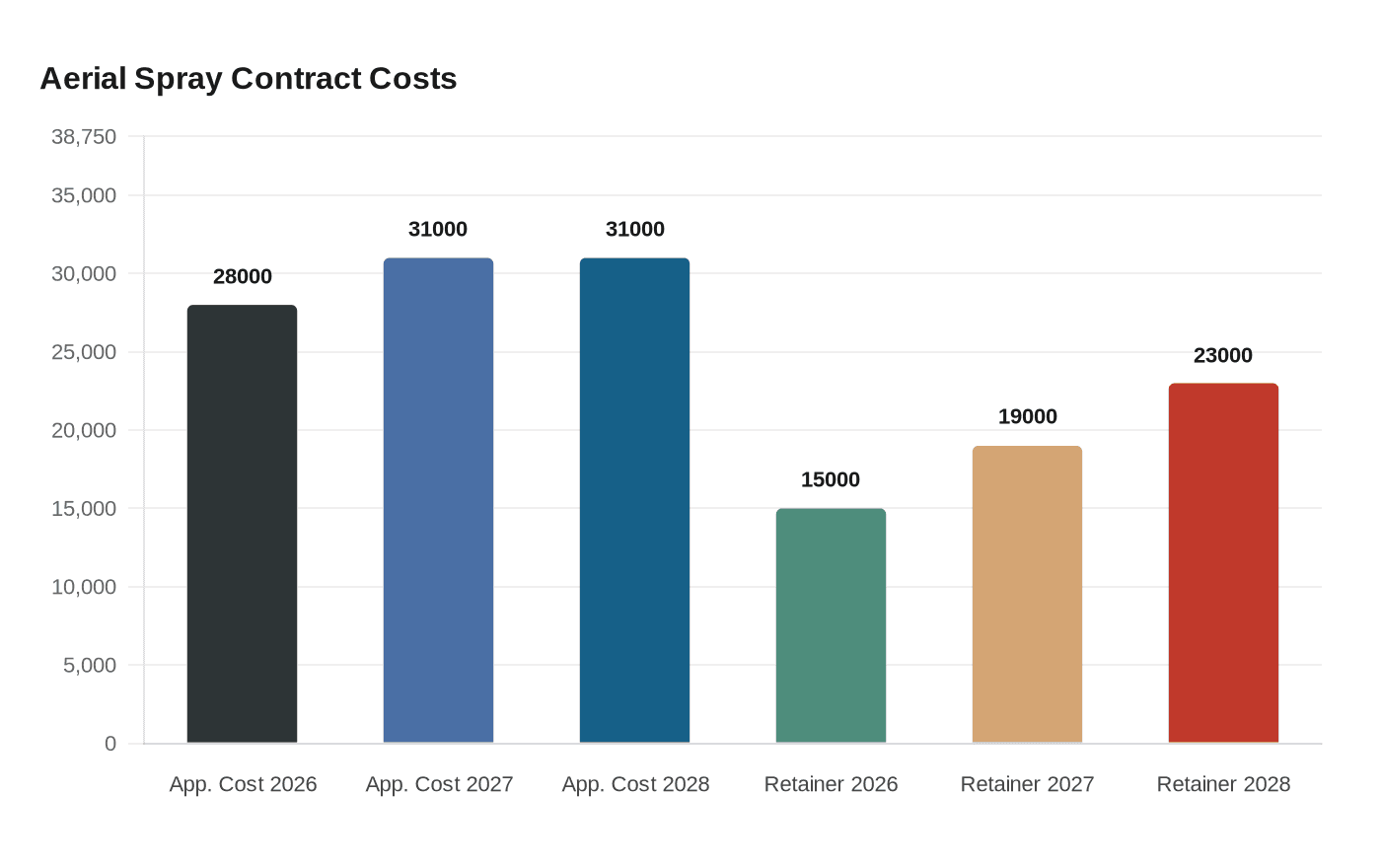
The numbers behind the proposal are significant. The quoted cost per aerial application runs just over $28,000 for 2026, climbing to more than $31,000 per application in both 2027 and 2028. On top of that, the contract carries annual retainer fees: $15,000 this year, $19,000 in 2027, and $23,000 in 2028, regardless of whether a single flight is ever ordered. City Administrator Sarah Hellekson told the committee the city typically spends about $160,000 per year on vector control in total, funded largely by a $1.50 monthly fee billed to each utility customer that generates roughly $160,000 annually. The vector-control fund currently carries a carryover balance of approximately $340,000, but locking into multi-year retainer obligations would meaningfully reduce that flexibility.
Jamestown's existing program relies on ground-based truck fogging and larviciding of ponds and standing water, covering roughly a half-mile to one mile beyond city limits. Mosquito counts have peaked at as many as 120 mosquitoes per trap in nine traps around Jamestown, and the public-health stakes are real: the North Dakota Department of Health and Human Services confirmed 32 human cases of West Nile virus statewide last summer, including one in Stutsman County. The city did not approve aerial spraying last year, and aerial application is framed by staff as a supplement to established ground methods, not a replacement.

Council members are not united on the necessity. Councilman David Steele said he would want to see an identified public-health threat, specifically mosquitoes confirmed to be carrying West Nile virus or encephalitis, before endorsing aerial spraying. Mayor Dwaine Heinrich acknowledged uncertainty about whether 2026 will even be a heavy mosquito season and indicated the city might spray just once this summer unless disease-carrying mosquitoes are detected. Another voice at the committee meeting was more blunt still: "To say that we could spend $28,000 on a regular basis for spraying, that's just not realistic."
Schloegel argued that redirecting those dollars toward public education and prevention, such as distributing larvicide and encouraging residents to eliminate standing water, could deliver more durable results.
Concerns at the committee level extended beyond dollars. Members raised the potential impact of aerial insecticide on pollinators, including bees and butterflies, a tension that mirrors debates in other North Dakota communities. Some vector control districts have structured spray schedules specifically to avoid the peak migration of monarch butterflies, which typically moves through North Dakota during the third week of August.
The Public Works Committee voted unanimously to forward the matter to the full council but stopped short of recommending approval or denial, leaving the decision entirely to elected members. Staff noted the city would provide the public an opportunity for comment before a final vote. The April 7 meeting will be the first formal decision point on a contract that, if approved, would shape how Jamestown spends its vector-control dollars through 2028.
This article was produced by Prism’s automated news system from verified source data, official records, and press releases, then run through automated quality and moderation checks before publishing. The system is built and supervised by the people who set the standards it runs under. Read our full AI policy.
Did this article answer your question?