Jamestown Reservoir Increases Releases Amid Unprecedented Flooding Concerns
Jamestown Reservoir releases jumped from 100 to 200 cfs on March 25 as warm weather drives record inflows; combined releases with Pipestem now reach 300 cfs.
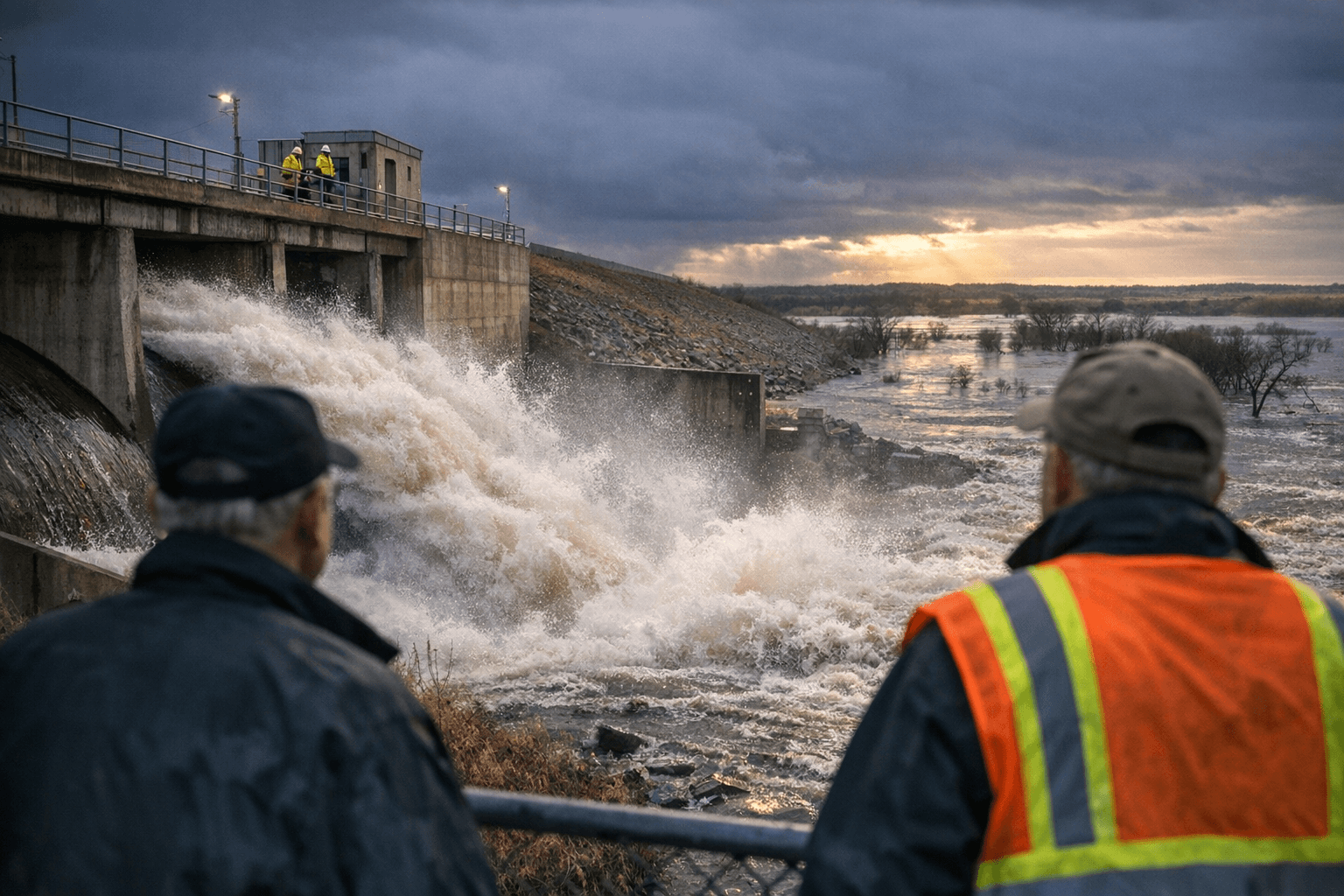
The U.S. Army Corps of Engineers increased releases at Jamestown Reservoir again on Wednesday, March 25, as warm weather pushed inflows at both Jamestown and Pipestem reservoirs to levels the Corps described as unprecedented, with the pool at Jamestown now sitting inside the flood control zone and continuing to climb.
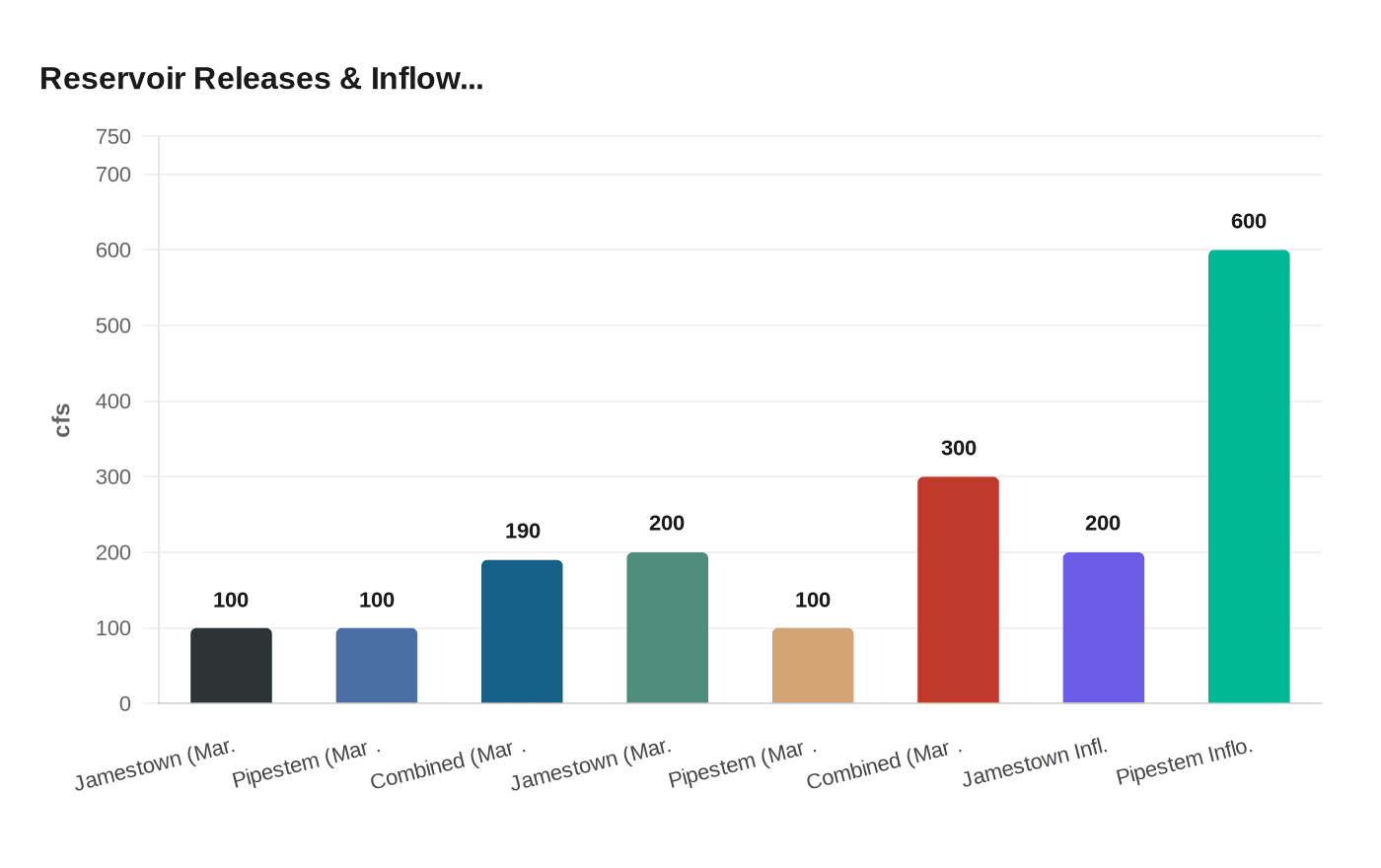
Releases at Jamestown Reservoir were increased Wednesday, March 25, from 100 to 200 cubic feet per second, according to the Corps of Engineers. Combined releases from Jamestown and Pipestem reservoirs have reached 300 cubic feet per second. That figure marks a rapid escalation from just days earlier: the Corps said inflows at both reservoirs remain high, with inflows peaking at around 600 cfs at Pipestem Reservoir and 200 cfs at Jamestown Reservoir.
The current surge follows an initial release increase recorded Thursday, March 19, when Jamestown Reservoir releases went from zero to 100 cfs and combined releases with Pipestem stood at 190 cfs. At that time, the pool elevation at Jamestown Reservoir stood at 1,431.95 feet above mean sea level, and releases at Pipestem Reservoir were at 100 cfs, with a pool elevation of 1,451.49 feet above mean sea level.
The driving force behind the escalating releases is warm weather arriving after a winter of steady pool gains. The Corps said warm weather increased inflows at both reservoirs and that pools had been steadily climbing until Jamestown Reservoir crossed into the flood control pool. A small release had been maintained through the winter at Pipestem Reservoir, and the Corps indicated those releases would continue to increase as conditions develop.
The broader context is stark. Record rainfall and snowfall caused the James and Pipestem Rivers to swell out of their banks, filling the reservoirs to the point where the Corps grew concerned about the ability to handle additional water. The Jamestown Reservoir was nearly four feet above the base of the flood control zone and continued to rise, according to the Corps' own website data. Officials characterized the inflow as "unprecedented" given the volume driven by heavy rain and snow accumulation.
The downstream consequences are significant for Stutsman County. Emergency officials warned that elevated releases could threaten up to three dozen homes. Jamestown, Stutsman County, and neighboring LaMoure County all declared states of emergency in response to the water releases. About 100 people attended a public meeting with the Corps of Engineers in Jamestown, with many expressing displeasure at the release plan. The additional outflow, officials said, could add up to 15 additional inches of water to already-flooded waterways.
A sandbagging operation opened at the Civic Center in Jamestown on Wednesday, Oct. 16, when the city first began preparing for the dam releases. It had been nearly a decade since Jamestown residents needed to fill sandbags, and it was believed to be the first time the city ever had to mount a flood defense in the fall.
Jamestown Reservoir is a Bureau of Reclamation project regulated by the Corps of Engineers when the reservoir is in the flood control zone, meaning the current pool levels trigger federal operational authority over release decisions. Flows are regulated from the Jamestown and Pipestem reservoirs into the James River, with significant planning and coordination required to determine releases. With inflows still peaking and the pool elevation still rising, the Corps has not announced a target date for evacuating flood control storage.
This article was produced by Prism’s automated news system from verified source data, official records, and press releases, then run through automated quality and moderation checks before publishing. The system is built and supervised by the people who set the standards it runs under. Read our full AI policy.
Did this article answer your question?