JRMC surgery and rehab help Jamestown couple stay active
Karla and Bob Ibes found that local surgery and rehab in Jamestown kept recovery manageable and got them back to fishing, hunting and family time.
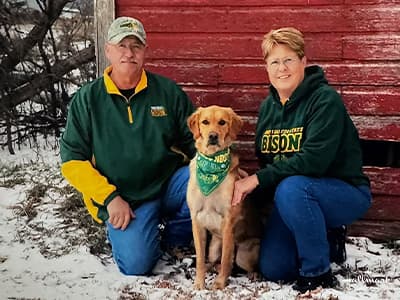
For Karla and Bob Ibes, staying close to home made recovery feel less like a disruption and more like a path back to ordinary life. After more than four decades farming west of Jamestown, the couple faced joint pain that made movement, sleep and daily tasks harder than they should have been. Jamestown Regional Medical Center gave them a place to handle that care without turning every appointment into a long road trip.
A hometown answer to a rural problem
Karla said knee pain affected the way she walked and kept her from staying as active as she wanted. Bob’s shoulder pain reached a point where it made sleep difficult and limited even basic lifting, the kind of strain that can ripple through farm life and retirement alike. Their story shows why a nearby orthopedic team matters in a county where distance is not an abstraction but part of daily life.
Stutsman County covers 2,298 square miles and is North Dakota’s second-largest county by area. It was organized in 1873, had 21,593 residents in the 2020 census, and Jamestown, the county seat and largest city, had 15,849 residents. In a place that large, specialty care close to home can spare families the burden of repeated travel and help keep recovery anchored in the routines they already know.
How surgery and rehab worked together
With guidance from orthopedic surgeon Dr. Michael T. Dean, Karla chose a knee replacement in February. Bob later underwent shoulder replacements, with the most recent in December. The point was not simply to replace a joint and move on. It was to restore function enough for both of them to keep living actively in the place they have called home for decades.
JRMC says Dr. Dean specializes in total joint replacements of the hip, knee and shoulder, along with knee arthroscopy and fracture repair. The medical center also says he has replaced more than 6,000 joints, a level of experience that helps explain why local families may feel comfortable staying in Jamestown for complex orthopedic care. For the Ibes, that meant treatment rooted in a familiar system of providers rather than a referral path that could have taken them farther from home.
Rehab was the difference between surgery and real recovery
The surgery was only part of the story. JRMC physical therapist Colton Ormiston emphasized that recovery depends on consistency, guidance and trust in the process, and the Ibes’ experience reflected that. They encouraged each other through therapy and timed their rehab so one could support the other, a practical approach that mattered as much as the operations themselves.
JRMC’s rehabilitation program is built around that kind of continuity. Its professional staff includes licensed physical therapists, licensed occupational therapists and a licensed speech-language pathologist, and the team works with surgeons, local physicians and social workers from pre-surgical care through outpatient services. JRMC says physical therapy can improve flexibility, strength, endurance, coordination and balance, the exact building blocks needed to get back to work, movement and everyday independence.
That support is especially important in rural communities, where North Dakota Health and Human Services has said barriers to care remain a real issue. In May 2026, the agency launched a $40 million rural hospital grant opportunity aimed at strengthening emergency and specialty care and keeping more treatment close to home. The Ibes’ experience fits that larger picture: when care is nearby, patients can stay connected to their providers and return to daily life with less disruption.
What local specialty care means for Stutsman County
JRMC’s orthopedic clinic says it specializes in the diagnosis and treatment of bones, joints, ligaments, tendons, muscles and nerves. That reach matters in a county where residents may need more than a one-time fix. Orthopedic care paired with rehabilitation gives patients a better chance to keep functioning well enough for farm chores, family responsibilities and the simple routines that make retirement feel like retirement instead of a constant round of medical errands.
The hospital is also signaling that it plans to keep building in this area. JRMC says Dr. Roxanne Keene will join the orthopedic team in early January, and describes her as one of the first female orthopedic surgeons in North Dakota. For a rural region that still struggles to keep specialty care within reach, that kind of recruitment is not just a staffing note. It is part of whether families in Stutsman County can keep finding care close enough to fit their lives.
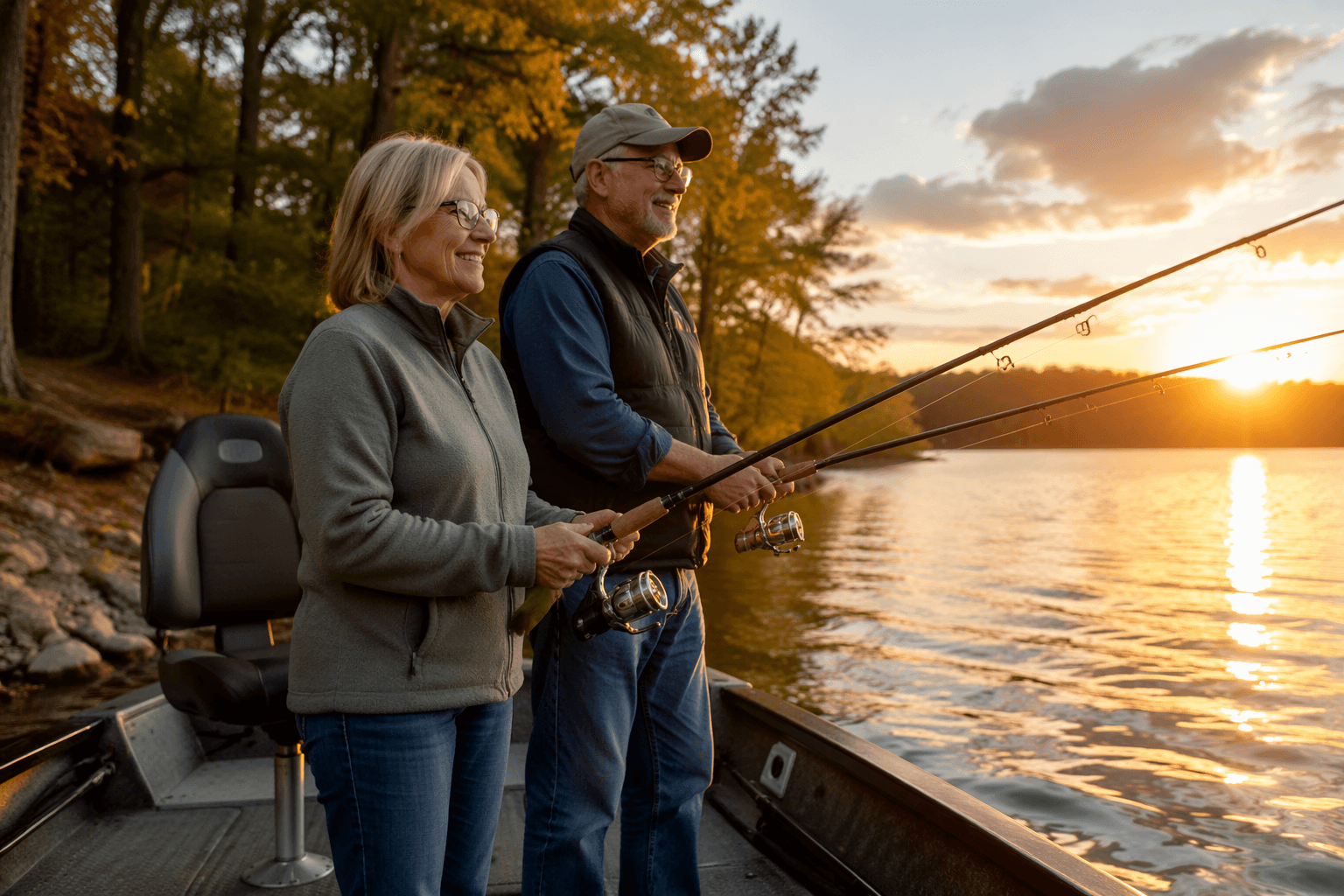
For Karla and Bob Ibes, that difference is easy to see. They were able to recover, support each other through therapy and get back to fishing, hunting and time with family without leaving their community behind. In a county the size of Stutsman, hometown specialty care is not a luxury. It is what helps people stay active, stay connected and stay home.
This article was produced by Prism’s automated news system from verified source data, official records, and press releases, then run through automated quality and moderation checks before publishing. The system is built and supervised by the people who set the standards it runs under. Read our full AI policy.
Know something we missed? Have a correction or additional information?
Submit a Tip