North Dakota prepares America 250 commemoration as statewide community effort
Jamestown’s courthouse, museum programming and community grants put Stutsman County at the center of North Dakota’s America 250 effort, with local groups shaping what lasts.
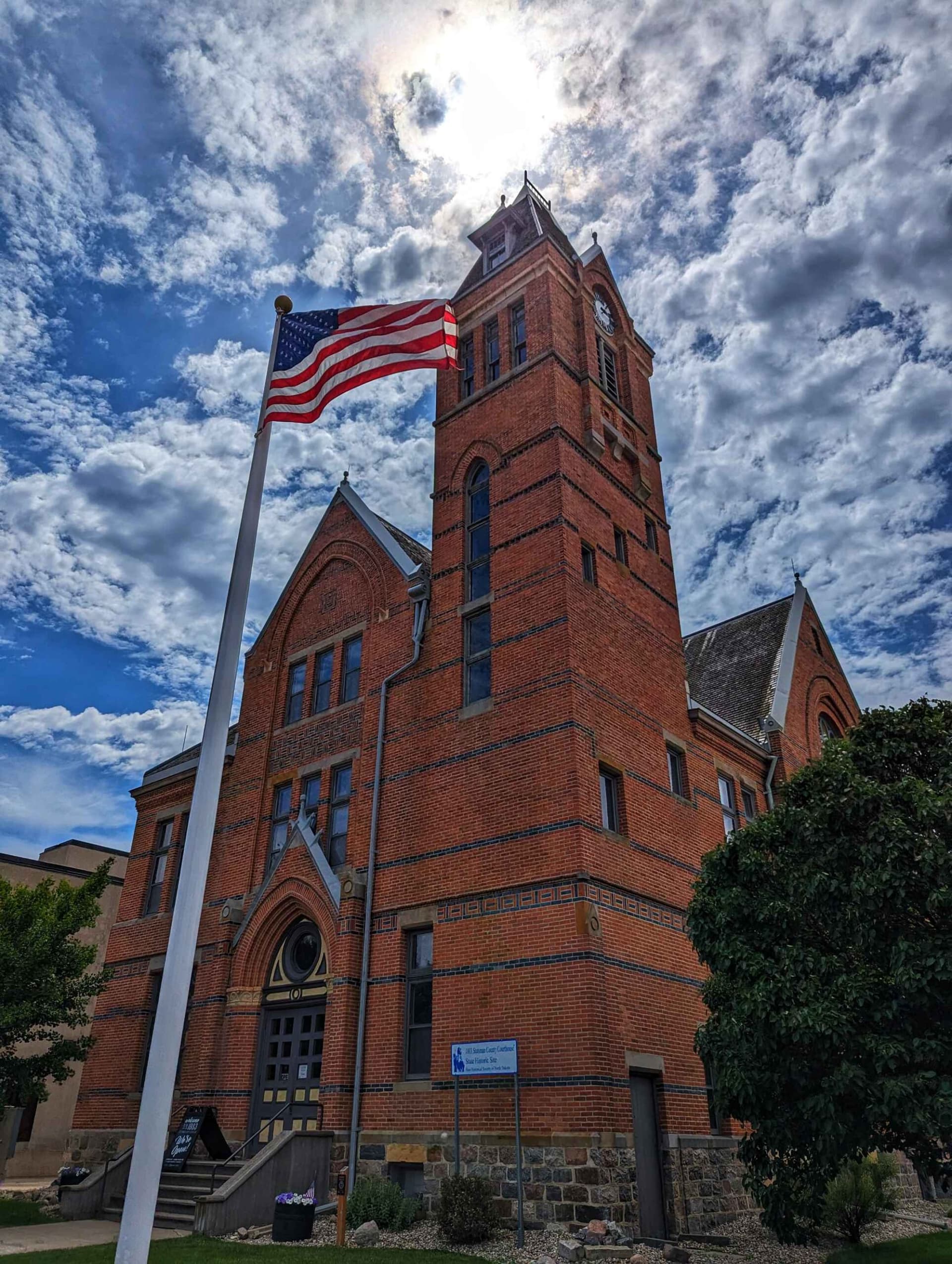
North Dakota’s America 250 commemoration is being built as a local civic project, and Stutsman County is one of the places where that will matter most. In Jamestown, the 1883 courthouse, downtown heritage sites and county-government history give the anniversary a concrete setting, while state grants and museum programming create a path for residents to take part rather than just watch from the sidelines.
Why Jamestown matters in North Dakota’s 250th story
Stutsman County was organized in 1873, and Jamestown sits at the crossroads of Interstate 94 and Highway 281, a location that has long made it a meeting point for travel, trade and public life. That geography helps explain why the county’s history keeps surfacing in statewide commemorations: it is a place where settlement, agriculture, transportation and government all left visible marks. The 1883 Stutsman County Courthouse is the strongest of those markers, because the State Historical Society identifies it as North Dakota’s oldest surviving courthouse and the only remaining state building directly tied to the activities of the 1880s statehood movement.
That courthouse is not just old, it is politically significant. Delegates to North Dakota’s constitutional convention were elected there, and meetings held in 1885 discussed dividing Dakota Territory. For a county that still serves as a civic center for the surrounding region, the building gives America 250 a local anchor that is more than ceremonial: it connects the national anniversary to the place where North Dakota’s own public institutions began to take shape.
How the statewide effort is structured
The ND250 Commission is leading the commemoration throughout 2026, with the State Historical Society of North Dakota administering the work. State materials frame ND250 around education, remembrance and civic engagement, and North Dakota Tourism describes the state’s story as beginning with the Native Nations who have called the land home for generations and continuing through explorers, pioneers, farmers, ranchers, miners and modern agriculture and energy innovators. That broad narrative matters in Jamestown because it places the county inside a statewide story that reaches from tribal homelands to farm country and energy development.
The practical tool behind that structure is the ND250 Grant Program, which offers grants of up to $10,000 for community projects and events. State materials describe the grants as a way to support inclusive local efforts that help communities share their piece of the American story and strengthen civic life. By February 2026, the commission had already awarded about $142,000 through two rounds of its Community Initiatives Grant program, and a later state release said 15 community grants totaled $94,355 in one round.
For Stutsman County, that means the anniversary is being financed in a way that can reach local groups instead of only state institutions. Schools, historical organizations, museums, downtown groups and civic clubs have a realistic path to propose programming that fits Jamestown’s own history, whether that means a lecture, a small exhibit, a public ceremony or a heritage event tied to the courthouse and the city’s historic core.
What residents are likely to see on the ground
The clearest statewide sign so far is a new exhibit at the North Dakota Heritage Center & State Museum in Bismarck. The State Historical Society has announced that “North Dakota 250 Road Trip: Our American Story” will open with a ribbon-cutting at 9 a.m. on Wednesday, July 1, and the exhibit will include more than 250 objects, photos and items, some of them never previously on display. It is scheduled to remain open through July 2028, which makes it one of the few America 250 assets in the state with a long shelf life.
That long display window matters for Stutsman County because it gives local teachers, families and tour groups a reason to connect a Jamestown visit with a larger state narrative. If residents travel to Bismarck for the exhibit, or if local schools build lessons around it, the anniversary becomes more than a one-year event cycle. It becomes part of the way North Dakota tells its story for the next several summers.
There are already local calendar entries that show how the commemoration is filtering into Jamestown. The State Historical Society calendar listed an ND250 Commission meeting for May 27, 2026, and a Decoration Day ceremony at the 1883 Stutsman County Courthouse for May 30, 2026. Those dates show that the effort is moving through planning, public programming and commemorative ceremony at the county level, not just through state branding.
The local heritage pieces that can carry the commemoration
Jamestown already has the kind of heritage assets that can make America 250 feel grounded instead of generic. Discover Jamestown describes Fort Seward as operating from 1872 to 1877 to oversee railroad construction through Jamestown, a reminder that transportation and settlement were tied together from the start. The city’s Talking Trail audio tour adds another layer, with 70 stops running from Frontier Village to the Buffalo Monument and giving visitors a way to move through local history in a practical, walkable format.
That matters because a commemoration lasts only if it leaves behind something residents can keep using. In Jamestown, the likely lasting assets are not grand new buildings, but public history tools: the courthouse as a civics site, the trail as a tourism asset, the museum exhibit as a teaching resource and the grant program as a way to keep local institutions involved. Jamestown Tourism’s America 250 page already frames the anniversary as a chance to highlight frontier life and the city’s role in the wider American story, which positions the community to use the milestone for education and heritage visitation.
For Stutsman County, the real measure of America 250 will be whether local decisions turn this moment into something visible after the anniversary year passes. If the grants support durable programs, if schools and civic groups keep using the courthouse and historic sites, and if the exhibit and related events bring more people into Jamestown’s story, the commemoration will leave more than branding behind.
This article was produced by Prism’s automated news system from verified source data, official records, and press releases, then run through automated quality and moderation checks before publishing. The system is built and supervised by the people who set the standards it runs under. Read our full AI policy.
Did this article answer your question?