NTSB blames degraded culverts for North Dakota train derailment near Carrington
Degraded culverts under a Bordulac rail line failed before dawn, derailing 29 cars, breaching nine hazmat tankers and forcing a nearby home to evacuate.

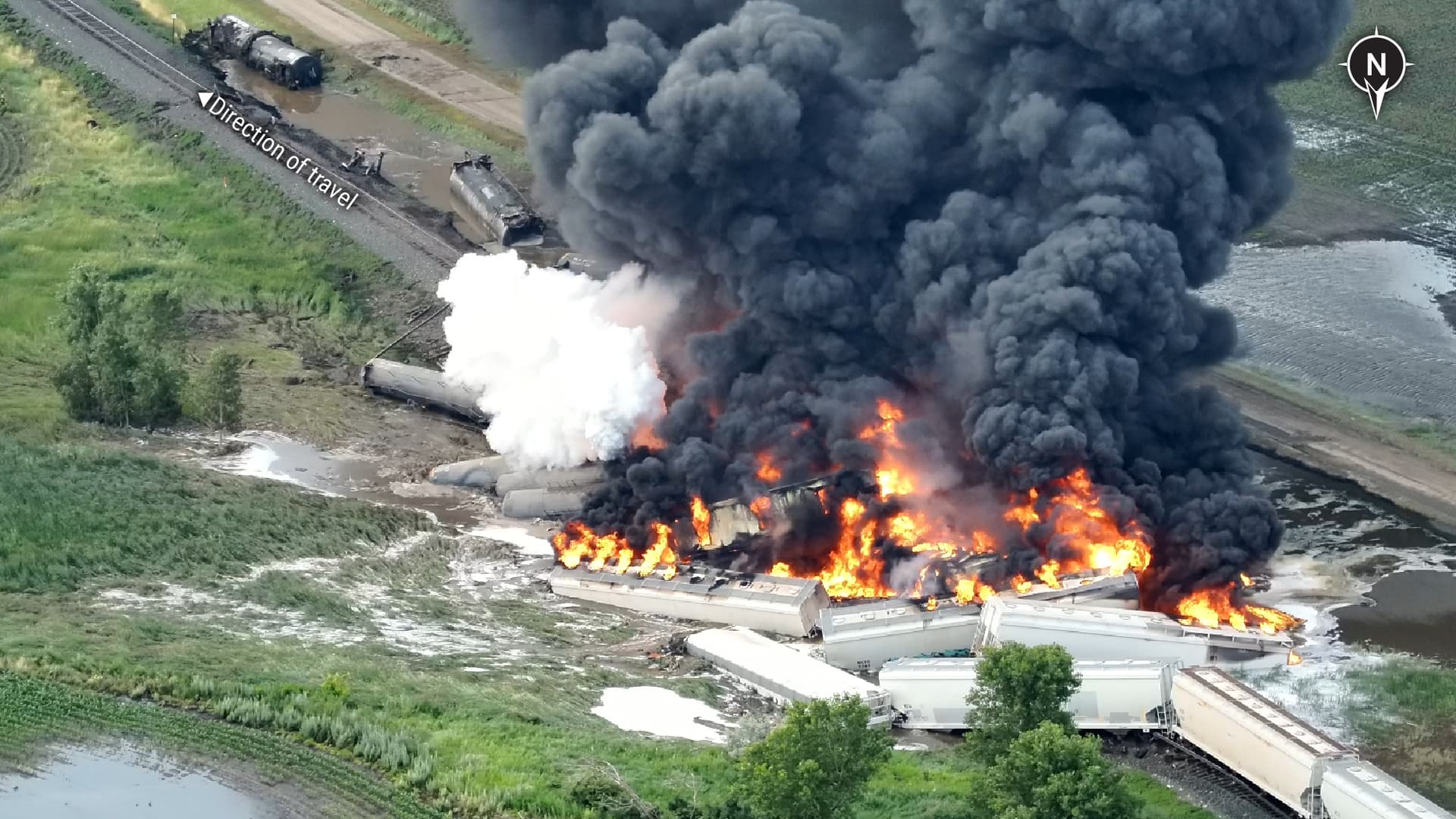
A degraded culvert under the Canadian Pacific Kansas City Railroad line near Bordulac caused the derailment that sent 29 railcars off the tracks and cracked open nine hazardous-material tank cars just southeast of Carrington. The freight train, numbered 242-03 and carrying 151 cars total, hit a broken rail at about 3:36 a.m. on July 5, 2024, after the track bed collapsed beneath it.
Federal investigators said two concrete culverts beneath the line had deteriorated and no longer provided the support the track needed. The National Transportation Safety Board said the railroad’s culvert inspections did not reflect how poor the structures had become, and the company’s inspection program did not give workers clear guidance for rating the risk posed by those conditions. The board recommended that culvert inspections be rewritten to require internal inspections and more detailed direction for inspectors.
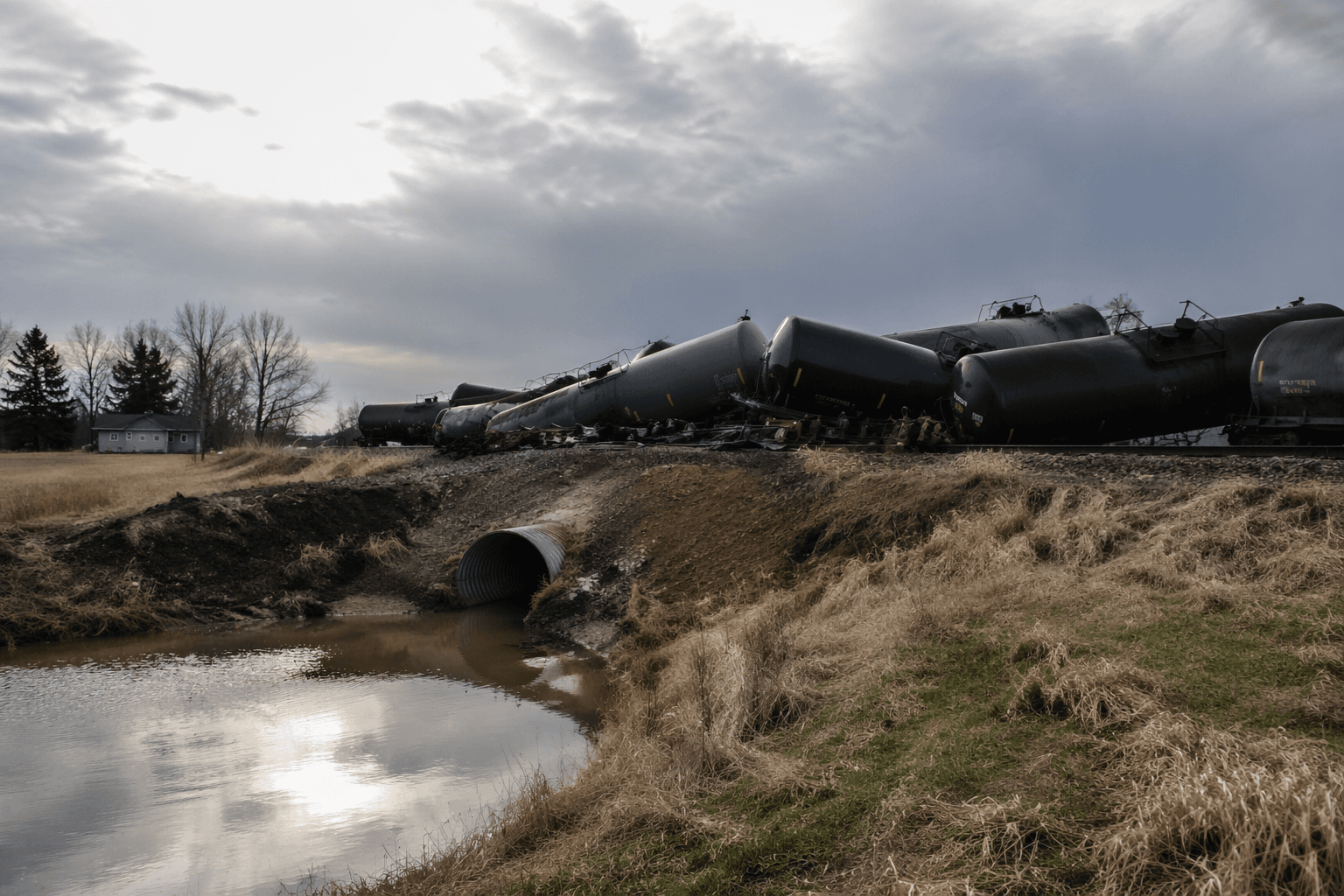
The derailment quickly became more than a rail problem. Methanol leaked from derailed tank cars and sparked a pool fire, then anhydrous ammonia was released from other tanks. No injuries were reported, but one nearby residence was evacuated as emergency crews moved in. The derailment also drew in local responders from both Foster and Stutsman counties, with emergency manager Andrew Kirking coordinating with state agencies and the North Dakota Watch Center. Kirking said crews were able to cut loose the cars and that mutual aid came from Kensal and other departments.
Cleanup stretched through the summer of 2024, a reminder of how a single weak drainage structure can create a long-running hazard far beyond the rail line itself. Kirking said, “It’s going to be my whole summer.” The railroad estimated damage at about $3.6 million and later made a $500,000 payment to Foster County.
Since the accident, CPKC installed larger steel culverts beneath the tracks and told inspectors to use an underwater camera when culverts are submerged. The NTSB called the Bordulac case one of the first major hazardous-material derailments it investigated since East Palestine, Ohio, underscoring how drainage failures, inspection lapses and hazmat routing still shape railroad safety far from the crash site.
This article was produced by Prism’s automated news system from verified source data, official records, and press releases, then run through automated quality and moderation checks before publishing. The system is built and supervised by the people who set the standards it runs under. Read our full AI policy.
Know something we missed? Have a correction or additional information?
Submit a Tip