Stutsman County Soil Conservation District Offers Wide Range of Local Programs
Stutsman County's soil conservation district offers equipment rentals, tree planting, watershed projects, and K-12 education programs — all available even outside active project areas.
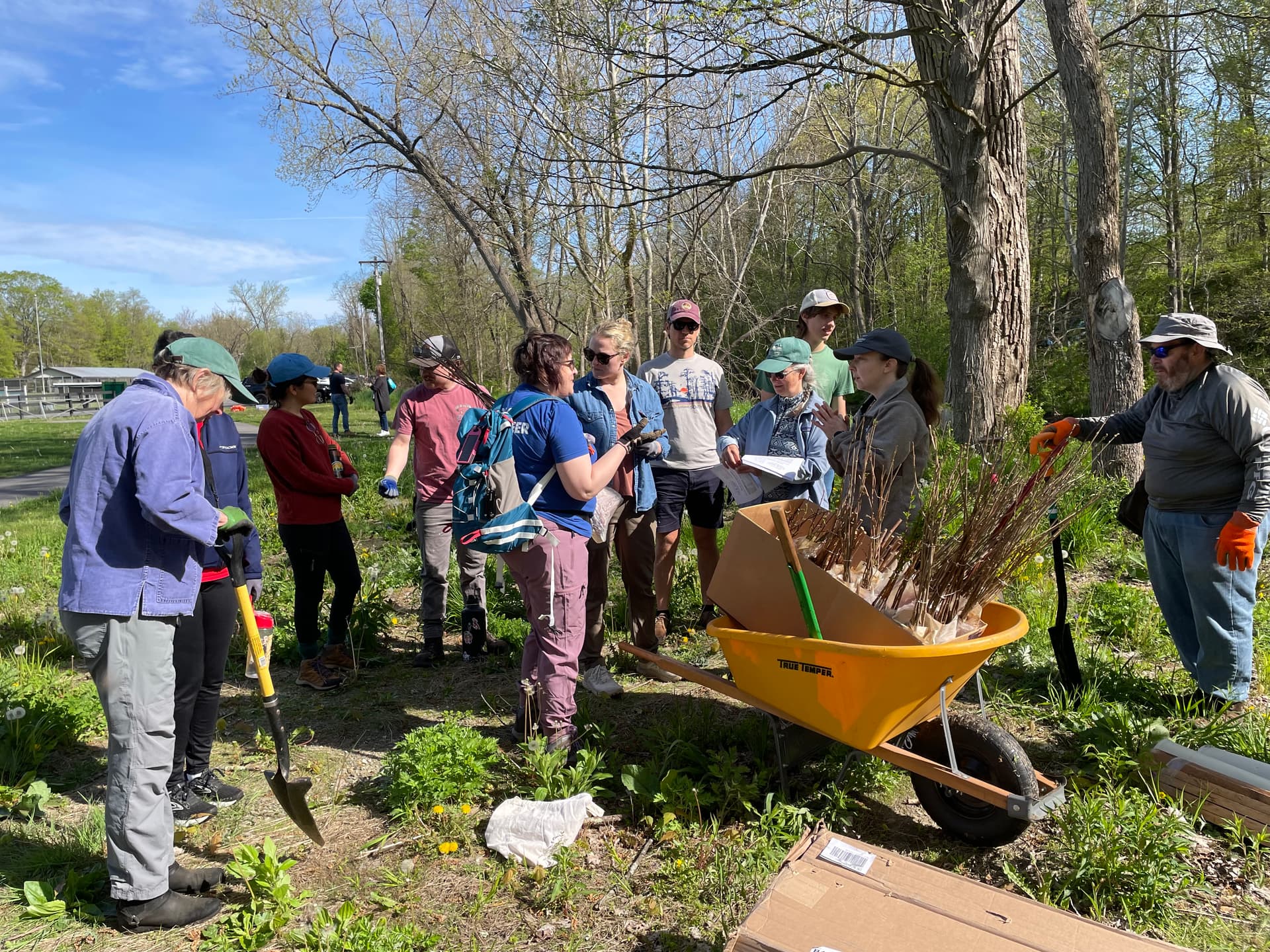
Chartered on August 21, 1948, the Stutsman County Soil Conservation District has spent more than seven decades helping farmers, landowners, and students across Jamestown and the surrounding county manage their land more sustainably. Its mission is straightforward: "To take available technical, financial, and educational resources, whatever their source, and focus or coordinate them so that they meet the needs of the local land user for conservation of soil, water, and related resources." What that looks like in practice is a surprisingly broad menu of services, from John Deere no-till drill rentals to classroom visits to an active watershed cleanup project targeting the Jamestown Reservoir.
Who the District Serves
The SCD primarily supports agricultural producers throughout Stutsman County, but its reach extends well beyond the farm gate. Workshops are open to the broader community, and the district has set an ambitious goal of reaching every student enrolled in grades K through 12 with hands-on learning about trees, soil health, and water quality. One recent example of that community-facing work: a rain barrel construction night the SCD hosted, which drew participants interested in capturing and reusing rainfall at home. The district's own description of its purpose puts it plainly: it exists "for the betterment of our community."
Equipment Available for Rent
One of the most tangible benefits the SCD offers local producers is access to specialized equipment that would be expensive to purchase outright. The district's current rental inventory includes:
- Two John Deere no-till drills, available for seeding grass and cover crops
- A no-till drill available for standard rental
- An interseeding planter designed specifically for cover crop planting
- An aerator for Conservation Reserve Program (CRP) maintenance as well as pasture and hayland aeration
- A manure composter
No-till and cover crop systems have become increasingly important tools for reducing soil erosion and improving water infiltration on Stutsman County's agricultural land. The interseeding planter in particular allows producers to establish cover crops into standing cash crops, a technique that extends soil coverage through the growing season without sacrificing a full planting window. Full details on equipment availability and any associated rental terms are listed on the Products and Services section of the district's website.
Tree Planting and Windbreak Program
The SCD operates a dedicated tree program focused on planting windbreaks throughout Stutsman County. Windbreaks, the rows of trees and shrubs planted along field edges and around farmsteads, reduce wind erosion, protect livestock, and can improve crop yields in adjacent fields by moderating temperature and moisture extremes. The district offers both the trees themselves and assistance with planning and placement, making the program accessible to producers who want to establish new shelterbelts or fill gaps in existing ones.
Watershed Projects and Water Quality Work
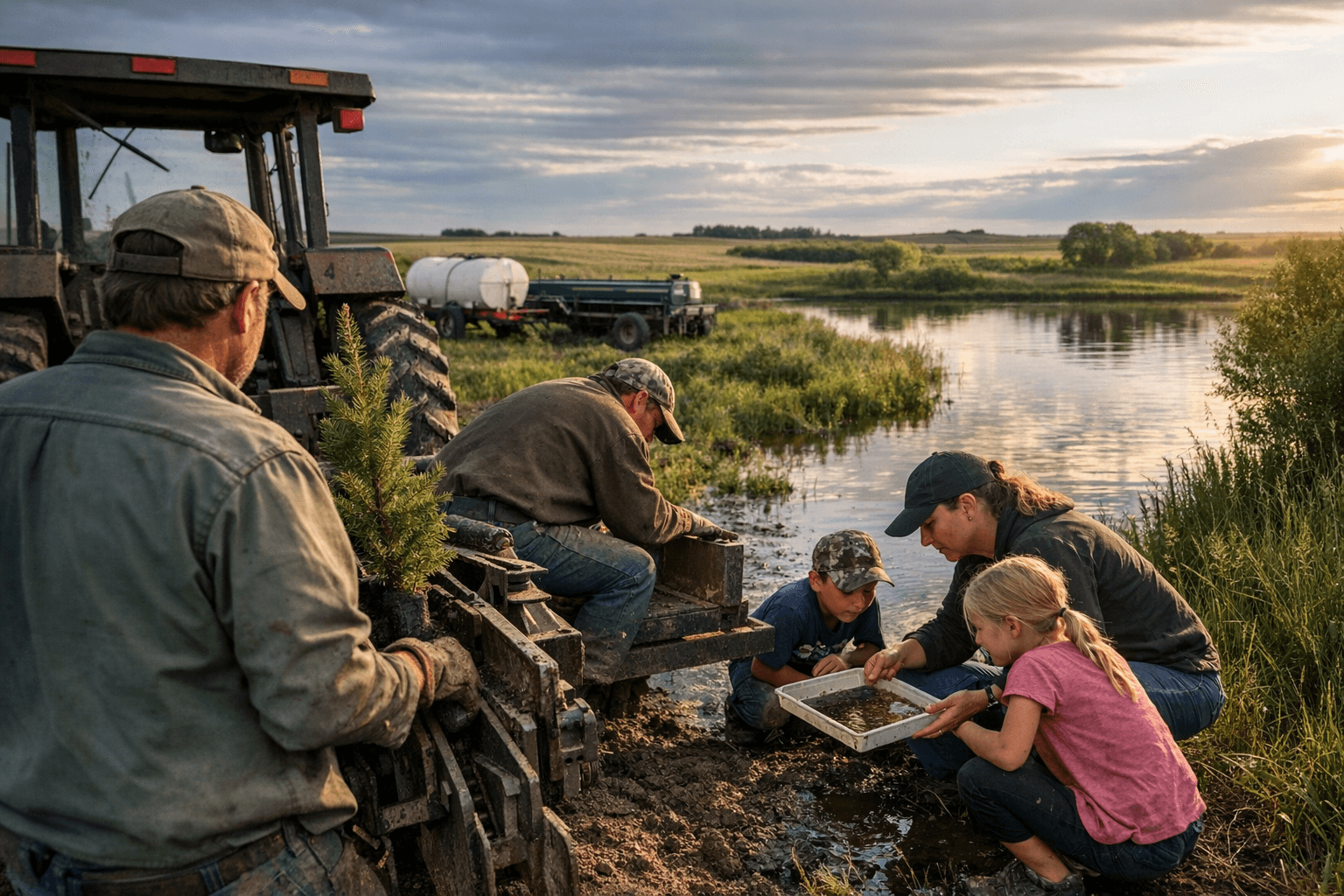
The district's most significant current initiative is the Jamestown Reservoir Watershed Project. In the fall of 2022, the SCD submitted a proposal for a watershed implementation project designed to address nonpoint source pollution in the Jamestown Reservoir and the waterways that flow into it. Nonpoint source pollution, the kind that travels to lakes and streams through rainfall and snowmelt runoff rather than through a single discharge pipe, is among the hardest types of water contamination to control, and it poses a direct threat to drinking water quality and aquatic habitat.
The project works by providing financial and technical assistance to landowners willing to implement Best Management Practices, or BMPs, on their operations. Conservation cover plantings and solar wells are two of the BMPs the SCD has already completed within the watershed. Both practices reduce the volume and velocity of runoff that carries sediment and contaminants into the reservoir.
The SCD's approach to this work reflects a broader philosophy about accessibility. According to the North Dakota Department of Environmental Quality's March 2025 project spotlight on the district, SCD staff want Stutsman County residents to know that the district is available to provide assistance "even if the operation is not in a current project area. The employees will help you find a program that fits your operation and work with you."
For producers or landowners interested in learning more about the Jamestown Reservoir Watershed Project specifically, the district can be reached at 701-252-2521 (ext. 3). For questions about watershed projects across North Dakota more broadly, Emilee Novak, the Environmental Quality Nonpoint Source Program Manager at the North Dakota Department of Environmental Quality, can be contacted at 701-328-5240 or ejnovak@nd.gov.
Education and Outreach
Beyond the watershed project, the SCD delivers educational programming to schools and community groups throughout the county. The K-12 initiative is ongoing, with the district actively working to reach every student in Stutsman County with curriculum on the importance of trees, soil conservation, and water quality. These aren't one-time visits: the goal is comprehensive, grade-appropriate coverage across the entire school-age population.
Community workshops round out the educational programming. The rain barrel construction event is one example of how the SCD translates conservation concepts into practical skills that residents can apply immediately, whether they farm thousands of acres or maintain a backyard garden in Jamestown.
Urban Conservation
The SCD explicitly includes urban conservation among its service areas, a detail worth noting for Jamestown residents who may assume the district's work is limited to row-crop agriculture. Urban conservation can encompass stormwater management, tree canopy programs, soil health in residential and commercial landscapes, and similar practices that improve environmental outcomes in built environments. Residents interested in exploring what urban conservation support might look like for their property or neighborhood are encouraged to contact the district directly.
Where to Find the District
The Stutsman County SCD is located at 1301 Business Loop East in Jamestown, ND 58401, inside the USDA Service Center, where it shares space with two other key federal agricultural agencies: the Natural Resources Conservation Service (NRCS) and the Farm Service Agency (FSA). That co-location is deliberate and practical; it means producers who need to coordinate across multiple programs can often handle business with all three offices in a single trip.
The district is reachable by phone at 701-252-2521, extension 3, and by email at stutsmanscd@gmail.com. The SCD also maintains a presence on Facebook for those who prefer to follow updates through social media.
A District Built for the Long Haul
The financial picture from the district's 2019 statements gives a sense of scale: total revenues that year reached $409,896, with payroll the largest single expenditure at $124,888 and federal watershed program spending accounting for another $143,506. The district ended that fiscal year with a net position of $215,907, of which $32,526 was restricted specifically for watershed programs. The mill levy that year contributed $8,365 to general revenues, supplemented by product sales of $158,001 and lease and rental income of $13,150.
Those figures are several years old, but they illustrate a district that funds its operations through a working mix of equipment revenue, product sales, grants, and local tax support. It is a structure designed to keep the SCD's services available and affordable to the producers and residents who depend on them, regardless of where commodity prices or federal funding levels happen to land in any given year.
This article was produced by Prism’s automated news system from verified source data, official records, and press releases, then run through automated quality and moderation checks before publishing. The system is built and supervised by the people who set the standards it runs under. Read our full AI policy.
Did this article answer your question?