Coram Apartment Fire Displaces Families, Raises Safety and Policy Questions
A garage fire on Jan. 5 in a Townhouse Drive apartment complex in Coram displaced 21 people and rendered half the building uninhabitable, officials said. The blaze, which began around 9:30 p.m., highlighted gaps in fire-safety protections and prompted calls for review of local alarm and sprinkler requirements and emergency response capacity.
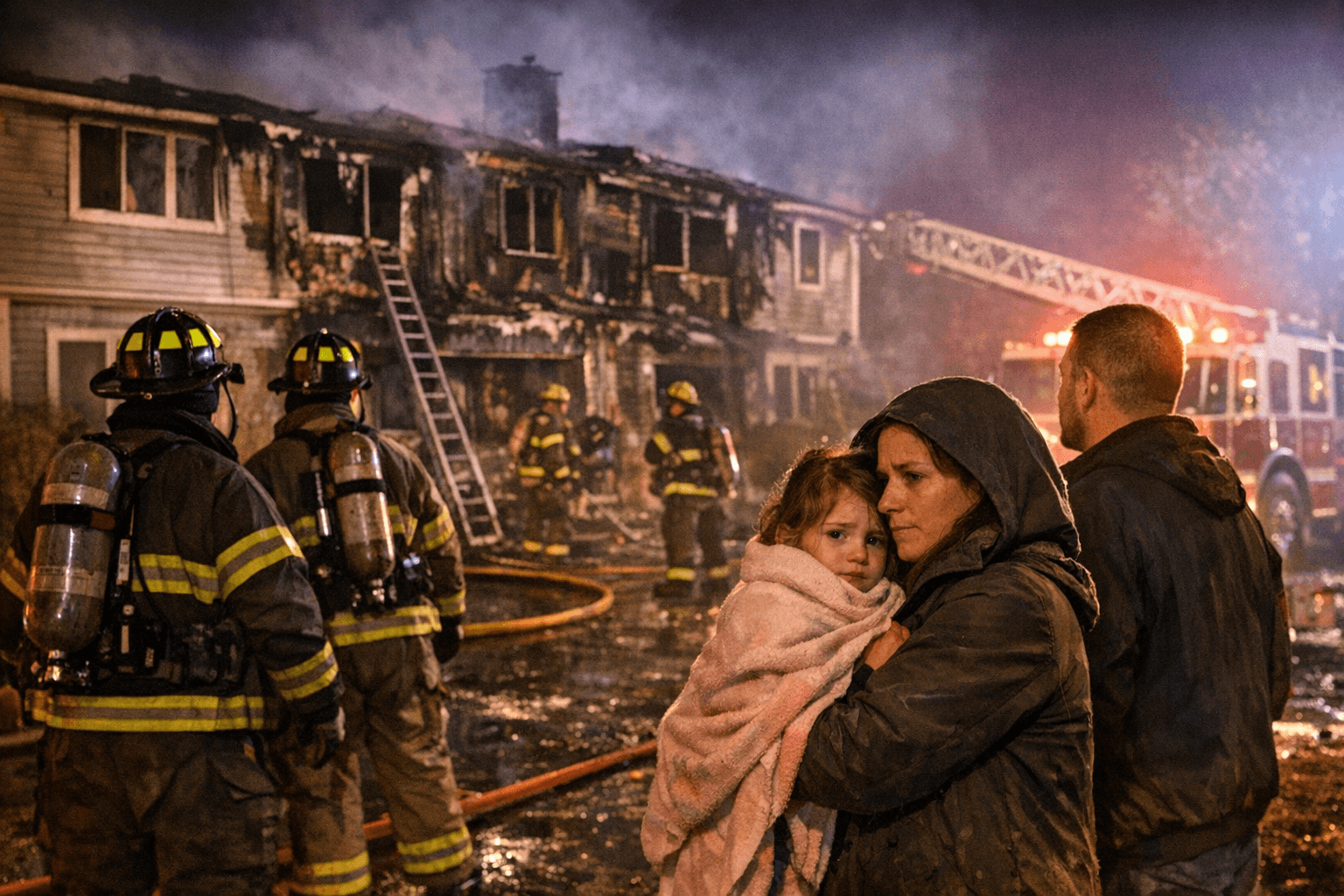
A fire that began in a garage on the evening of Jan. 5 damaged four units in an eight-unit apartment building on Townhouse Drive in Coram and displaced 21 residents, Brookhaven Town Fire Marshal Christopher Mehrman said. Fire crews from roughly nine departments worked for about an hour and a half to extinguish the blaze, which extended from the garage into the main structure and an adjacent unit. The Arson Squad and the Fire Marshal continue to investigate; based on on-scene examination and eyewitness accounts, the cause did not appear suspicious at the time of the report.
The building did not have an automatic sprinkler system, and its alarm system was a local alarm that did not automatically notify a central monitoring station. Officials deemed the structure unsafe to occupy because of damage to individual units and to building services including electricity, water and the alarm system. One resident was injured but declined hospital transport. The American Red Cross registered 15 households for emergency assistance, and community fundraisers have been started to support impacted families.
The incident spotlights several policy and governance issues for Suffolk County and the Town of Brookhaven. Automatic sprinkler systems and centrally monitored alarms are widely recognized as reducing fire spread and speeding emergency notification, yet requirements for such systems vary with building age, size and local codes. The absence of sprinklers and a non-monitored alarm likely affected the fire’s progression and the scale of displacement. The response by multiple departments demonstrates a functioning mutual-aid network, but also raises questions about volunteer staffing, equipment needs and response times in a region that relies on interdepartmental coordination.
For tenants and property owners, the fire underscores the importance of clear standards for building safety, regular inspections and contingency planning for mass displacement. The Red Cross registration shows immediate relief channels were available, but long-term housing and recovery needs typically fall to a mix of nonprofit aid, community fundraising and municipal support. Officials responsible for building codes, permitting and inspections will face scrutiny over whether existing standards and enforcement are adequate to protect renters and homeowners.
Local policy choices about fire-safety mandates, funding for fire departments and enforcement capacity are matters for town boards and county legislators. Residents affected by the fire and neighbors with concerns about safety have avenues to press for change through town meetings and direct inquiries to municipal offices. As the investigation continues, the incident will likely inform debates about retrofitting older buildings, alarm monitoring standards and how best to prevent future displacements in Suffolk County communities.
This article was produced by Prism’s automated news system from verified source data, official records, and press releases, then run through automated quality and moderation checks before publishing. The system is built and supervised by the people who set the standards it runs under. Read our full AI policy.
Did this article answer your question?