Ethan Murrow’s Seastead Wall Drawing Confronts Waterfront Futures
Boston artist Ethan Murrow installed Seastead, a large-scale wall drawing on the Sandra and Gerald Fineberg Art Wall at the Institute of Contemporary Art/Boston on January 1, 2026. Executed directly on the wall with permanent markers by Murrow and two assistants over roughly two weeks, the work uses maritime and military imagery to engage the museum’s waterfront setting, raising questions about climate, community resilience, and equitable access to cultural spaces for Suffolk County residents.
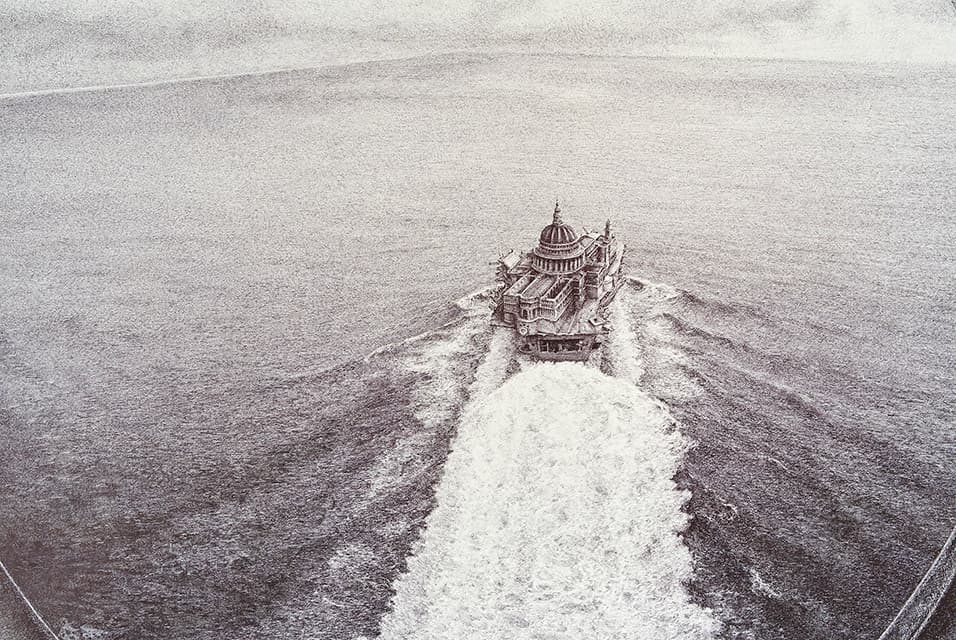
On January 1, 2026, Ethan Murrow completed Seastead, a sweeping wall drawing that now occupies the Sandra and Gerald Fineberg Art Wall at the Institute of Contemporary Art/Boston. Drawn directly on the gallery surface with permanent markers, the installation depicts a large boat hauling a massive cathedral into an empty sea; the vessel borrows the visual language of American aircraft carriers. Murrow and two assistants executed the piece over roughly two weeks, emphasizing scale and process in a work meant to be read in relation to the city’s waterfront.
The imagery prompts immediate associations with maritime force, institutional power, and absence, themes that resonate on a coastline confronting rising seas, infrastructure pressures, and shifting neighborhood demographics. For Suffolk County residents, the piece is more than an aesthetic gesture; it intersects with lived concerns about public safety, housing stability, and access to communal resources as climate-driven storms and chronic flooding increasingly shape daily life.
Public health experts and community advocates have increasingly argued that cultural institutions can serve as hubs for resilience and information during environmental crises. A permanent-marker wall drawing such as Seastead can catalyze public conversation about those connections by making abstract policy choices visible: who controls waterfront spaces, which institutions are resilient, and who is included in planning for climate adaptation. The work’s aircraft carrier references also invite consideration of militarized infrastructure and the allocation of public funds, dimensions that affect social equity, emergency response priorities, and neighborhood investment.
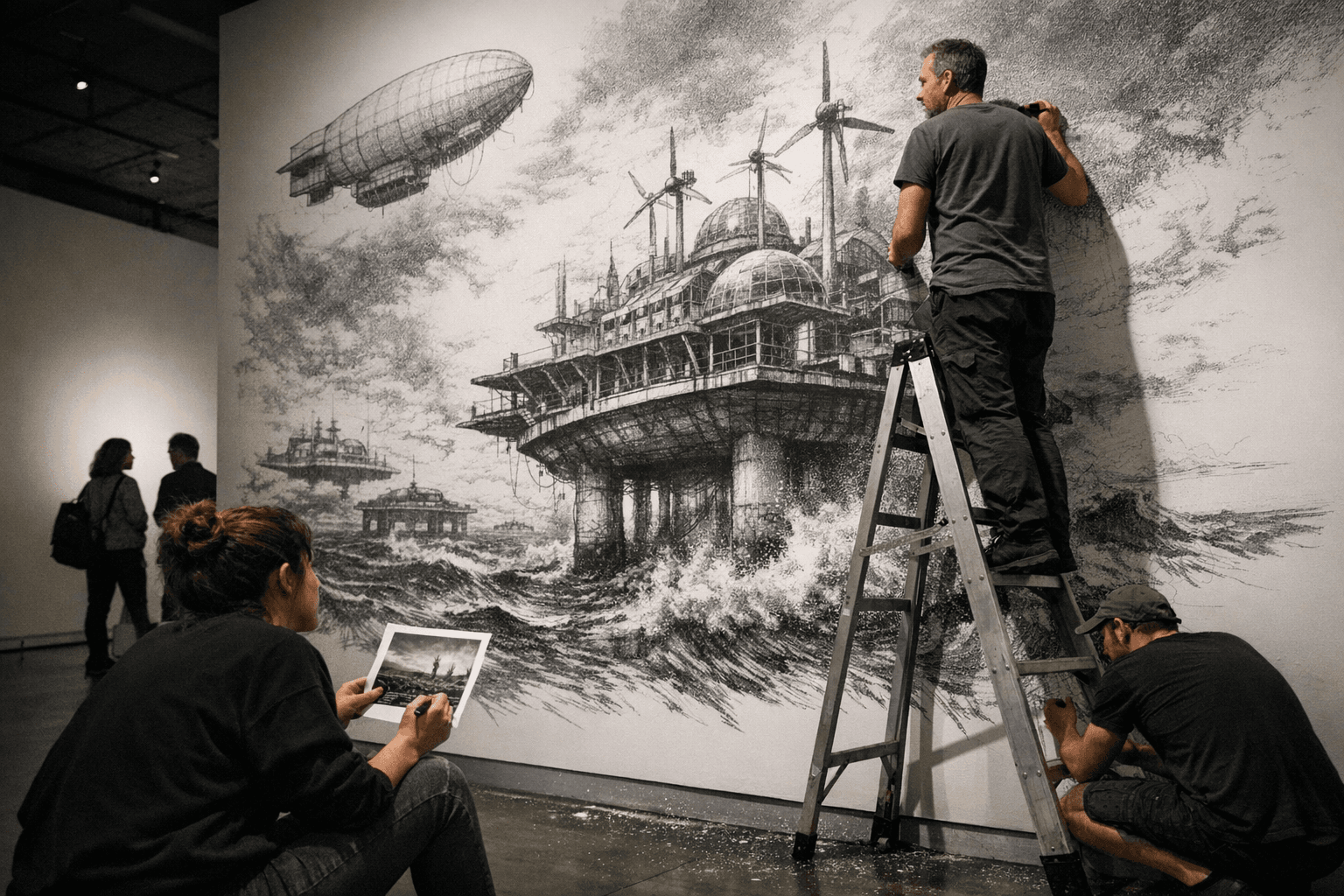
Beyond climate implications, Seastead touches on mental health and community wellbeing. Large public artworks can offer catharsis and communal reflection, but they also reveal disparities in who gets to shape and benefit from cultural narratives. The installation’s location at a prominent waterfront museum raises questions about transportation access, admission barriers, and outreach to communities in Suffolk County that have historically been underserved by major arts institutions.
The drawing’s permanence on the gallery wall underscores the tension between ephemerality and endurance in public life: a work made with markers that will remain as a fixed presence in a city in motion. As Seastead becomes part of the ICA’s visual landscape, policymakers and cultural leaders in Boston face an opportunity to link artistic programming to broader efforts in climate preparedness, equitable cultural access, and public health outreach, ensuring that conversations sparked by art translate into policies that protect and include all residents.
This article was produced by Prism’s automated news system from verified source data, official records, and press releases, then run through automated quality and moderation checks before publishing. The system is built and supervised by the people who set the standards it runs under. Read our full AI policy.
Did this article answer your question?

