Fuel Spill in Ted Williams Tunnel Causes Major Commute Delays
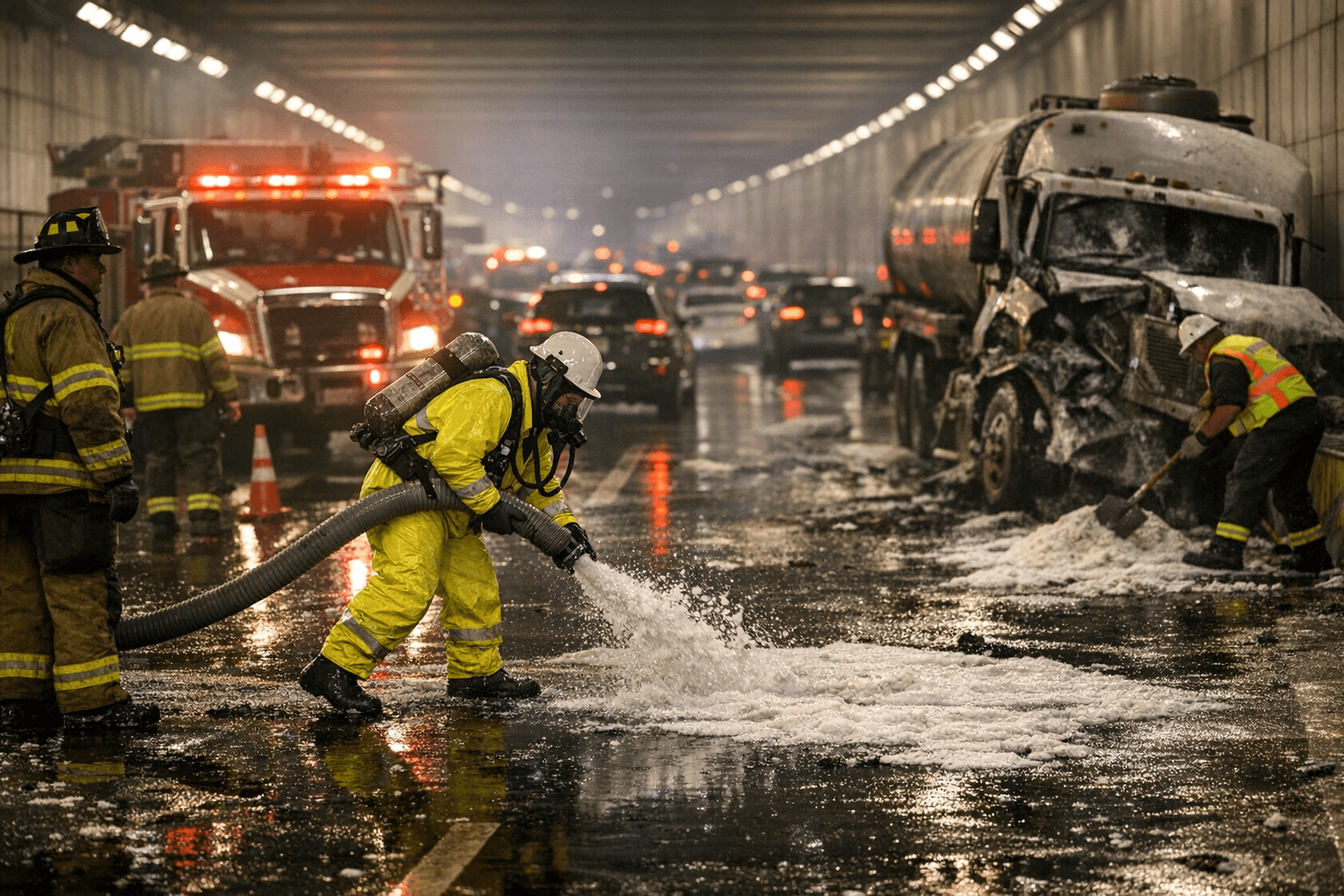
A crash in the Ted Williams Tunnel on Interstate 90 east on Dec. 29 produced a fuel spill that closed a lane and snarled the morning commute across Suffolk County. MassDOT crews and emergency responders spent hours cleaning the spill and reopened all lanes by mid-afternoon, highlighting risks to commuter reliability and worker safety during hazardous cleanups.

On the morning of Dec. 29 a crash in the Ted Williams Tunnel on Interstate 90 east resulted in a fuel spill that forced the closure of a lane and produced significant delays for drivers traveling into and through Boston. MassDOT crews worked for several hours to contain and remove the spilled fuel, and officials reopened all lanes by mid-afternoon, though few further details about the collision were available in early reports.
The Ted Williams Tunnel is a vital eastbound corridor for commuters and airport traffic linking the city to Logan Airport and adjacent neighborhoods. The single-lane closure during the morning rush created cascading delays on approach roads across Suffolk County, slowing commutes for workers, students and others who depend on reliable travel times. For many residents, even a temporary disruption on this route means missed connections, late arrivals at jobs and added transportation costs.
Fuel spills present specific public health and safety concerns. Evaporating gasoline or diesel can produce strong fumes and pose fire hazards, while cleanup operations require careful traffic control to protect workers and first responders. The extended cleanup underscores the need to balance rapid reopening of traffic with measures that limit exposure for cleanup crews and nearby residents.
The incident also highlights systemic vulnerabilities in regional transportation. Reliance on a small number of major corridors means that a single crash or hazardous materials event can ripple through the entire commute network. That burden falls disproportionately on people with less flexible work hours and on essential workers who cannot shift schedules easily. Ensuring equitable access to alternatives and support during disruptions requires coordinated planning among state agencies, employers and transit providers.
For drivers traveling in and through Suffolk County, the episode is a reminder to build extra time into schedules during winter months and to follow official traffic advisories when incidents occur. MassDOT’s response reopened traffic by mid-afternoon on Dec. 29, but the length of the cleanup illustrates why agencies and employers need robust contingency plans for hazardous-materials incidents on critical routes.
Officials had not released more detailed information about the crash circumstances in early reports. For commuters, the practical takeaway is the continued importance of real-time traffic monitoring and system-level investments that reduce the community-wide impact when incidents occur on major links like the Ted Williams Tunnel.
This article was produced by Prism’s automated news system from verified source data, official records, and press releases, then run through automated quality and moderation checks before publishing. The system is built and supervised by the people who set the standards it runs under. Read our full AI policy.
Did this article answer your question?