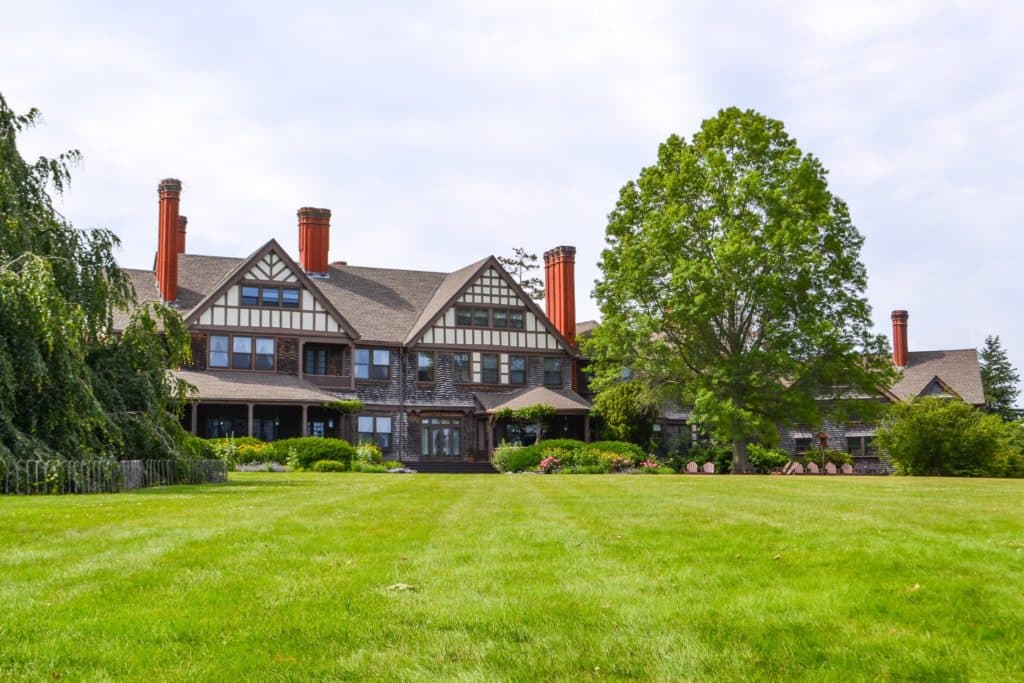
Hallockville Museum Farm preserves North Fork farming history in Riverhead
Hallockville protects a 1765 Riverhead homestead that once sat in a planned nuclear zone. Today, 28 acres and 19 buildings keep North Fork farm history open to Suffolk residents.
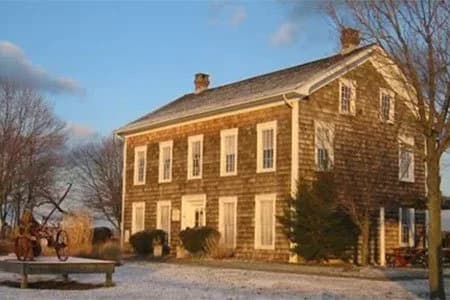
Hallockville Museum Farm turns a stretch of Sound Avenue in Riverhead into a working lesson in North Fork land use. On 28 acres with 19 buildings, it gives Suffolk residents a place to see how a farmstead survived colonial settlement, family succession, industrial pressure and modern development.
A Riverhead homestead with deep North Fork roots
Hallockville was created to preserve and interpret the farming history of the North Fork of Long Island, and its oldest structure carries that history back to 1765. The original portion of the Hallock Homestead was built by Ruben Brown, then later folded into the Hallock family’s agricultural story after Ezra Hallock bought the farm sometime after the Revolution.
That family line matters because Hallockville is not a generic period property. In 1801, Ezra Hallock sold the sixty-acre farm and its buildings to his brother, Captain Zachariah Hallock, for Zachariah’s son. The site’s own history also reaches beyond one family: Native Americans, Puritans, Polish immigrants and many others lived and worked on the land over time, giving the museum farm a layered social history that mirrors the North Fork itself.
How Hallockville avoided becoming a power plant site
The most dramatic chapter in Hallockville’s preservation story came in the 1970s, when Long Island Lighting Company acquired a larger 525-acre parcel in 1973. The utility’s plan would have placed four nuclear power plants on the land, a proposal that would have erased the open farm landscape now associated with Hallockville.
Local opposition, together with Governor Hugh Carey’s involvement, helped stop the project, and the nuclear plan was denied in January 1980. Before that decision, LILCO leased the Caleb Hallock barn and other outbuildings to the newly formed Hallockville, Inc. in 1977, a key step that helped move the property from threatened industrial site to museum farm. That sequence is the reason the historic buildings still sit on preserved ground instead of beside reactor foundations.
What is on the grounds now
Visitors today find a site that feels larger than a single farmhouse. Hallockville’s grounds include 19 buildings on 28 acres of preserved farmland, with historic houses, barns and outbuildings ranging from the mid-18th century Hallock Homestead to the Depression-era Cichanowicz Farmhouse.
The museum grounds are open Monday through Sunday, sunup to sundown, year-round for self-guided exploration. Public Hallockville Homestead tours run from May 1 through October 31, with guided Saturday tours from 10:00 a.m. to 3:00 p.m. The museum shop is open Monday through Friday from 10:00 a.m. to 3:00 p.m. year-round, and Saturdays from 10:00 a.m. to 3:00 p.m. from May through November.
That mix of access matters. It lets Hallockville function both as a destination and as an everyday landscape, with enough scale for a meaningful visit and enough flexibility for repeat trips across the season.
Why the site still works as a live farm experience
Hallockville is not just preserving buildings. Its visit materials say guests can tour houses, barns, gardens and collections, see real farming in the museum’s fields and meet the site’s cows, sheep and chickens. That keeps the farm from becoming a static display and gives the North Fork’s agricultural past a visible present tense.
The site also connects directly to education. Hallockville says it was built to reconnect the community to its shared agricultural heritage, and its classes and workshops use traditional folk arts such as quilting and woodworking to do that. For Riverhead, that makes the museum farm part heritage site, part classroom and part cultural bridge between older farm skills and current community programming.
A preservation landscape, not an isolated property
Hallockville’s history page frames the site as the museum farm, the neighborhood and the surrounding land, including Hallock State Park Preserve. The Peconic Land Trust groups it with Hallock State Park and identifies it as the former KeySpan property, which shows how the farm sits inside a broader landscape of conservation and public access.
That larger setting is why Hallockville matters beyond a single homestead. It helps anchor a preserved stretch of the North Fork where farmland, state parkland and local history still overlap. In a region where open land is constantly under pressure, that kind of physical continuity has both cultural and practical value.
The nonprofit side of preservation
Hallockville is a 501(c)(3) nonprofit, which means its historic mission depends on public support and earned revenue as much as on the land itself. The museum shop, open on a regular schedule, is part of that operating model, and special events help sustain the preservation work.
The organization’s timeline also shows how long the public has cared about the site. Hallockville marked its 250th anniversary in 2015, and it scheduled a 50th Anniversary Gala for August 21, 2025, underscoring the difference between the homestead’s colonial-era origin and the museum’s own modern institutional life.
Plan a visit
Hallockville Museum Farm is at 6038 Sound Ave., Riverhead, NY 11901. The setting is easy to understand once you arrive: 28 acres of open farmland, 19 buildings to explore, and a landscape that still tells the story of how Suffolk County balanced agriculture, development and conservation.
For North Fork residents, that is the point. Hallockville shows that a 1765 homestead still has economic and cultural value because it supports tourism, education, preservation funding and regional identity at the same time. In Riverhead, the farm is not just a relic of what the North Fork was, but a working example of what the North Fork still chooses to protect.
This article was produced by Prism’s automated news system from verified source data, official records, and press releases, then run through automated quality and moderation checks before publishing. The system is built and supervised by the people who set the standards it runs under. Read our full AI policy.
Did this article answer your question?