Riverhead native Rashad Robinson reflects on justice roots in Suffolk County
Rashad Robinson’s Suffolk County roots run through Riverhead schools, a police-lineup memory and an early student boycott that helped shape his national justice playbook.
Rashad Robinson’s path from Riverhead to the front lines of national justice fights runs through the kinds of Suffolk County institutions that shape a political worldview before it has a name. Long before he became known for campaigns on racial justice, LGBTQ+ rights, corporate accountability and criminal justice reform, he was a Riverhead kid learning how power works, who gets protected by it and who gets used by it.
A Riverhead upbringing that stayed close to home
Robinson was born on October 13, 1978, on Long Island and graduated from Riverhead High School in 1997 before earning a political science degree from Marymount University in 2001. But the geography of his childhood matters as much as the milestones. He grew up in Calverton and Baiting Hollow, attended Riley Avenue Elementary School and then Pulaski Street School, where students from Riverhead’s four elementary schools came together in fourth grade.
Those details place him inside the everyday civic machinery of Riverhead, where neighborhoods, schools and social divisions meet early and often. RiverheadLOCAL’s profile notes that his parents met in Riverhead and that both sides of his family spent much of their lives in the area. His grandmother attended Riverhead High School on Roanoke Avenue, another thread tying his national public voice to the county streets and schools that raised him.
That local grounding helps explain why Robinson’s story resonates beyond the usual hometown profile. His rise is not framed by a single breakthrough or a lucky exit from Suffolk County. It is built on years of seeing how institutions work from the inside, and on learning to question them.
The lesson that turned into a worldview
One of the most important memories Robinson has described comes from early-1990s Riverhead, when seven Black students were selected for a police lineup involving a robbery suspect without their parents being asked. The students were allegedly promised small payments and taken to the police station dressed in different shirts and baseball caps turned backward.
Robinson was not one of the students chosen, but the episode stayed with him as a lesson in institutional power. What made it so formative was not only the police action itself, but the way it treated Black children as available for use without consent, accountability or care. That experience became part of the logic behind his later work, which treats power as something measurable, organized and challengeable rather than abstract.
The Riverhead memory also connects to a wider history that Suffolk County residents know well, from disputes over policing to broader arguments about how schools, police and public systems decide whose dignity counts. In Robinson’s case, the lesson from that moment was not simply outrage. It was strategy.
An early organizing instinct on Route 58
The Riverhead years were not only about being shaped by institutions. They also show Robinson learning, very young, how to push back. A 2011 Riverhead News Review archive item says that when he was 18, he and other Riverhead High School students organized a boycott of three Route 58 stores, Waldbaum’s, Rite Aid and The Wall, after the stores banned students during lunchtime hours.
That episode is important because it shows the same pattern that later defined his national work: identify the power structure, build a collective response and make the issue public. What happened on Route 58 was local, but the method was already political. He was not waiting for permission to speak on behalf of students who were being shut out; he was organizing around the exclusion itself.
At the time, the archive said his parents, Everett and Shirley Robinson, still lived in Calverton. That detail sharpens the picture of a young activist whose politics were not imported from somewhere else. They were being formed in real time in Suffolk County, in the ordinary disputes over access, fairness and who gets to belong.
From local protest to national campaigns
Robinson’s official biography says that over more than two decades, his strategic campaigns, media expertise and movement leadership have helped win real change for real people. It also says he has designed campaigns that changed public policy, corporate practices, electoral outcomes and media representations. Penguin Random House adds that he has advised foundations, nonprofits and leaders across media, politics, government and business.
Those are the credentials of a national strategist, but they make the Riverhead story more, not less, revealing. Robinson’s work has ranged across the same fault lines that were visible in Suffolk County: race, institutional accountability, representation and access to power. The local story matters because it shows where those instincts came from.
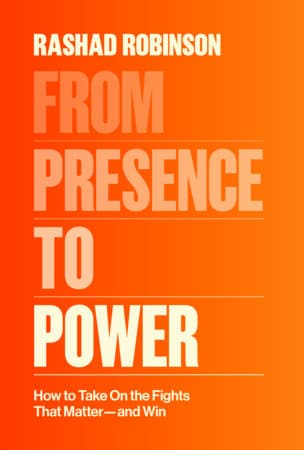
That is also why his new book is being positioned as a strategy book rather than a memoir. From Presence to Power: How to Take On the Fights That Matter and Win is scheduled for release on July 28, 2026, and Robinson’s book site lists launch events from July 27 to July 30 in New York City, Washington, D.C., San Francisco and Los Angeles. The rollout suggests a public conversation aimed well beyond Riverhead, but the subject matter still points back to the same question that shaped him here: how do people build power when the system is designed to deny it?
Why Suffolk County still matters in the story
Robinson’s national profile can make it easy to forget how specific his origins are. Riverhead, Calverton, Baiting Hollow, Riley Avenue, Pulaski Street and Riverhead High School are not background details. They are the places where he saw how authority is exercised, how communities respond and how young people learn whether institutions can be challenged.
That is what gives his story local force. Suffolk County did not simply produce a successful alumnus. It helped produce an activist who understood, from personal experience, that justice work starts when ordinary people stop accepting the terms set for them.
This article was produced by Prism’s automated news system from verified source data, official records, and press releases, then run through automated quality and moderation checks before publishing. The system is built and supervised by the people who set the standards it runs under. Read our full AI policy.
Did this article answer your question?