Seven Aggravated Assaults and 18 Property Crimes Recorded in 24 Hours
Suffolk County law enforcement recorded seven aggravated assaults and 18 property crimes in a preliminary 24-hour tally covering Dec. 26-27, 2025. The figures, which include two auto thefts and a dozen larcenies, highlight short-term public-safety pressures that could influence community policing and household security needs.
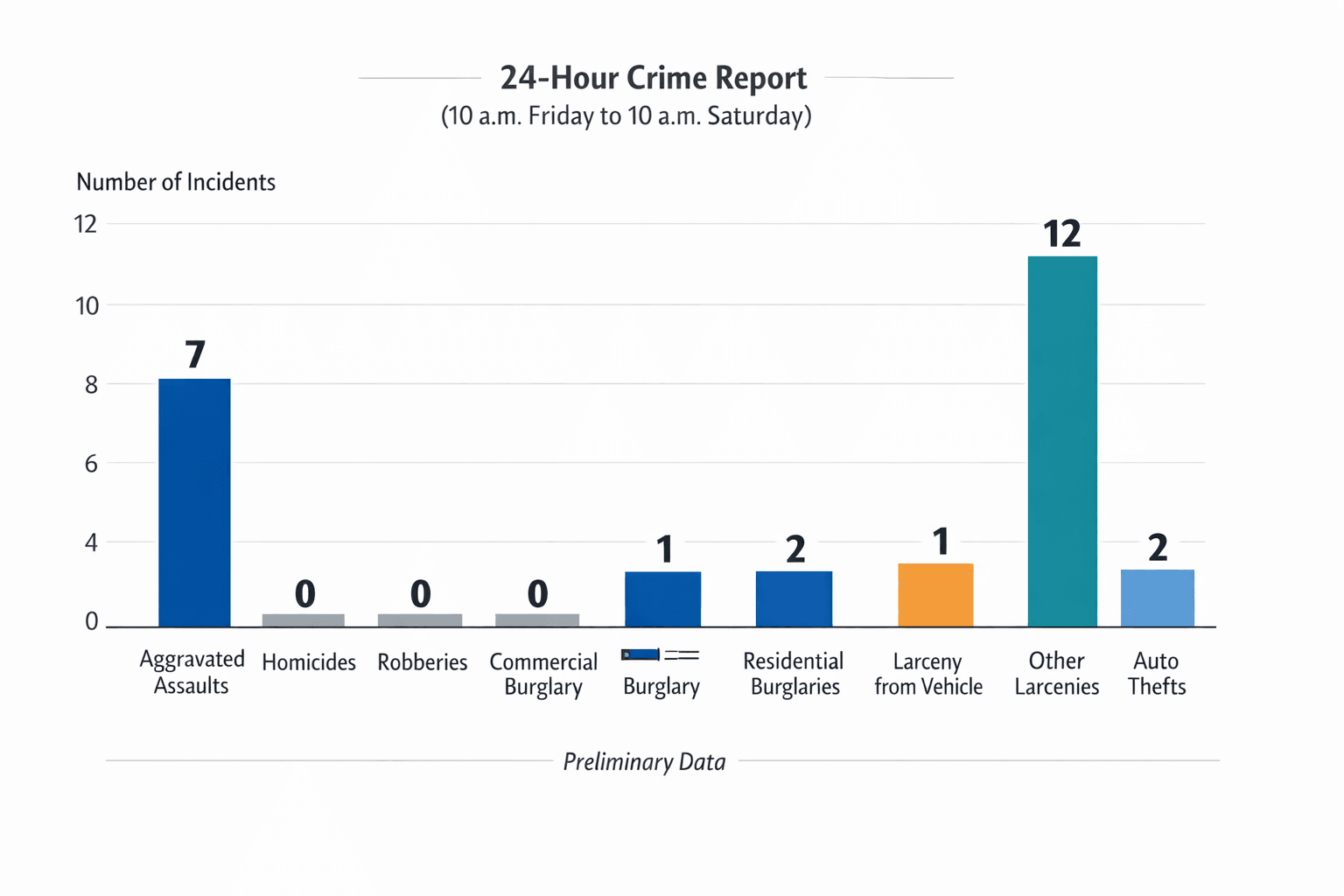
Suffolk County law enforcement reported a preliminary tally of significant incidents during a 24-hour period beginning Friday at 10 a.m. and ending Saturday at 10 a.m., covering Dec. 26-27, 2025. The initial review identified seven aggravated assaults, zero homicides and zero robberies. Property crime counts included one commercial burglary, two residential burglaries, one larceny from a vehicle, 12 other larcenies and two auto thefts.
The total of 18 property crimes and seven violent incidents over a single 24-hour stretch represents a concentrated set of incidents that local officials say should not be treated as final statistics. The tally is preliminary and based on an initial review of incident reports; it may not be comprehensive and is not a statistical analysis. Details on arrests, suspects or case outcomes were not included in the initial summary.
For residents, the numbers underscore two immediate concerns: personal safety and property vulnerability. Seven aggravated assaults in a day is notable for any community-size county and could prompt increased patrols or targeted enforcement in hotspots. The two auto thefts and one larceny from a vehicle point to ongoing risks for unattended vehicles and underscore the potential for higher insurance claims and repair costs if such incidents cluster over time.
Small businesses and homeowners face direct economic consequences when burglaries and larcenies rise. Even a single commercial burglary can disrupt operations, lead to inventory loss and raise security expenses. Residential burglaries carry similar financial and emotional costs for families and can influence local housing market perceptions if they recur in particular neighborhoods.
Policy implications center on resource allocation and data-driven deployment of law enforcement. Short-term spikes in assaults or thefts often prompt local leaders to request focused patrols, community outreach, and accelerated data analysis to determine whether incidents reflect isolated events or emerging trends. County public safety planners will rely on more comprehensive crime statistics and trend analysis to decide on staffing, technology investments and prevention programs.
Until a full statistical review is complete, the preliminary tally serves as an early signal rather than a definitive trend line. Residents are advised to remain vigilant, secure vehicles and property, and report incidents to local law enforcement so cases are captured in the official record that county planners will use to assess long-term safety and resource needs.
This article was produced by Prism’s automated news system from verified source data, official records, and press releases, then run through automated quality and moderation checks before publishing. The system is built and supervised by the people who set the standards it runs under. Read our full AI policy.
Did this article answer your question?