State expands Shinnecock Bay shellfish closure after biotoxin spike
Shellfish harvests west of Ponquogue Bridge were shut down again after marine biotoxins spiked, widening a closure that now reaches Shinnecock Bay’s tributaries.

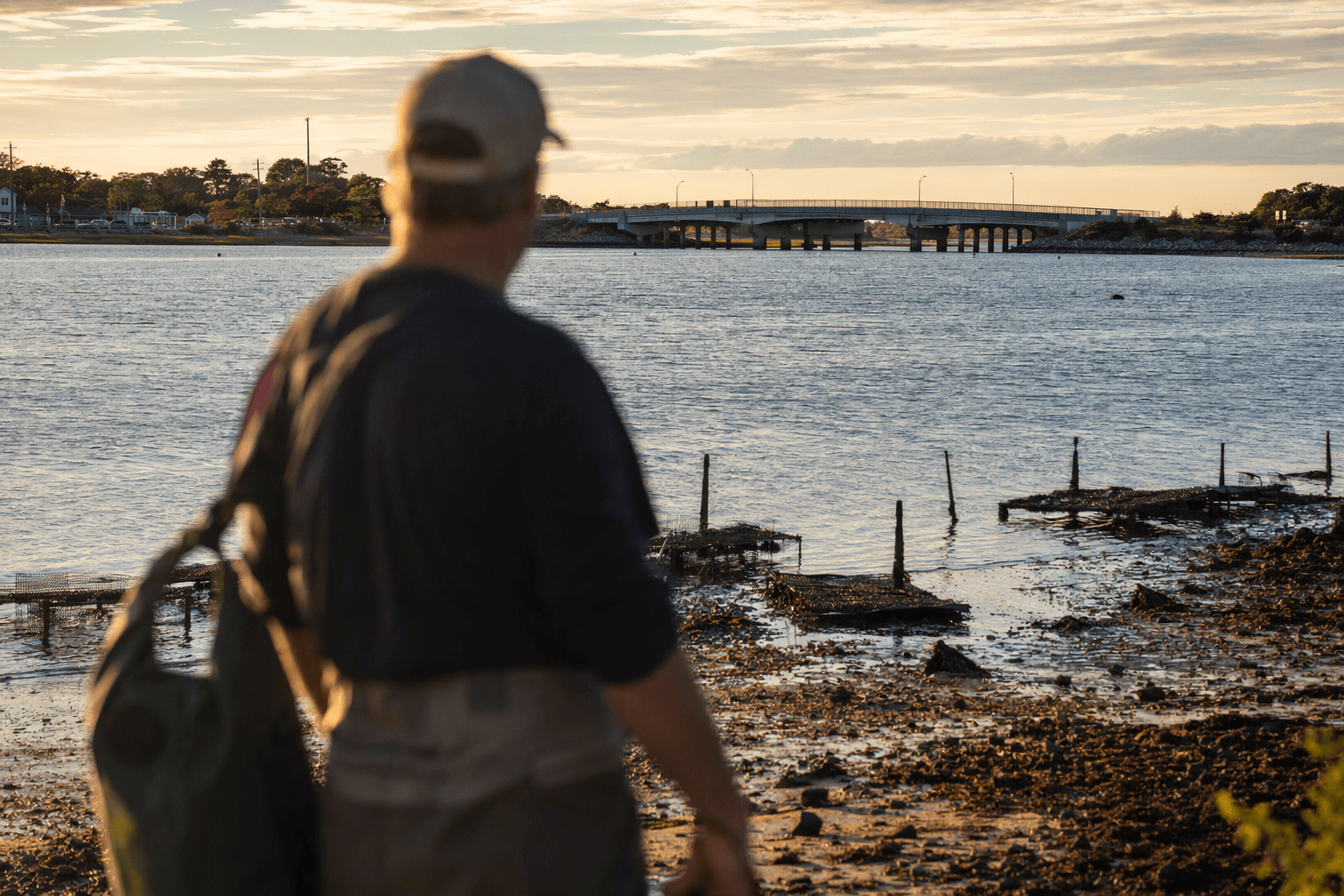
Harvesters in Hampton Bays and the Town of Southampton faced another hard stop in Shinnecock Bay after state officials widened a shellfish closure west of Ponquogue Bridge because of elevated marine biotoxins. The New York State Department of Environmental Conservation said the restriction took effect May 5 and now covers Shinnecock Bay and its tributaries west of the bridge, blocking the harvest of shellfish and carnivorous gastropods.
The expansion matters because it went beyond an earlier April 8 closure that covered only a smaller western section of the bay. By moving the line farther across the waterway, the state signaled that the contamination concern was not confined to a narrow pocket. For baymen, wholesalers and restaurants that rely on clams, oysters and other local shellfish, the change can mean lost harvest days, tighter supply and more pressure to source product from elsewhere.
The closure also carried a public-health warning that reaches well beyond the docks. State and county officials have long treated Shinnecock Bay as part of the South Shore Estuary Reserve, a more than 70-mile system stretching from Nassau County to Shinnecock Bay with biological, economic and social importance. Suffolk County said monitoring of Shinnecock Bay began in 1977, underscoring how closely the area has been watched as water quality shifts across the East End. County health officials have warned that harmful algal blooms can be lethal to fish and shellfish and can pose serious public-health threats.
The DEC said Alexandrium spp. produces saxitoxin, the toxin tied to paralytic shellfish poisoning. Health guidance says saxitoxin can cause numbness and tingling, headache, dizziness, nausea and loss of coordination, and severe cases can bring paralysis and respiratory failure. The Centers for Disease Control and Prevention says symptoms can appear quickly after contaminated shellfish are eaten, which is why state closures are meant to keep tainted product out of the food chain before it reaches dinner tables in Southampton Town and beyond.
The latest restriction also fit into a broader pattern on Long Island, where marine biotoxin and harmful algal bloom alerts have been affecting multiple waters this spring, including areas in Southold and Old Fort Pond. The DEC said the Shinnecock Bay closure remained temporary, but it urged the public to use its shellfish closures hotline at (631) 444-0480 for the latest status as officials track whether the biotoxin spike eases or spreads.
This article was produced by Prism’s automated news system from verified source data, official records, and press releases, then run through automated quality and moderation checks before publishing. The system is built and supervised by the people who set the standards it runs under. Read our full AI policy.
Did this article answer your question?