Suffolk lawmakers approve $140 million bond refunding, fiscal measures
Suffolk lawmakers rolled $140 million of older debt into new bonds while also approving $4.4 million in grants and other fiscal moves.
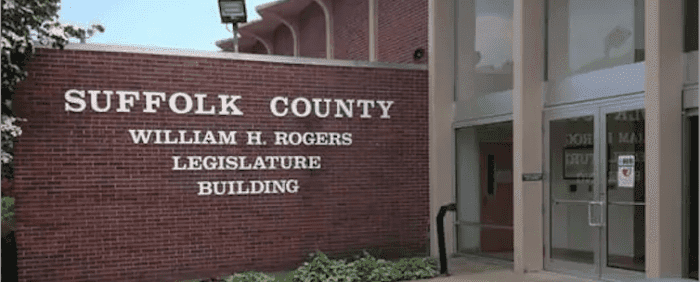
Suffolk County lawmakers approved a $140 million bond refunding Tuesday, moving older debt into new municipal bonds as part of a broader fiscal package that also carried about $4.4 million in grants, PAYGO spending and school funding.
The bond refunding had already cleared the Legislature’s Budget and Finance Committee unanimously before reaching the full chamber. By replacing older bonds with new ones, county officials are reshuffling debt service rather than opening a new spending program.

Lawmakers also approved repealing a county code section tied to the Metropolitan Commuter Transportation District Mobility Payroll Tax, which applies to employers and self-employed people doing business inside the 12-county Metropolitan Commuter Transportation District. The vote came alongside acceptance and appropriation of roughly $4.4 million in grant money covering STRIVE II domestic violence prevention work, housing funds tied to the U.S. Department of Housing and Urban Development, state gun-violence reduction aid and federal Justice Department money aimed at reducing violent crime.

The Legislature further appropriated PAYGO funds for police technology and hazardous material cleanups, approved Suffolk County Community College’s 2026-2027 operating budget and backed an Empire State Development Corporation grant to create a master plan for the Suffolk County Farm. Lawmakers also approved a classification-and-salary change that creates a general counsel position in the district attorney’s office.

In September 2025, County Executive Ed Romaine presented a $4.3 billion 2026 Recommended Operating Budget that complied with New York State’s property tax cap and local charter requirements. In 2012, Suffolk was facing a $500 million operating deficit and a $200 million annual structural budget gap.
This article was produced by Prism’s automated news system from verified source data, official records, and press releases, then run through automated quality and moderation checks before publishing. The system is built and supervised by the people who set the standards it runs under. Read our full AI policy.
Did this article answer your question?