Charlestown announces hydrant flushing schedule for April 20-24
Charlestown began flushing hydrants Monday, with crews moving street by street through Thursday and possible brown water or pressure changes in nearby homes and businesses.
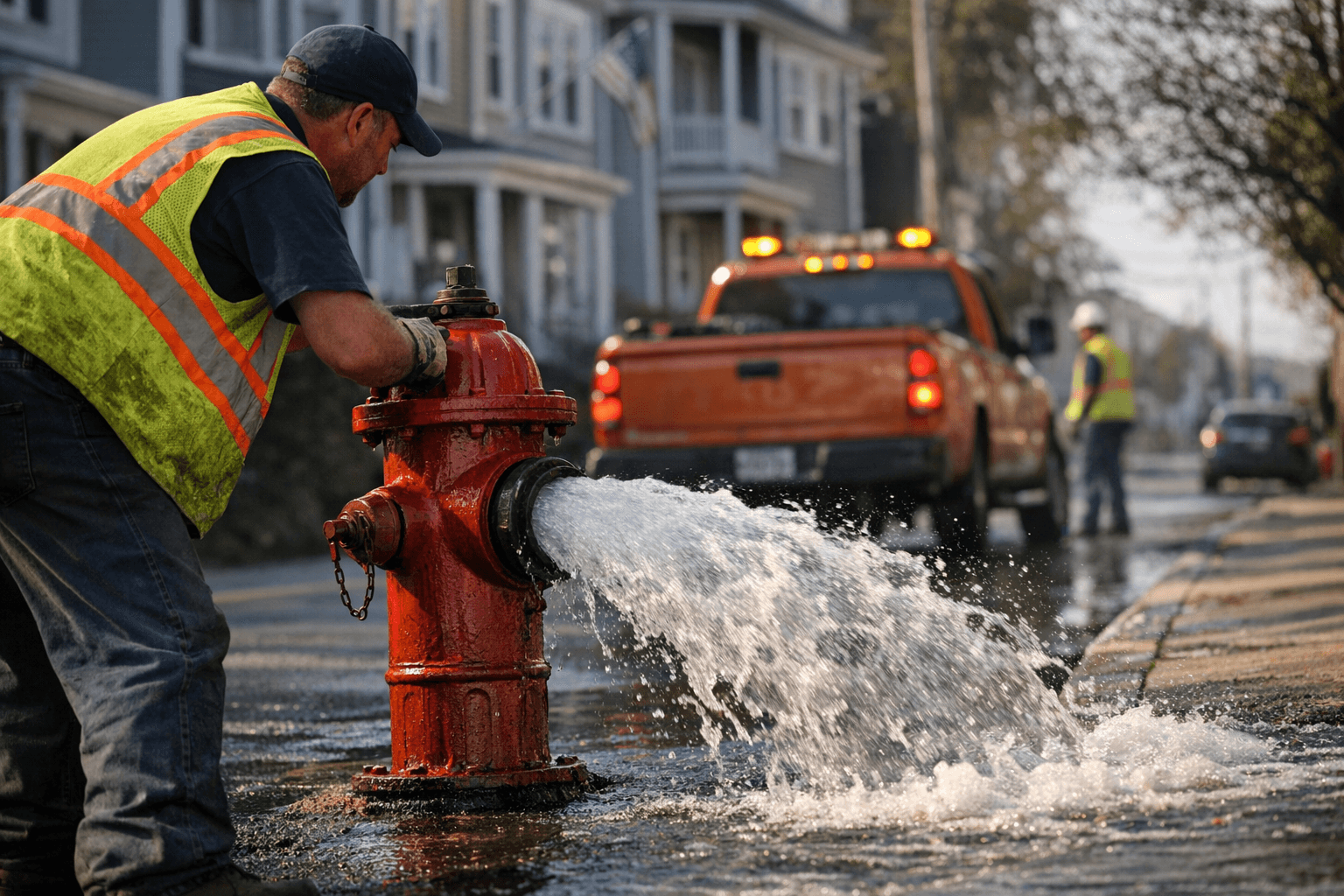
Charlestown residents on the east and west side of the village were first in line Monday for possible brown water, lower pressure or brief interruptions as hydrant flushing began and moved through town through April 24. The town laid out the work day by day so households and businesses could plan ahead before washing clothes, cooking meals or serving customers during the maintenance window.
The schedule split the work into a clear sweep. Monday covered the east and west side of the village. Tuesday shifted north to the Old Claremont Road and Old Springfield Road areas. Wednesday moved north to Salt Shed Road. Thursday was set for North Charlestown. That kind of map matters in a small town where a single maintenance day can affect a wide stretch of the water system, especially when crews are purging mains and moving from one section to the next.
Charlestown’s water system is built on groundwater and supplied by three wells, Clay Brook on North Hemlock Road, Bull Run #1 off Lovers Lane Road, and Bull Run #2 off Lovers Lane Road. The town says Clay Brook produces about 380 gallons per minute, Bull Run #1 about 200 gallons per minute, and Bull Run #2 about 500 gallons per minute. The 2024 Consumer Confidence Report says Charlestown monitors and controls its water systems 24 hours a day, seven days a week, has passed all state and federal water-quality standards for the history of its testing, and performs more than 100 water-quality tests each year.
The report also notes that aging infrastructure presents challenges to drinking water safety, which helps explain why a routine hydrant-flushing cycle remains important even when there is no emergency. The Water Interconnect has been completed, connecting North Charlestown water users to the Charlestown well, adding another layer of resilience to the system. In practical terms, the work helps keep water moving through the network, supports water quality and keeps hydrants ready for fire protection.
For Charlestown households and businesses, the warning is straightforward: if water runs cloudy or pressure dips during the listed days, let it clear before using it for laundry, food preparation or customer service. The town’s street-by-street schedule gives North Charlestown, the Old Claremont Road corridor, the Old Springfield Road area and the village center a clear window to expect crews and plan around the temporary work.
This article was produced by Prism’s automated news system from verified source data, official records, and press releases, then run through automated quality and moderation checks before publishing. The system is built and supervised by the people who set the standards it runs under. Read our full AI policy.
Did this article answer your question?