Claremont Rejects HB 292 State Loan Fund Despite $5M Shortfall
Claremont rejects HB 292 state loan option, relying on a $4M bank note and facing a roughly $5M budget hole that could strain school operations through the summer.
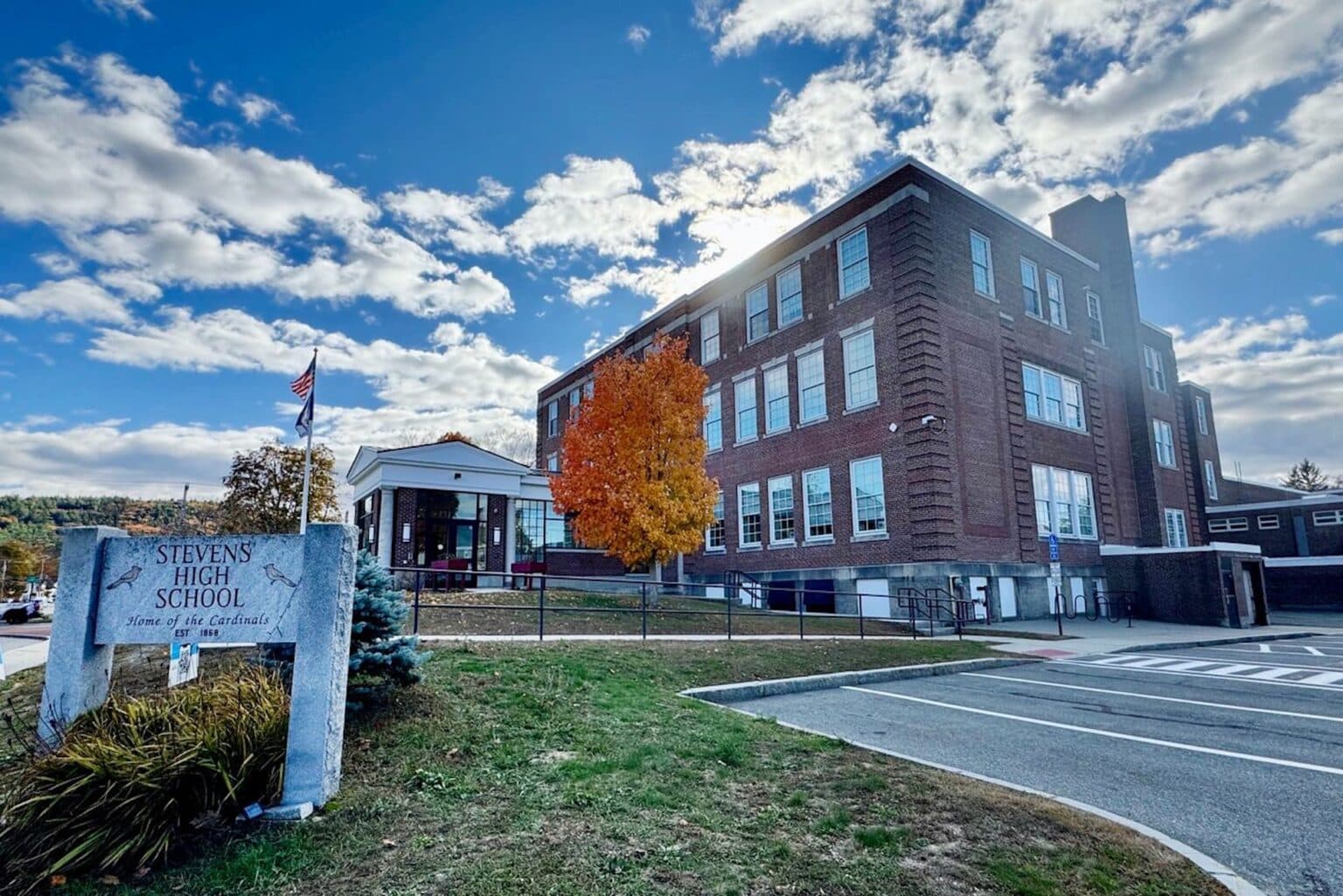
The Claremont School District has declined to tap a proposed state revolving loan fund even as it grapples with a roughly $5 million budget shortfall discovered last August and a $4 million revenue anticipation note from Claremont Savings Bank due April 17, 2026. Interim business administrator Matt Angell told the school board he was reluctant to seek the state loan and said, "I’m not sure I would want to ask the school board to accept those funds … I’m hopeful that we can make it through the end of the year without having to borrow money."
Legislators have moved House Bill 292 through the Legislature to create a revolving loan fund allowing districts to borrow against future state adequacy aid and repay with interest taken from subsequent adequacy payments. The Senate passed its version of the bill 16-8 with all Senate Republicans supporting it, while the House advanced related measures that would give the State Board of Education authority to place struggling districts on probation and appoint an independent administrator if problems persist. House leaders fast-tracked both bills, waiving usual Finance Committee review.
Proposals differ sharply on key mechanics. Some descriptions would let a district borrow up to 75 percent of its adequacy aid in staged payments and repay with interest estimated at about 2 percent. Other accounts tie loan interest to the federal funds rate - described by one commentator as nearly 4 percent - and cap repayment windows at three years or five years depending on the amendment. Lawmakers have offered repayment timelines ranging from mid-2029 to mid-2030; Rep. Rick Ladd has pushed for earlier payback with tighter reporting and monthly disclosure requirements.
District officials and legal counsel frame the debate differently from some critics. Attorney James O’Shaughnessy said bluntly, "The district doesn’t have other options." He added, "Claremont is not asking for a bailout. These are funds that the district is already entitled to receive under current state law," and warned that "April to Sept. 1 will be a very difficult time for cashflow." Those concerns are immediate: after the bank note is repaid, the district expects to need additional funds to meet payroll and prepare for the 2026-27 school year. The school board closed one of three elementary schools in October and is weighing further consolidation.
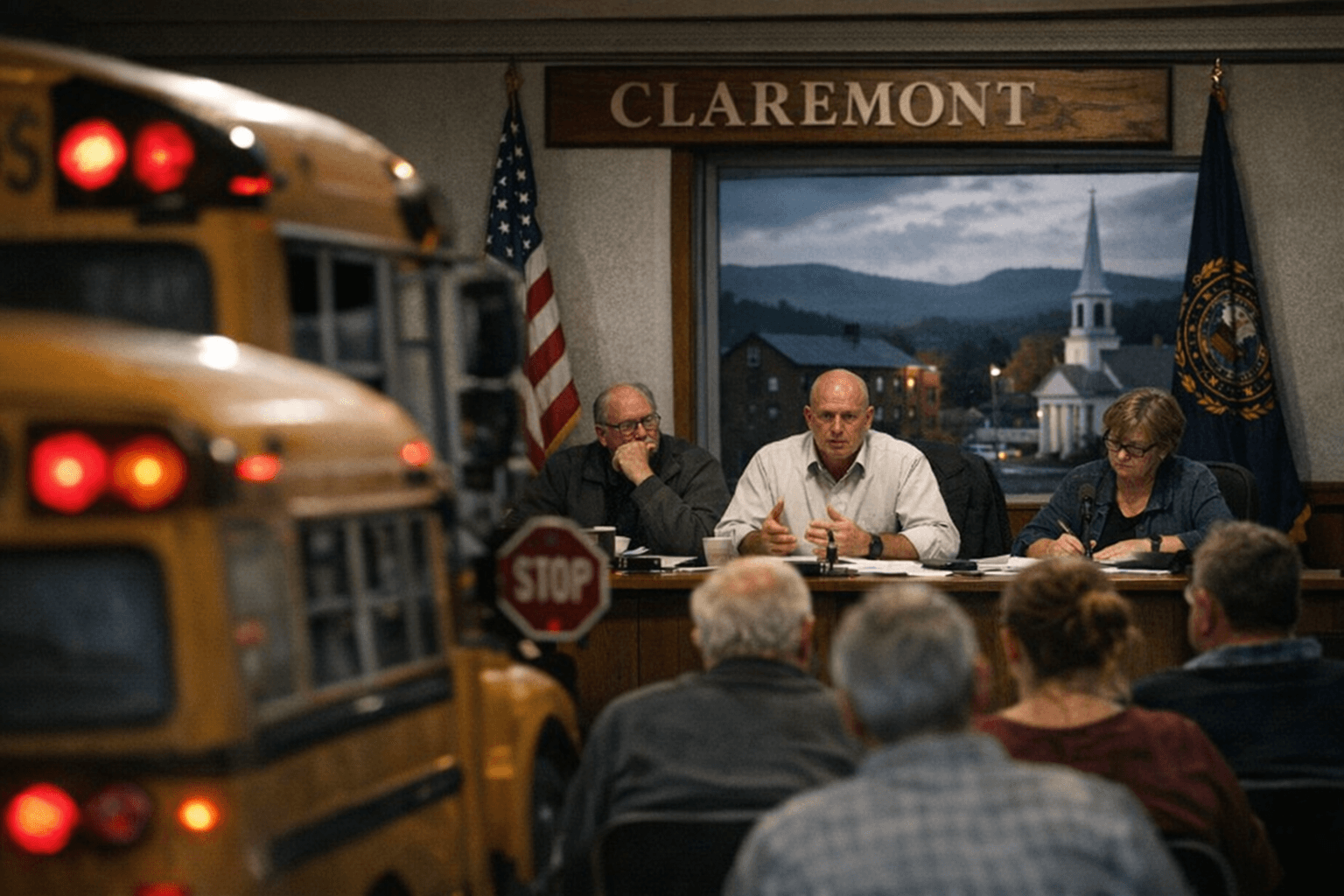
Community observers point to deeper funding questions. Writer Andru Volinsky has highlighted local socioeconomic and education indicators, noting high poverty and special education shares and lower teacher pay; his figures and the precise size of Claremont’s annual adequacy aid vary across accounts and require verification from official state records. That discrepancy matters because it changes how large a loan the district could access under HB 292.
For Sullivan County residents, the stakes are practical and local: the district must navigate a bank loan due in April, a risky cashflow window through Labor Day, and potential state conditions on any aid. The immediate watch points are the House’s next action on HB 292, final language on interest and repayment, and local budgeting decisions that will determine whether Claremont consolidates further or faces state intervention.
This article was produced by Prism’s automated news system from verified source data, official records, and press releases, then run through automated quality and moderation checks before publishing. The system is built and supervised by the people who set the standards it runs under. Read our full AI policy.
Did this article answer your question?