NH Senate Passes 16-8 Bill Redefining Adequate Public Education Standards
A new NH law redefines school adequacy without closing a $3,000-per-child funding gap, effectively making Claremont-area property taxpayers cover the difference.
Governor Kelly Ayotte signed legislation on March 27 that shifts the financial burden the New Hampshire Supreme Court said the state owed to public schools onto local property taxpayers, a move that falls hardest on property-poor communities like Claremont, which spent decades in court winning the very funding protections the new law narrows.
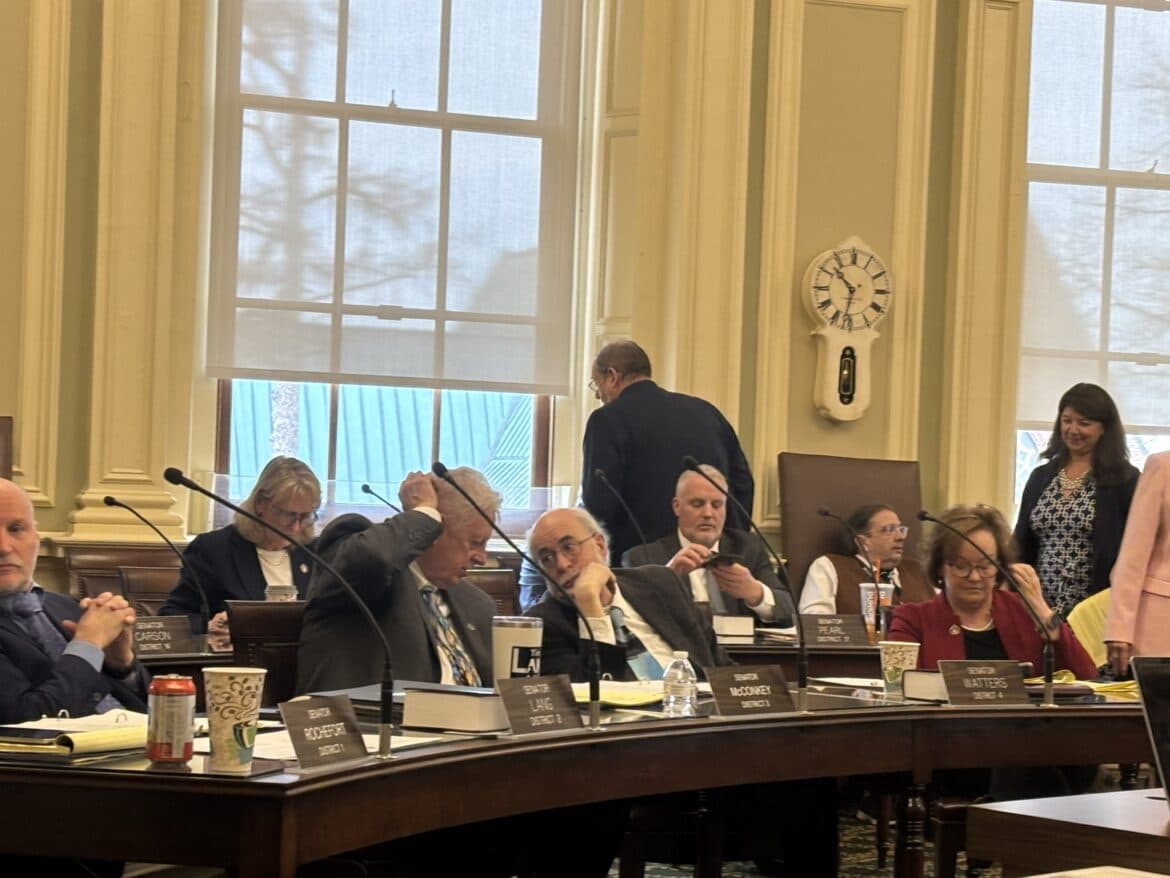
HB1815 passed the Senate 16-8 along strict party lines on March 26, one day before Ayotte's signature. The House had cleared it 188-162 on March 5. The law takes effect May 26.
The measure's author, Rep. Bob Lynn, a Windham Republican and former state Supreme Court chief justice, described it as a corrective to recent court rulings. "I think basically what it says is, 'You, court, got it wrong,'" Lynn said at a February House Education Funding Committee hearing. Senate Republicans argued the law more clearly articulates shared responsibility between state and local government for certain education costs.
What the law does not do is close the funding gap the Supreme Court identified. Last July the court ruled 3-2, in the ConVal case, that New Hampshire was underfunding public schools by more than $3,000 per child. HB1815 redefines in statute what counts toward "adequacy," a change opponents say lets the state declare the problem solved without spending more money.
Andru Volinsky, an attorney who co-represented the original Claremont plaintiffs and currently represents the Rand plaintiffs in a separate ongoing case, was direct. "Shame on Bob Lynn," Volinsky said. "He should know better that you can't change the constitution" with a statute.
Megan Tuttle, president of the National Education Association of New Hampshire, condemned the law, saying it "attempts to redefine the State's responsibility and will ultimately deepen inequities and leave property taxpayers to bear the burden of funding public schools."

That warning carries particular weight in Sullivan County, where Claremont carries one of the state's highest property tax rates while straining to fund services other districts take for granted. The Claremont cases of the 1990s established the constitutional foundation for adequate education funding in New Hampshire; critics argue HB1815 is a direct legislative assault on that foundation. Services like special education, pupil support, and transportation, which depend heavily on state adequacy calculations, now face pressure as districts recalibrate what they can expect from Concord versus what must come from the local tax levy.
Rep. David Luneau of Hopkinton, the ranking Democrat on the House Education Funding Committee, offered a blunt forecast: "If you think your property taxes are bad now, just wait."
Sen. Debra Altschiller, D-Stratham, called the approach "inviting the perfect lawsuit," warning that redefining adequacy in statute while courts are actively scrutinizing the state's compliance is likely to trigger new litigation. The Senate's 16-8 tally followed strict party lines, with all Republican senators in favor and all Democrats opposed. An identical bill, Senate Bill 659, was tabled, consolidating the chamber's action behind the House-passed version.
School districts across Sullivan County will now plan budgets under a new statutory framework effective in late May. For Claremont taxpayers, the math is simple: the $3,000-per-child gap the Supreme Court identified has to be covered by someone. Under HB1815, state law now says a larger share of it can come from the local property tax bill.
This article was produced by Prism’s automated news system from verified source data, official records, and press releases, then run through automated quality and moderation checks before publishing. The system is built and supervised by the people who set the standards it runs under. Read our full AI policy.
Did this article answer your question?