Sunapee event explores ethics of artificial intelligence, deepfakes, jobs
A free Sunapee session on AI covered deepfakes, job loss and school use as New Hampshire schools tighten disclosure rules.
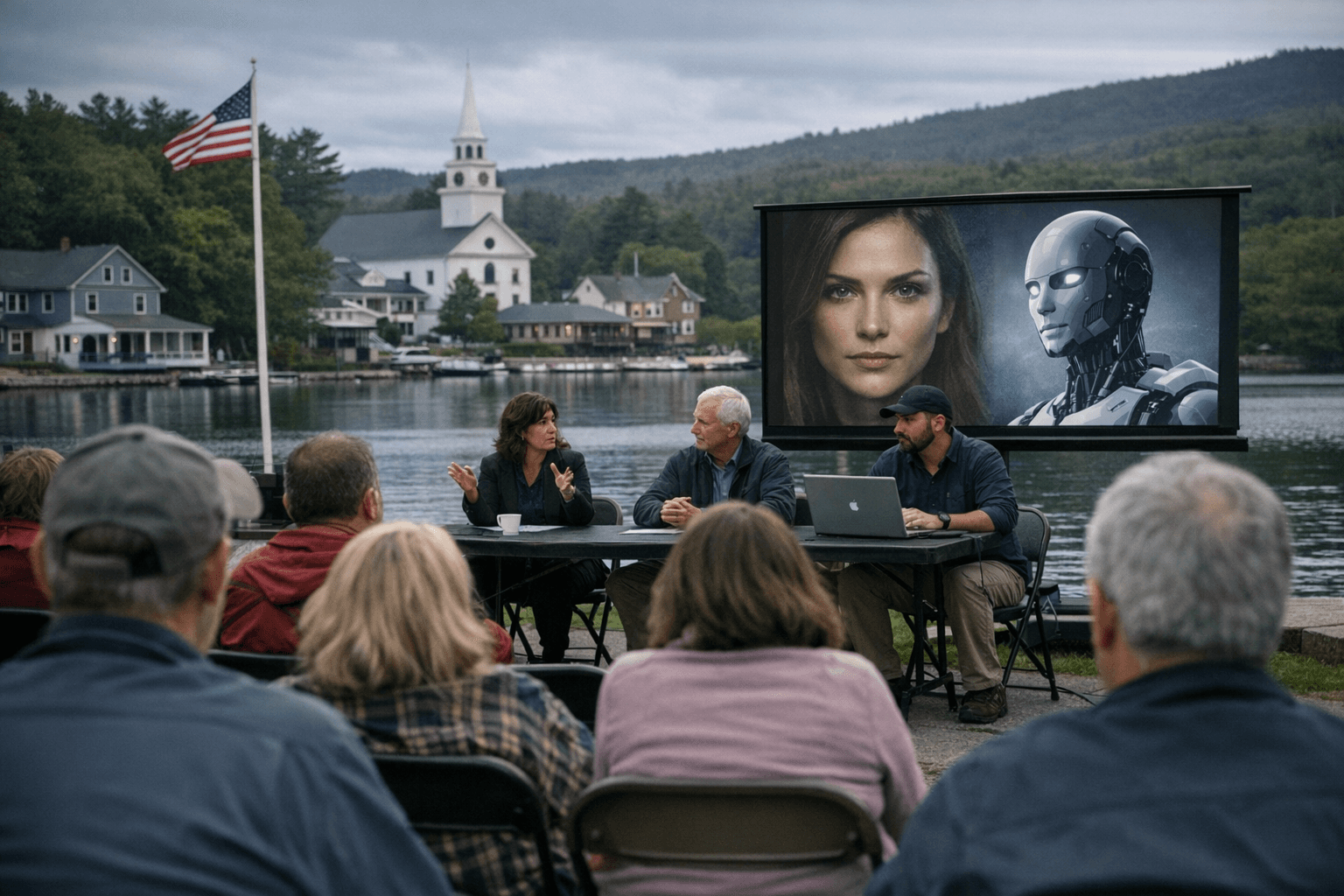
Artificial intelligence is no longer an abstract debate in Sunapee. It is already touching classrooms, workplaces, and the scams and fake images residents may run into on their phones, which is why a free community conversation at Lake Sunapee United Methodist Church drew attention beyond the usual ethics crowd.
Sunapee Seniors, the Sunapee Recreation Department and New Hampshire Humanities hosted The Ethics of AI on Lower Main Street, with Dr. Kiki Berk, a philosophy professor at Southern New Hampshire University, leading the discussion. The program opened with a brief introduction to applied ethics and the technology behind generative AI, then moved through automation and job displacement, deepfakes and misinformation, AI in education, implicit bias, autonomous systems such as self-driving cars and drones, and questions around a possible technological singularity.
That range mattered because the stakes were local as much as national. Parents are already weighing how AI affects homework and school policy. Employers are thinking about how much work can be automated. Older residents are trying to sort real information from machine-made falsehoods that can be polished enough to fool a quick glance. In New Hampshire, the issue is not theoretical: Manchester schools recently revised their AI policy to require disclosure of approved AI use by students and staff, a sign that transparency and academic integrity are already active concerns in public education.
Berk brought a philosophy background shaped by years of public-facing teaching. She joined Southern New Hampshire University in 2012 after teaching at Indiana University South Bend, and her course work has included Death and the Meaning of Life and Happiness and the Good Life. That kind of training fits a discussion about how communities decide where useful technology ends and harmful overreach begins.

The session also reflected Sunapee’s habit of using familiar civic spaces for practical conversation. Parking was listed at the church lot, and Sunapee Seniors members had a luncheon at noon before the program. The church itself carries a long local history: its history page says a fire destroyed the church and several nearby buildings on June 10, 1871, before services were temporarily held at the North Meeting House or Union Church at Lower Main Street and North Road while a new site was chosen.
New Hampshire Humanities, which says it is celebrating 50 years, describes its mission as connecting people and ideas through programs that inspire curiosity and civil dialogue. For Sunapee, the timing made the event especially useful: published listings differed slightly on duration, with one showing 1 to 2 p.m. and another extending to 2:30 p.m., but both pointed to the same central question. Residents were given a chance to think through how AI should be used, limited, and understood before the technology’s next wave reaches even more corners of daily life.
This article was produced by Prism’s automated news system from verified source data, official records, and press releases, then run through automated quality and moderation checks before publishing. The system is built and supervised by the people who set the standards it runs under. Read our full AI policy.
Did this article answer your question?