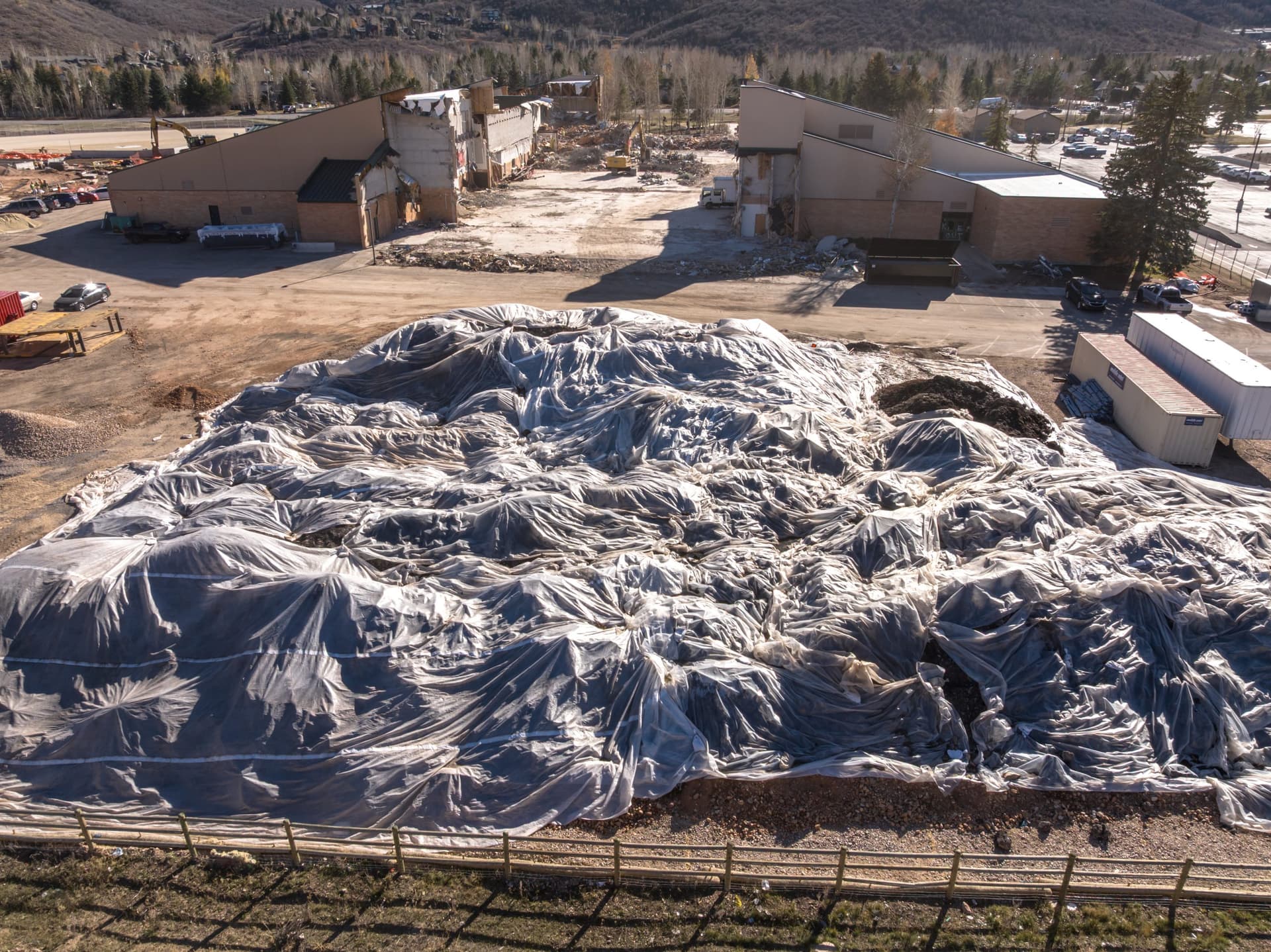
Demolition of Park City Junior High Uncovers Long-Known Contaminated Soil
Arsenic and lead confirmed in new soil piles at Treasure Mountain's demolition site, the third environmental issue since September, as the $23M sports complex project faces mounting complications.
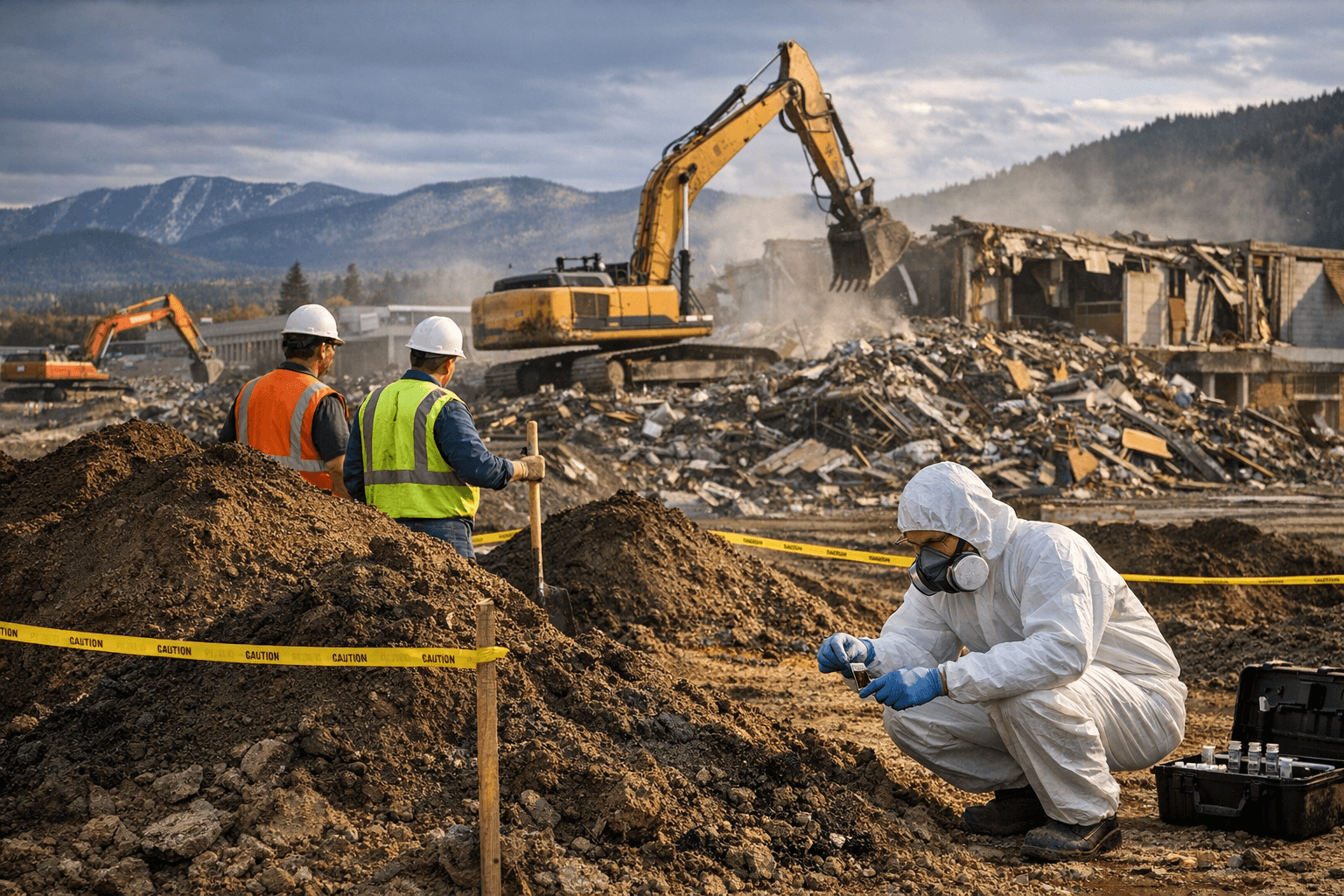
The Utah Department of Environmental Quality identified new piles of arsenic- and lead-contaminated soil at the Treasure Mountain Junior High School demolition site, documents confirmed through a Government Records Access and Management Act request, marking the third significant environmental compliance failure at the project since demolition began last September.
State officials said there is no risk of airborne exposure from the newly identified piles. But the finding compounds a pattern of problems at a site where the district had already spent an estimated $3 million or more removing contaminated soil before demolition crews ever arrived.
That contamination traces to Park City's 19th-century silver and lead mining era. PCSD entered into a CERCLA environmental covenant with the U.S. EPA in 2016 after lead- and arsenic-laden soils were documented on campus, requiring that no contaminated soil remain on the grounds for more than 30 days. Despite that restriction, two piles accumulated behind the school by 2022, one dating to 2017, placed there during construction at adjacent McPolin Elementary. In November 2022, McPolin had to relocate its playground because of dust from the contaminated surface soil.
Soil removal began in December 2023 and was completed by June 2024, though some contaminated material could not be transported off campus and was buried approximately six inches underground rather than hauled away. Treasure Mountain Junior High closed that same month after 40 years as the campus for Park City's eighth and ninth graders.
Demolition officially began September 22, 2025, with air quality monitoring equipment and a water cannon deployed to suppress dust. Within months, the Utah Division of Air Quality issued a non-compliance advisory after inspectors found asbestos-containing materials on the active site. That violation resulted in a $400 fine for PCSD and a $2,531 fine for Cripple Creek Consulting and Environmental, a third-party contractor cited for failing to update its asbestos management plan. Board of Education Vice President Nick Hill said the asbestos issues were separate from the groundwater concerns that surfaced next.
In mid-October 2025, the Utah DEQ launched an investigation after an anonymous tip to its spills hotline alleged contractors had discharged contaminated groundwater into Silver Creek on the east side of the site. Records showed more than 500,000 gallons moved through a storm drain feeding the creek. DEQ spokesperson Dave Noriega said the agency found no evidence of an immediate public health risk; the district noted Silver Creek was already contaminated from prior mining activity. A public Q&A on the issue was held December 16, 2025 at district offices on Kearns Boulevard.
To manage the remaining groundwater, PCSD obtained a dewatering permit on March 31, 2026. Contractors will treat four tanks of groundwater with chemicals, with laboratory analysis required before any discharge.
The Treasure Mountain Sports Complex, approved by the Park City Planning Commission on April 9, 2025, will include two soccer fields, eight tennis courts, four batting cages, a 6,500-square-foot athletic support building, and a 3,400-square-foot press box. The school board capped the project at $23 million, with the district stating taxpayers are not bearing the cost. How additional remediation expenses get allocated among PCSD, its contractors, and their insurers remains an open question as the site's mining-era geology continues to complicate the rebuild.
This article was produced by Prism’s automated news system from verified source data, official records, and press releases, then run through automated quality and moderation checks before publishing. The system is built and supervised by the people who set the standards it runs under. Read our full AI policy.
Did this article answer your question?