Park City café employs adults with disabilities, builds community ties
Lucky Ones Coffee has turned inclusion into a working model, employing adults with disabilities in Park City and Salt Lake City while showing how supported jobs can scale.
A working model for inclusion in Park City
Lucky Ones Coffee has made a clear business case for disability employment: place adults with disabilities in real customer-facing jobs, back them with structure and support, and the café becomes both a workplace and a community anchor. The nonprofit now operates two library locations, one inside the Park City Library and another in the Marmalade Branch of the Salt Lake City Public Library, giving the idea local reach while keeping the model grounded in everyday errands.
That matters in Summit County because the café is not framed as a symbolic gesture. It is a job creator, a training ground, and a public-facing business that asks customers to see disability employment as normal commerce rather than charity.
How the café grew from an idea into a business
Lucky Ones was started by Taylor Matkins and Katie Holyfield, both of whom had worked in adaptive recreation before launching the café. They saw a gap that many families and service providers know well: people with disabilities could find internships, but there often was not a clear next step into paid work. The café was designed to fill that gap with a real schedule, real duties, and a setting where employees interact with customers every day.
The business began in 2017, according to a Harvard Business School case study, and was already operating by 2018. A Park City Magazine feature said the founders raised $22,000 through crowdfunding to get it off the ground, and that the concept was inspired by Bitty & Beau’s in Wilmington, North Carolina. Those details matter because they show Lucky Ones was built from a modest local campaign into a repeatable concept, not a large institutional rollout.
What the café actually changes for workers
The strongest argument for Lucky Ones is not abstract mission language. It is the way the café creates jobs, income, and responsibility for people who are often left out of the labor market. The company’s own site says 70% of individuals with disabilities are unemployed, and the café’s structure is built around closing that gap through paid work and hands-on learning.
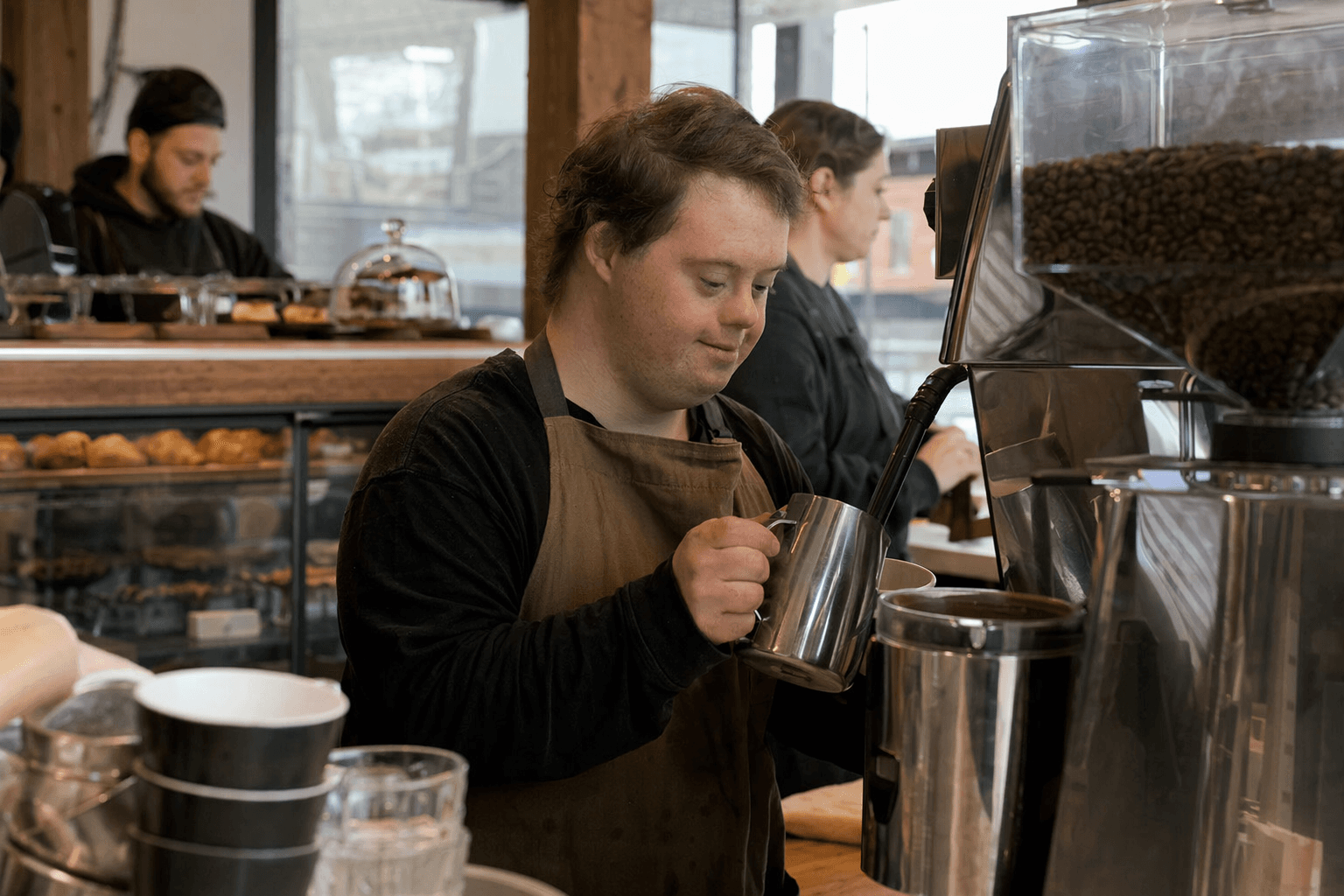
By early 2023, Harvard Business School said Lucky Ones employed 17 people across two coffee shops. More recent listings associated with the organization said it had 35 neurodiverse baristas, suggesting the workforce has continued to expand. The jobs are not hidden away either. Workers serve coffee, take orders, and carry out daily duties in a setting where customers see skill, speed, and teamwork rather than assumptions about what disabled workers can or cannot do.
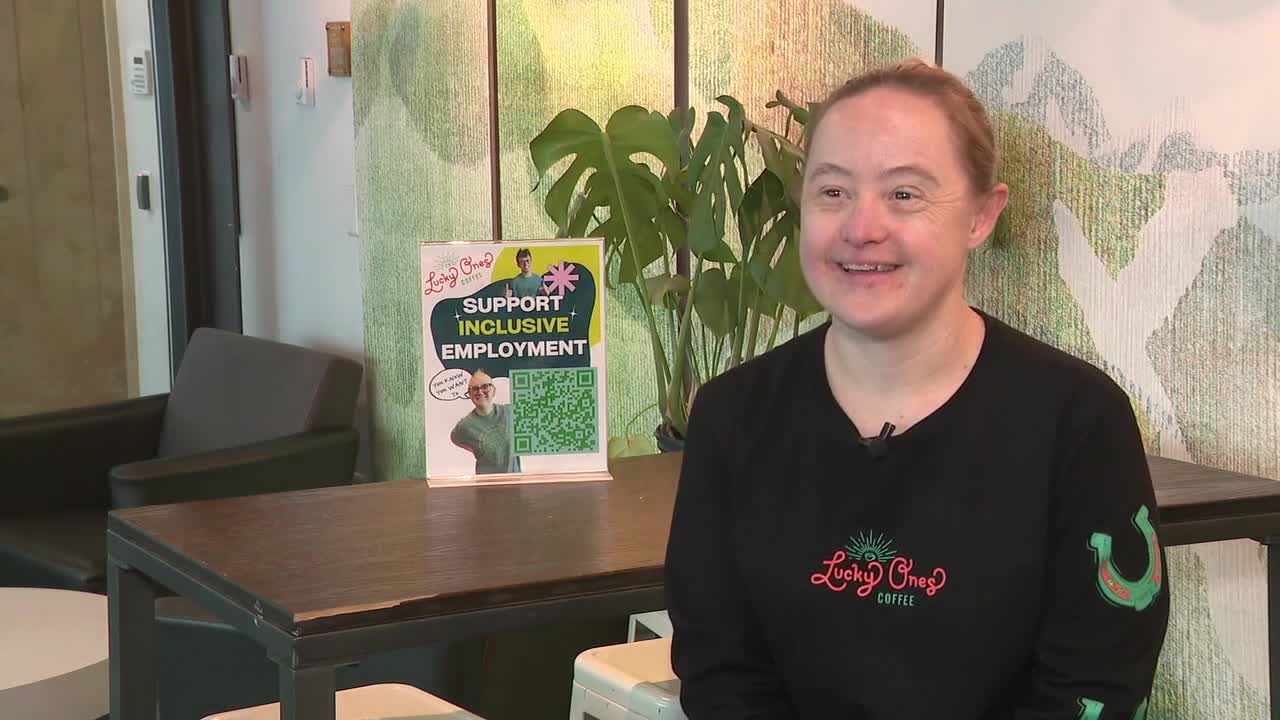
Julianna “Jules” Faulkner, who has Down syndrome, is one of the clearest examples of that model in action. FOX 13 reported that she now helps train new employees. She recalled that her interview question was, “What is your favorite candy and why?” and said she answered Reese’s Peanut Butter Cups. That kind of personality-driven hiring process signals something important: the café is not sorting applicants through a rigid corporate filter, but looking for fit, communication, and comfort in a social workplace.
Faulkner also said she enjoys seeing other people with Down syndrome at work because, in her words, it makes her day. That small detail says a lot about the environment Lucky Ones has created. It is not just a job site. It is a place where representation is visible, routine, and part of the daily rhythm.
A café that functions as a social network, not just a counter
The workday at Lucky Ones is built around more than tasks. FOX 13 reported that many employees work 20 to 30 hours a week, which gives the role enough structure to matter without making it feel temporary or token. The social side of the café is part of the model too. People celebrate birthdays there, friendships form, and Faulkner even met her boyfriend at the coffee shop.
That social fabric is one reason the business has become meaningful in Park City. Visit Park City describes Lucky Ones as a place that changes how people see others and calls it a coffee home for everyone. That language reflects how the café functions in practice: it is a place where disability is not tucked away from daily life, but woven into a normal local gathering spot.
The library setting strengthens that effect. A café inside the Park City Library and another inside the Marmalade Branch means the business is embedded in places where families, students, remote workers, and seniors already pass through. The result is steady exposure, not occasional publicity.
From Park City to Salt Lake City, and beyond the counter
The Salt Lake City expansion shows that the model is no longer limited to one resort town café. A November 2024 report from The Salt Lake Tribune said Salt Lake City Public Library expected Lucky Ones to open at the Marmalade Branch, and a 2025 Park Record story said the café had reopened there, with barista Morgan Warner greeting customers. The library describes the first floor location as home to a team of neurodiverse baristas serving espresso drinks, paninis, and locally baked treats.
That mix of food service and library traffic creates a practical blueprint other employers in Summit County could study. It shows how inclusion can be paired with business basics: foot traffic, a welcoming setting, visible roles, and a product customers already want. Lucky Ones also lists a food truck, catering, event services, volunteer opportunities, and job applications, which suggests the nonprofit has moved well beyond a single storefront and built multiple entry points for both work and revenue.
Why the model is realistic for other Summit County employers
Lucky Ones works because it removes several common barriers at once. It offers paid employment instead of short-term programming, brings workers into public view rather than isolating them, and wraps the job in support that helps people stay successful. Idealist listings associated with the organization say it provides physical, emotional, financial, and educational support, which helps explain how the café can sustain a workforce that needs more than a badge and a schedule.
For Summit County employers, the lesson is not to copy the menu. It is to copy the structure. That means hiring for strengths, designing simple and repeatable tasks, training supervisors to support different communication styles, and creating enough hours to make the work meaningful. The café’s path, from $22,000 in crowdfunding to two library locations and a reported 35 neurodiverse baristas, shows that inclusion can scale when the business model is built around it from the start.
Lucky Ones Coffee has turned a common talking point about inclusion into a visible local economy. In Park City and Salt Lake City, it is proving that disability employment can be organized as a functioning business, a social hub, and a template others could realistically adapt.
This article was produced by Prism’s automated news system from verified source data, official records, and press releases, then run through automated quality and moderation checks before publishing. The system is built and supervised by the people who set the standards it runs under. Read our full AI policy.
Did this article answer your question?

