Rockport State Park offers year-round recreation, camping and archery range
Rockport State Park is Summit County’s all-season reservoir escape, with camping, fishing, a 3-D archery range and a history tied to a flooded town.
Rockport State Park works as one of Summit County’s most versatile public spaces because it does not depend on a single season to draw people in. Summer brings boating, waterskiing and fishing on Rockport Reservoir, while winter shifts the focus to ice fishing and nearby snowmobile trails, giving the park a steady role in local recreation all year long.
A park built for every season
The easiest way to understand Rockport is to think of it as a reservoir park with a wide operating range. Utah State Parks describes it as a year-round recreation destination, and the activities change with the weather rather than shutting down when temperatures drop. In the warm months, the water is busy with tubing, wakeboarding and waterskiing; in colder weather, the same setting becomes an ice-fishing spot with access to nearby snowmobile trails.
That year-round use is part of what makes the park matter to Summit County. It is not simply a scenic stop on the way to somewhere else. It is a place where residents, weekend visitors and campers all use the same shoreline, boat access and trail connections in different ways depending on the season.
One small but practical detail speaks to how the park operates day to day: the gates close nightly from 11 p.m. to 6 a.m. That matters for anyone planning a late arrival, an early departure or an overnight stay near the reservoir.
Camping, fishing and water access
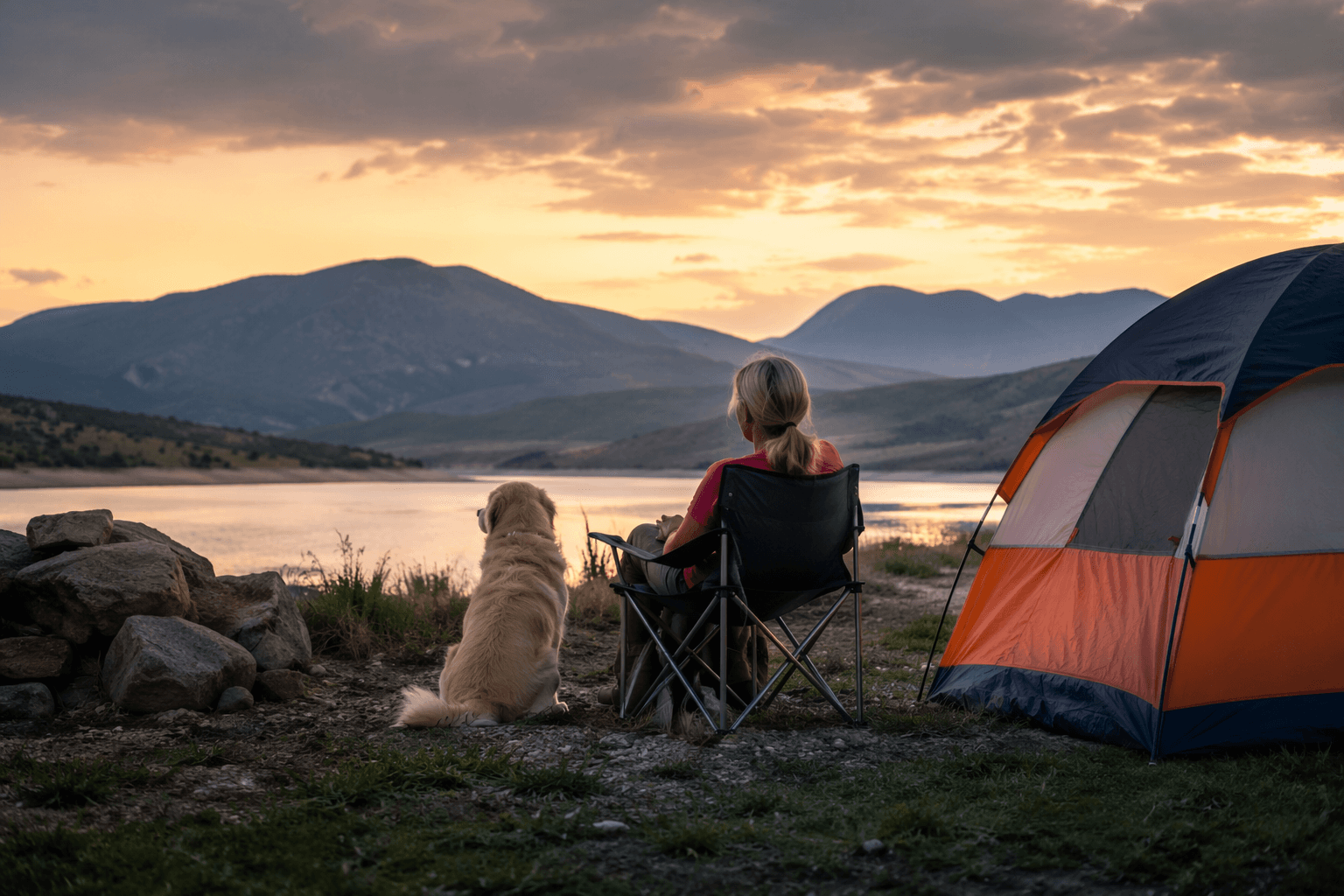
Rockport’s camping options are a major part of its appeal. Utah State Parks says the park offers tent and RV camping in five developed and primitive campgrounds, and the park has over a hundred campsites. That gives families, anglers and travelers a wide range of ways to stay overnight without leaving the reservoir setting.
Fishing is another core reason people come here. Utah State Parks says Rockport Reservoir has good fishing for both trout and bass, and the current conditions page recently noted numerous reports of perch and bass being caught. The same update said the water level was 88 percent and that all docks had been installed for the season, which shows the park is actively managed as a working recreation reservoir, not just a scenic backdrop.
For visitors who want a simple, practical read on the park, the main takeaway is straightforward: summer favors boats and shore fishing, while winter favors ice fishing and snowmobile access. That mix keeps Rockport useful to different kinds of users across the calendar, from anglers looking for trout and bass to campers staying for a full weekend.
The 3-D archery range adds a different draw
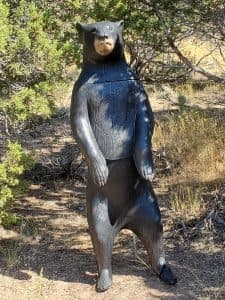
Rockport’s 3-D Archery Range gives the park a feature that goes beyond the water. The range sits along the Lakeview Trail and stretches across 3/4 of a mile, with nine archery stations plus one practice station. It uses life-size targets at different distances, which makes it feel more like a field course than a simple shooting lane.
The range is open from May through October, extending the park’s activity calendar well into the shoulder seasons. It is free with a park entrance fee, camping fee or annual pass, but visitors must bring their own bow and arrows. Broadheads are not allowed, a rule that helps define the range as a controlled recreational space rather than an open-use hunting area.
That specificity is part of what makes the archery range such a useful feature for a Summit County guide. It is named, measurable and easy to plan around, which matters for people deciding whether Rockport is worth a half-day trip or a longer stay.
A reservoir with a buried town behind it
Rockport also carries a history that reaches well beyond recreation. Utah State Parks says the first European American settlers arrived in 1860, and the settlement was first called Crandall before it was renamed Enoch City a year later. The valley where the town of Rockport once stood was later flooded to create Rockport Reservoir, turning the place into both a water source and a preserved historical landscape.
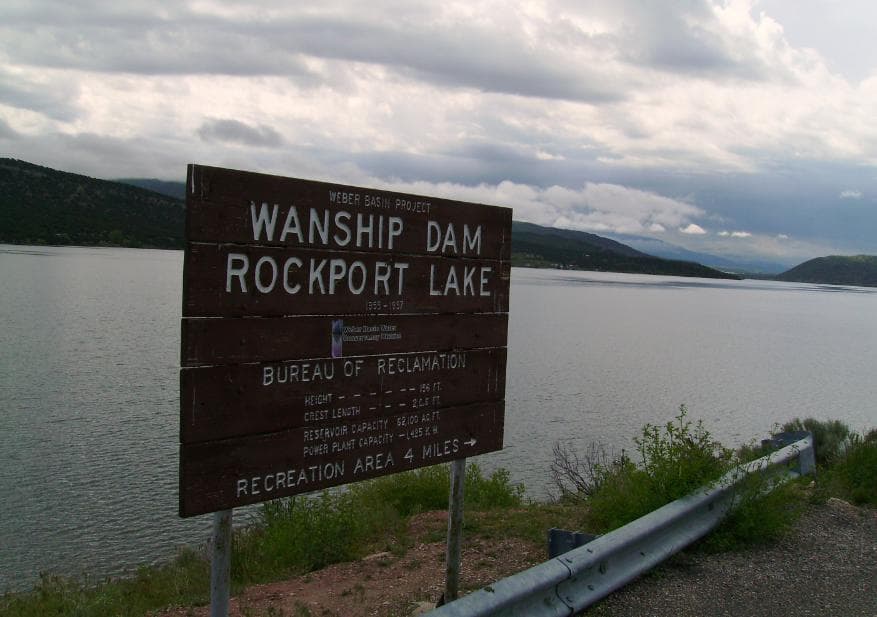
The reservoir’s scale helps explain why the site has remained so important. Utah State Parks gives Rockport Reservoir a total capacity of 62,100 acre-feet and a surface area of 1,080 acres. Some buildings from the original town were removed before flooding and are now preserved at Pioneer Village inside Lagoon Amusement Park, giving the area a second life in a different setting.
That history still resonates locally. In 2024, the Summit County History Museum planned a Rockport exhibit and asked for artifacts tied to the town before the reservoir. Local interest in that project reflected more than nostalgia. It underscored how deeply the flooded town remains part of the county’s memory, especially because Rockport was intentionally flooded as part of the Weber Basin Project, the same regional effort that also created Willard Bay, Pineview Reservoir, Causey Reservoir, East Canyon Reservoir and Lost Creek Reservoir.
Why Rockport still matters locally
Rockport’s value in Summit County comes from the way it combines recreation, history and utility in one place. The Bureau of Reclamation identifies Wanship Dam and Rockport Lake as part of the Weber River system, which helps place the reservoir in a larger water-management picture as well as a recreation one. That broader context matters in a county where outdoor access, water storage and land use are all closely linked.
The park’s Old Church venue adds another layer of public use. It can be rented for events, which means Rockport is not just for fishing or camping trips. It also serves weddings, reunions and local gatherings, giving the park a role in personal and community milestones.
For anyone planning a visit, the most useful facts are the ones that shape the day itself: the park is open year-round, the gates close from 11 p.m. to 6 a.m., camping is available in five developed and primitive campgrounds, and the archery range runs from May through October. In a county where outdoor spaces often get reduced to a single season or a single use, Rockport stands out because it does several jobs at once, and keeps doing them as the weather changes.
This article was produced by Prism’s automated news system from verified source data, official records, and press releases, then run through automated quality and moderation checks before publishing. The system is built and supervised by the people who set the standards it runs under. Read our full AI policy.
Know something we missed? Have a correction or additional information?
Submit a Tip