Summit County forum to explore Utah's advanced nuclear energy future
Park City residents will hear how Utah’s nuclear push could affect bills, water, and reliability as state leaders seek a federal nuclear hub.
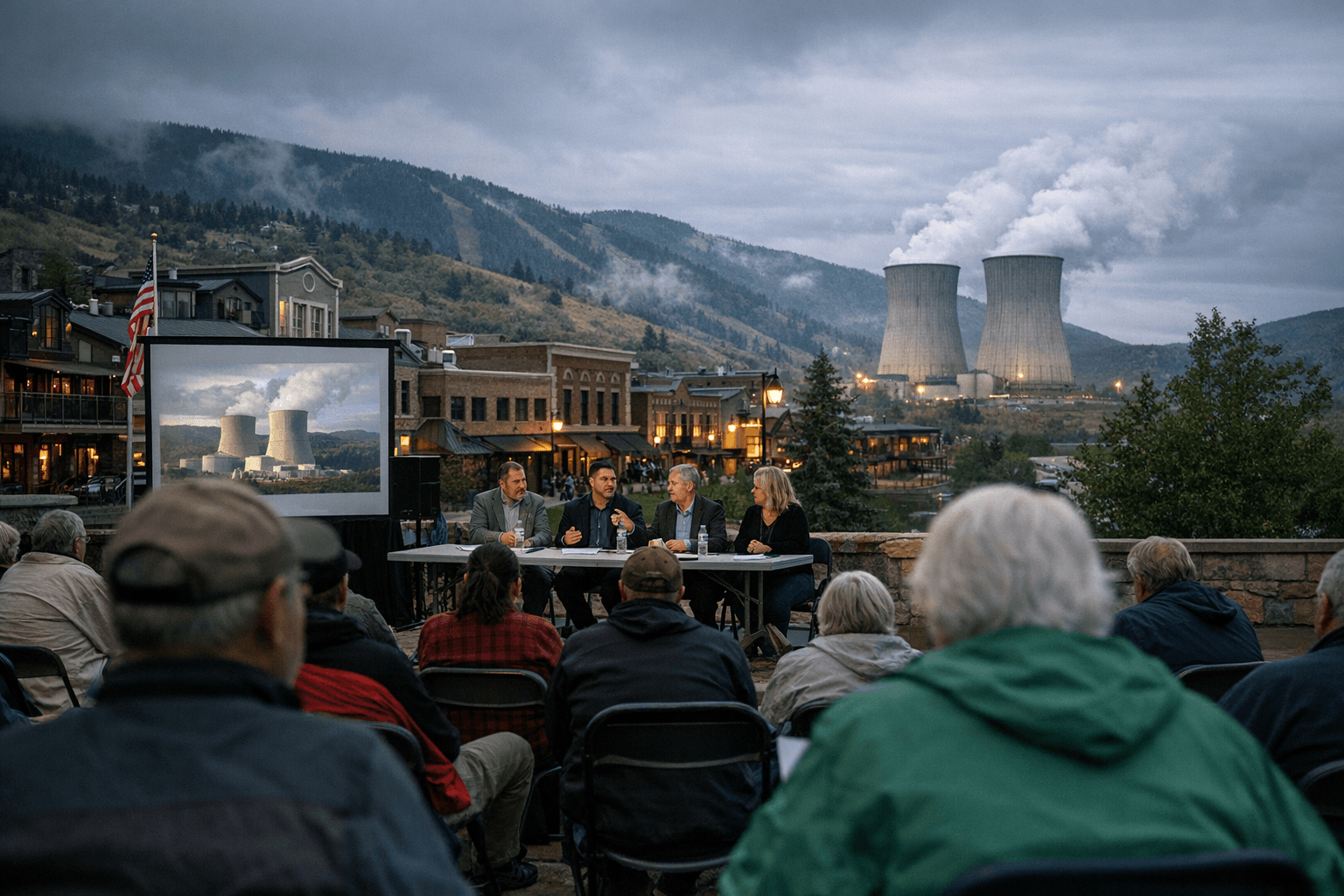
Utah’s advanced nuclear push will come before Park City residents at a forum that could shape how Summit County thinks about electricity prices, water use and the state’s growth plans for decades to come. Citizens’ Climate Lobby Wasatch Back will host the discussion April 28 from 6 to 8 p.m. at the Blair Education Center at Park City Hospital, with RSVP required through Eventbrite.
The timing matters because Utah’s nuclear ambitions are no longer theoretical. Gov. Spencer Cox’s administration submitted a 150-page proposal to the U.S. Department of Energy on April 1 seeking a federal “nuclear lifecycle innovation campus” that could include fuel fabrication, enrichment, recycling of spent nuclear fuel and nuclear waste storage. State leaders say the goal is to build the “safest, most complete nuclear energy ecosystem” in the country, with sites stretching from Box Elder County to San Juan County.
Those ambitions are tied directly to Utah’s energy demand. State officials have said Utah needs to triple its energy production by 2050, a target that raises the stakes for households watching utility bills and for communities already worried about growth pushing against water supplies and infrastructure. For Summit County, where housing costs, seasonal demand and limited local resources already shape daily life, the nuclear debate is less about abstract technology than about who pays, who benefits and who carries the risks.
A key part of that discussion has already moved forward. On Aug. 25, 2025, the Utah Office of Energy Development, TerraPower and Flagship Companies signed a memorandum of understanding to explore siting a Natrium advanced reactor in Utah. The design is a 345-megawatt sodium-cooled fast reactor with molten-salt-based energy storage that can boost output to 500 megawatts when needed, a feature supporters say could help balance the grid as demand rises.
The Legislature also laid groundwork in 2025 through HB 249, which positioned Utah as a future energy innovation hub and supported the Utah Energy Council, Energy Development Zones, the Nuclear Energy Consortium and the Utah Energy Research Board. Supporters view those moves as a signal that Utah wants to compete for the next generation of energy investment and jobs.
But the questions that matter most in a place like Park City remain unresolved. A Utah State University ILWA report says nuclear energy could become central to Utah’s energy security and economy, while warning about high upfront costs, water use, spent fuel and lingering public concerns tied to the state’s Cold War-era nuclear history. Citizens’ Climate Lobby says it has more than 350 chapters nationwide, and its Wasatch Back chapter is using a nonpartisan format to bring local residents and state energy experts into the same room before Utah’s nuclear future hardens into policy.
Sources:
Know something we missed? Have a correction or additional information?
Submit a Tip