Summit County uses AI tool to track visitor flows, tourism impact
Summit County is using Placer.ai to map where visitors go, as leaders weigh tax, transit and infrastructure choices tied to tourism.
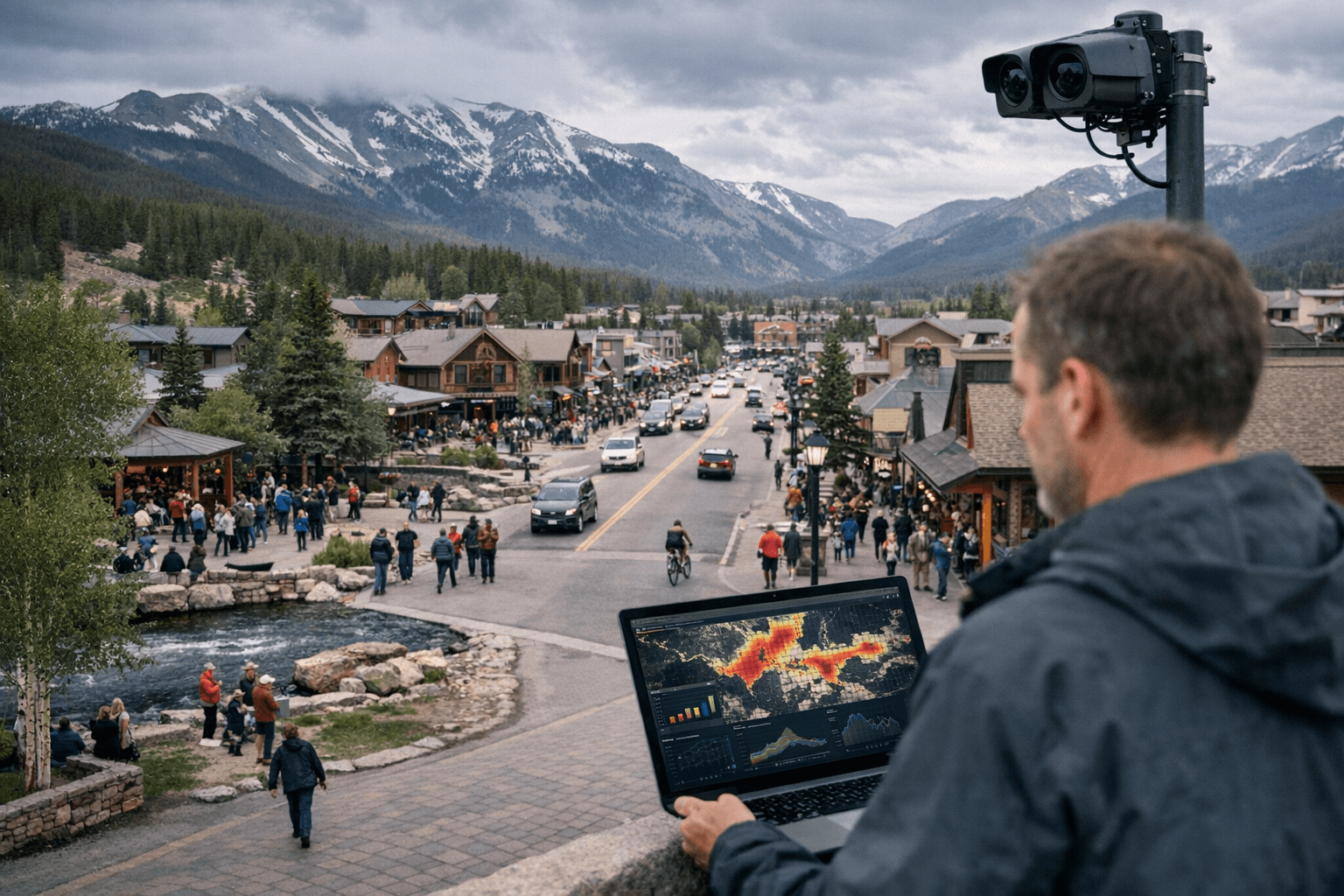
Summit County has long depended on tourism dollars, but officials have often had to plan with only rough estimates of who was here, where they went and how much they spent. Now the county is using a location analytics tool to put harder numbers behind the debate over roads, transit, staffing and long-term growth.
On April 24, county leaders were briefed on Placer.ai, a platform that uses aggregated, anonymized mobile-location data to estimate movement patterns. Staff said the system has already shown out-of-market visitors down about 5% from 2019 to 2025, even as employee counts rose roughly 46% over the same period. For county finance officials, that gap matters because tourism still drives a major share of local revenue.
Megan McKenna, a county council member, said the numbers underline why better measurement is needed as the county weighs future decisions. Staff told the council they had loaded custom geographic boundaries into the platform, including fire districts, school districts and areas of unincorporated Summit County, so they can study visitation at a neighborhood or site-specific level instead of relying on countywide averages. They are also comparing visitation data with transient room tax and restaurant tax collections to estimate economic value.
One example came from the Basin Recreation Fieldhouse, which drew about 374,000 visits in 2025 with an average stay of 76 minutes. Those kinds of details could help county leaders decide where pressure is building, where parking and transit investments are needed, and how much tourism is affecting everyday services in places like Kimball Junction, Snyderville Basin and Coalville.
The fiscal stakes are rising. Summit County said its Impacted Communities Tax, authorized by the Utah State Legislature through SB 333 in 2025, can be set at up to 1.1% in unincorporated areas and could generate about $17 million a year. The county says that revenue is restricted to public infrastructure and transportation and transit projects, including work tied to the 2034 Winter Olympics and efforts to ease congestion.
The new analytics also arrive as travel patterns appear to be shifting. A KPCW report said average visitor stays in Park City and Summit County fell from about 4.5 days in 2019 and 2020 to about four days in the past two years. County CFO Matt Leavitt said the data gave staff “a little bit of a raised eyebrow,” and estimated that about 65% of Summit County sales-tax revenue comes from tourists and nonresidents.
For a county trying to justify how visitor spending should pay for public costs, the question is no longer whether tourism matters. It is how precisely Summit County can prove where the money is going, what it is straining and what should get funded next.
This article was produced by Prism’s automated news system from verified source data, official records, and press releases, then run through automated quality and moderation checks before publishing. The system is built and supervised by the people who set the standards it runs under. Read our full AI policy.
Did this article answer your question?