Utah Avalanche Center Warns of Considerable Danger as March Heat Wave Intensifies
Four Utahns died in avalanches this season as a March heat wave pushed Salt Lake City to 79°F, prompting the Utah Avalanche Center to warn of "widespread, spontaneous, destructive wet avalanches."
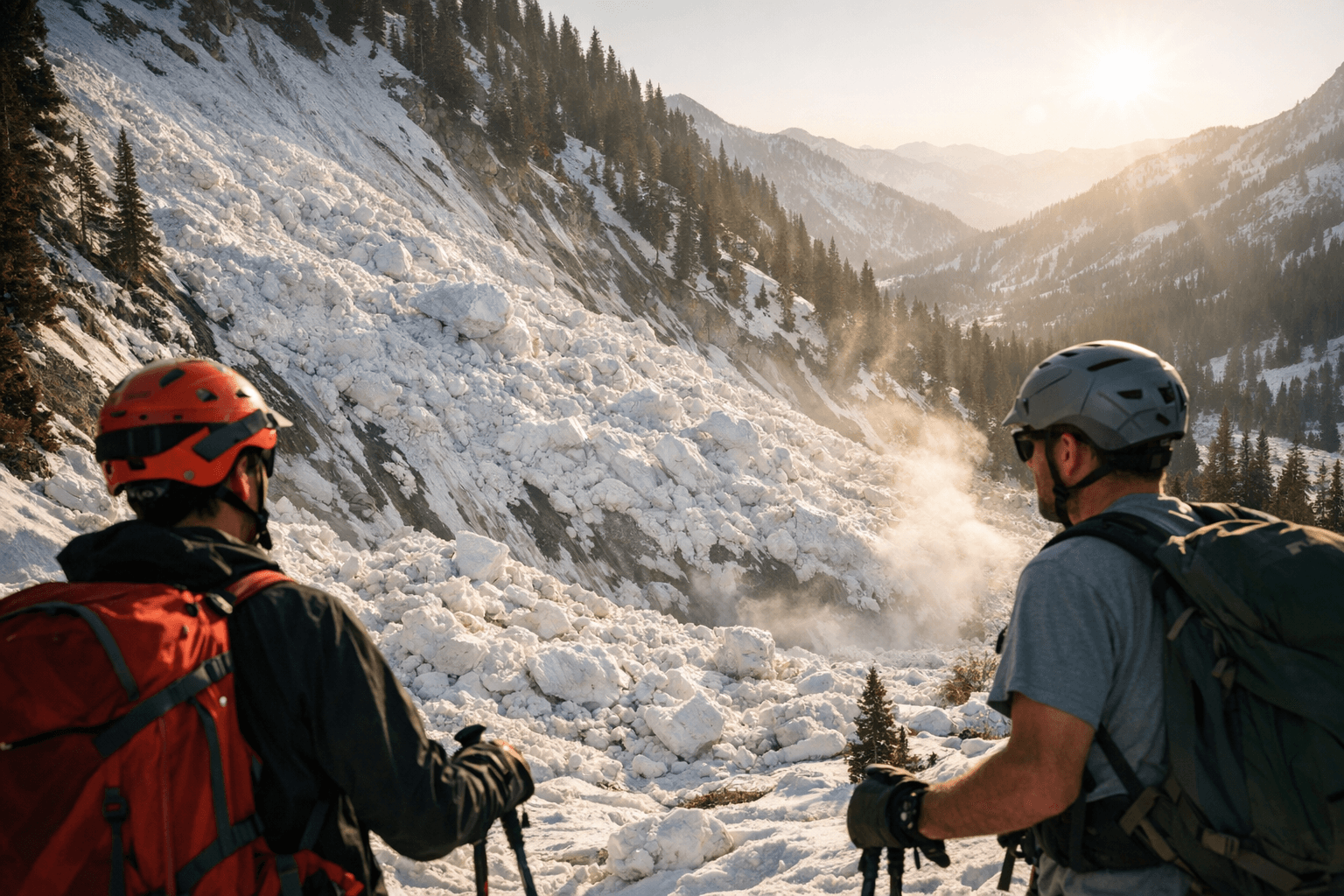
The Utah Avalanche Center issued a Special Avalanche Advisory this week as a historic March heat wave drove rapid snowmelt across the Wasatch and surrounding ranges, elevating backcountry avalanche danger to "considerable" — the third-highest level on the North American Public Avalanche Danger Scale — and warning that human-triggered avalanches were likely across all mountain regions in the state.
The advisory, which ran from Thursday, March 19, through at least Sunday, covered every mountain region in Utah. The center warned that significant meltwater would travel through the snowpack and pool on weak layers beneath the surface, destabilizing snow at all aspects and all elevations, including terrain that typically stays colder this time of year.
Utah Avalanche Center forecaster Bo Torrey explained the mechanics on KPCW's "Local News Hour." "What we're worried about is as the warm temperatures influence the snowpack and start to put a large amount of melt water down through the snowpack," Torrey said. "That water can pool on various interfaces throughout the snowpack and cause the release of large wet slab avalanches." He was blunt about the calculus for backcountry travelers: "Right now, the actual riding conditions are quite poor, so the risk is high and the reward is especially low."
The heat driving those conditions was extraordinary even by the standards of an already warm winter. Salt Lake City hit 79 degrees on Wednesday, one degree short of the all-time March record high, with forecasters expecting the city to break that record Thursday. Daily maximum temperature records fell on Wednesday in Provo, Cedar City, Wellington and Kodachrome Basin as well, and weather stations from Laketown near Bear Lake to Scipio reported unprecedented heat for the month.
"A lot of these temperatures we're hitting are more attuned to early June than mid-March," said Julie Cunningham, a meteorologist with the National Weather Service. "That just goes to show how anomalous this heat wave is." Even with a modest cool-down expected over the weekend, Cunningham noted temperatures would remain 10 to 15 degrees above normal. The forecast offered no relief from precipitation: no rain or new snow was expected anywhere in Utah in the coming week.
That dryness compounded a snowpack that was already well below average for late March, according to data from the Natural Resources Conservation Service. The combination of thin, heat-saturated snow and persistent warmth led the center to warn of "widespread, spontaneous, destructive wet avalanches" capable of running on any slope orientation at any elevation.
The center advised anyone in the mountains to choose conservative terrain, avoid travel on and beneath steep slopes, and plan an early exit well before peak daytime heating. It specifically urged people not to ski, ride or snowmobile on steep slopes or the runout zones below them.
The warning came against a grim seasonal backdrop. Four people have died in Utah avalanches this year, all within a single week. The Utah Avalanche Center said it will publish an end-of-season report on the fatal slides and is currently accepting questions online to address in that final update.
For those still seeking turns, Torrey pointed to the resort. Wasatch Back ski areas, including those in the Uinta-Wasatch-Cache National Forest near Park City, were expected to remain open through March, while several other Utah resorts had already closed for the season. On-piste skiing, Torrey said, was the best available option while the backcountry remained dangerous.
This article was produced by Prism’s automated news system from verified source data, official records, and press releases, then run through automated quality and moderation checks before publishing. The system is built and supervised by the people who set the standards it runs under. Read our full AI policy.
Did this article answer your question?