Goodwell newspaper offers rare glimpse of Texas County life in 1928
Only two surviving issues of The Goodwell Gazette, dated Sept. 13 and 20, 1928, capture a Texas County town shaped by wheat, schools and countywide connections.
The surviving run of The Goodwell Gazette spans just two issues, dated Sept. 13 and Sept. 20, 1928, and that narrow window makes it unusually revealing. In 12 pages, the paper can still show how Goodwell fit into Texas County’s wheat economy, school system and civic life at a moment just before the Dust Bowl changed the Panhandle.
Why a two-issue paper matters
The Library of Congress holdings record for The Goodwell Gazette lists the surviving dates as <1928:9:13-20>, and The Gateway to Oklahoma History says it currently provides access to 2 issues, totaling 12 pages. That is not much paper, but it is enough to preserve a snapshot of how a small town presented itself and what it considered worth printing in late September 1928.
That brevity is what makes the title useful to historians and family researchers. A short-run local newspaper often preserves the details that bigger histories miss: merchant ads, school notices, social events, public meetings, agricultural news and the names of ordinary residents who only surface in print once. In a place like Goodwell, those fragments help reconstruct how the town worked day to day, not just what happened there in broad outline.
The Gazette also sits inside a longer local newspaper record. The Library of Congress separately lists a Goodwell News title covering 1908 to 1919, which shows that Goodwell had more than one print voice across the first decades of statehood. Taken together, the two titles suggest continuity in local reporting even when individual runs were short.
Goodwell’s place in Texas County
Goodwell is on U.S. Highway 54, ten miles southwest of Guymon, the county seat of Texas County. That location matters because Goodwell was never an isolated dot on the map. It sat inside a county whose residents moved goods, news and labor across a network of nearby towns that included Guymon, Hooker, Texhoma and Optima.
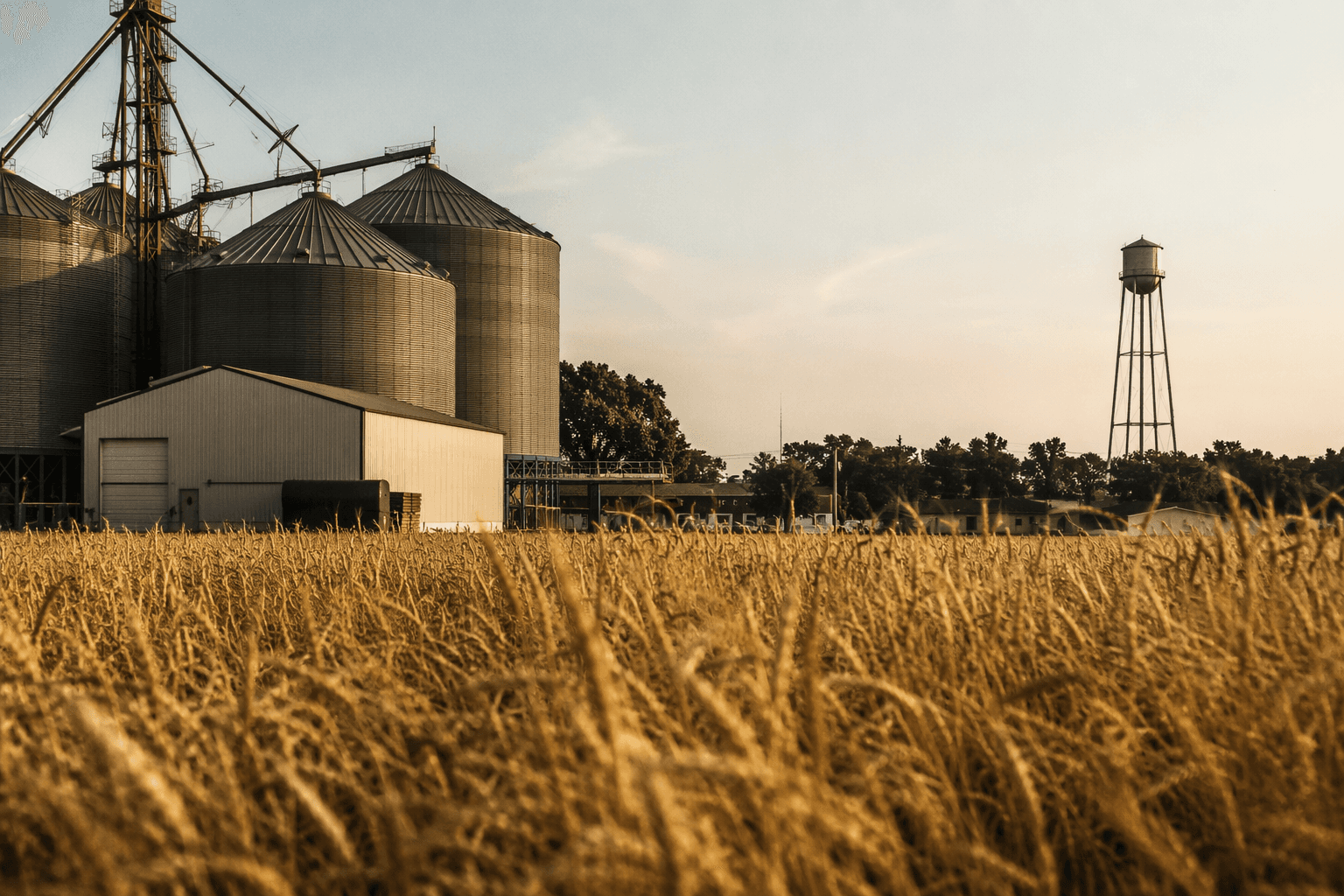
Texas County itself was created at 1907 statehood from Beaver County, then known as the Public Land Strip. By the 1920s, that landscape had become one of Oklahoma’s most productive agricultural regions. A scholarly source on the Oklahoma Panhandle notes that for several years in the 1920s Texas County was the banner wheat county in the nation, and the Panhandle was among the world’s great granaries.
That agricultural scale helps explain why a Goodwell newspaper from 1928 matters beyond nostalgia. A town paper in a wheat county could track land promotion, crop prospects, transportation links, merchant activity and the practical business of keeping a farming community running. In a region where local fortunes rose and fell with the harvest, those printed details were part of the county’s economic record.
How the paper reflects a town built around school and land
Goodwell’s identity was not defined by farming alone. Oklahoma Panhandle State University’s history page says the school was created by the Oklahoma State Legislature in 1909 as Pan-Handle Agricultural Institute, became Panhandle Agricultural and Mechanical College in 1921 and added junior and senior level courses in the summer of 1926. By 1928, that meant Goodwell was tied to a college presence that gave the town a more layered civic life than a simple farm settlement.
A local paper in that environment could carry school news, college events, student activity and announcements that linked education to the surrounding agricultural economy. It also likely mirrored the town’s broader social rhythm through church notices, community meetings and advertisements from merchants serving farmers, students and families. Those categories may look ordinary on the page, but together they show how a town organized itself around instruction, commerce and public life.
That combination is what gives the Gazette lasting value. Goodwell was part of a county where roads, farms and institutions were tightly connected, and the newspaper would have been one of the main places where those connections became visible in print. For researchers, a school notice or local ad can be as telling as a headline because it places names, businesses and institutions in the same daily frame.
What the 1928 issues can still teach
The late 1920s were a pivot point for western Oklahoma. The surviving Goodwell issues come just before the Dust Bowl years transformed labor, farming and household routines across the Panhandle. That timing makes the paper a useful baseline for seeing what ordinary life looked like before the worst environmental disruption hit the region.
The paper’s small size does not lessen its importance. Two issues and 12 pages can still map a town’s priorities: who was selling goods, what schools were doing, how residents stayed informed and how a community tied to wheat production described itself. In a county where local identity depended on agriculture, education and access to markets, those details were part of the economic fabric.
Goodwell’s newspaper record, from Goodwell News in the 1908 to 1919 years to the brief 1928 run of The Goodwell Gazette, shows a town that kept telling its own story through local print. The surviving pages preserve a moment when Texas County was riding high on wheat, Goodwell was anchored by a growing college, and the town’s daily life still depended on the connection between farms, merchants, schools and the county seat in Guymon.
This article was produced by Prism’s automated news system from verified source data, official records, and press releases, then run through automated quality and moderation checks before publishing. The system is built and supervised by the people who set the standards it runs under. Read our full AI policy.
Did this article answer your question?