EOU board approves 2.7% tuition increase for 2026-27
EOU’s 2.7% tuition hike adds about $255 a year for a resident undergraduate, as trustees tied the vote to fiscal planning and student access.
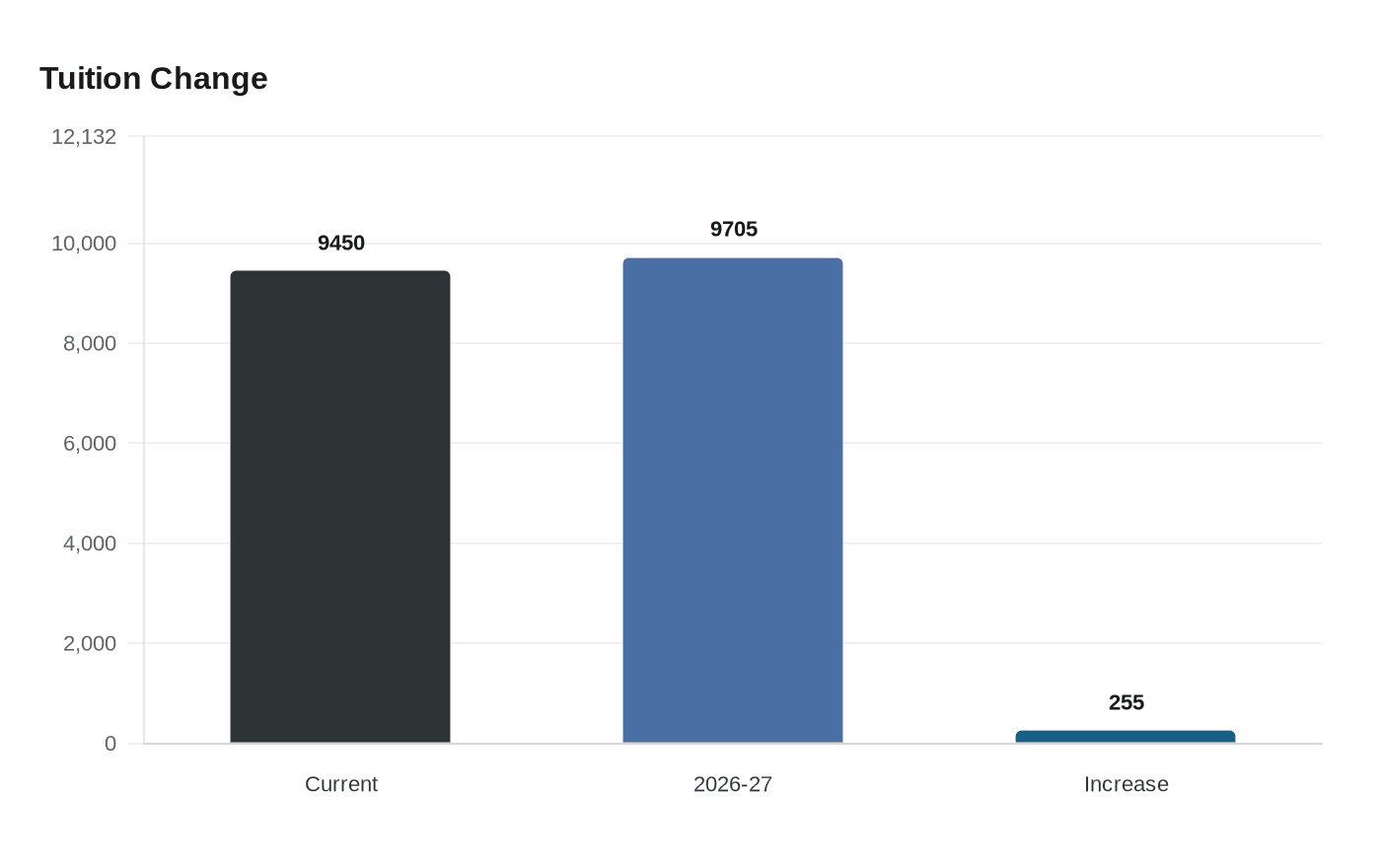
Eastern Oregon University families will pay more to keep students in La Grande next year: the Board of Trustees approved a 2.7% tuition increase for 2026-27, adding about $255 to the annual tuition bill for a resident undergraduate whose current tuition is $9,450.
The vote came at the end of the board’s spring meeting May 21, after two days of public sessions focused on fiscal planning, student access, board governance, enrollment and strategic priorities. The 16-member board, made up of volunteer trustees appointed by the governor and confirmed by the Oregon Senate, is responsible for setting tuition and fees, determining the university budget and overseeing EOU’s financial health.

EOU says standard tuition and fee schedules are set each year by the Eastern Oregon Board of Trustees and the Oregon Higher Education Coordinating Commission, and that tuition is established to support the cost of instruction and instruction-supported expenditures. For a student living on campus without dependents, the university’s 2025-26 estimated cost of attendance was $28,896, including $9,450 in tuition, $2,184 in fees, $12,534 for housing and food, $1,215 for books, $885 for transportation, $1,950 for personal expenses and $678 in loan fees. A 2.7% tuition increase would push that tuition line to about $9,705, and lift the total cost to roughly $29,151 if all other expenses stayed the same.
The price change lands alongside new 2026-27 tuition tables already posted for undergraduate and graduate students, both online and on-site. EOU’s 2026-27 online and on-site table lists undergraduate resident and nonresident coursework at $337.50 per credit, with a one-time $250 matriculation fee for new and transfer students. That means a 12-credit schedule would total $4,050 before the matriculation fee, a reminder that even a modest percentage increase can quickly shape aid calculations and family budgets.
The university has also continued to present itself as a low-cost option in Oregon higher education, saying its undergraduate tuition is the lowest among Oregon’s public universities and that its total cost is 18% lower than Oregon State University. EOU says students from Oregon, Idaho and Washington may qualify for resident tuition under certain conditions, and some COFA and refugee students may also qualify for resident-rate tuition and fees.
For La Grande and Union County, the decision reaches beyond campus ledgers. EOU is a local employer and a major driver of rentals, dining, retail and other day-to-day spending, so tuition changes can affect enrollment decisions and the flow of student dollars through the community.
This article was produced by Prism’s automated news system from verified source data, official records, and press releases, then run through automated quality and moderation checks before publishing. The system is built and supervised by the people who set the standards it runs under. Read our full AI policy.
Did this article answer your question?