Hot Lake Springs blends Oregon Trail history, soaking and lodging near La Grande
Hot Lake Springs is now a working destination: soak, dine, sleep and watch a film beside one of the Northwest’s biggest hot springs, just south of La Grande.

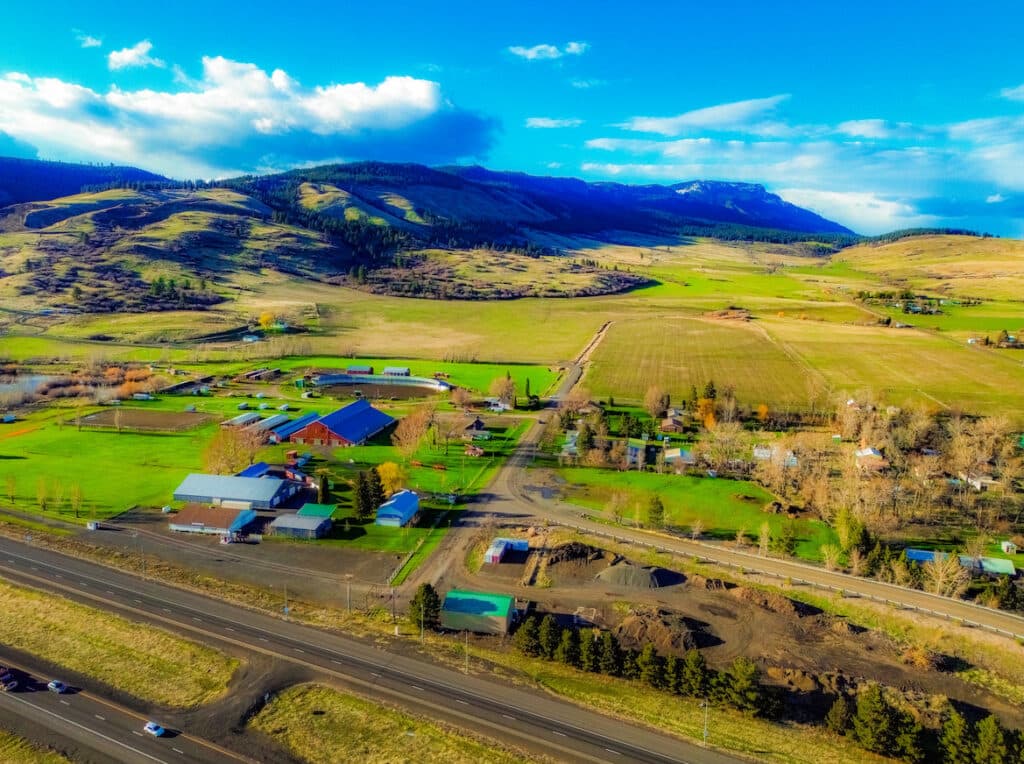
Hot Lake Springs has become one of Union County’s most unusual working attractions: a place where you can soak in mineral water, sleep in a restored 1906 lodge, eat at the Thermal Pub & Eatery and catch a movie in a 60-seat theater, all on the same property. Just eight miles south of La Grande, the resort sits beside what it describes as one of the Northwest’s largest and hottest mineral springs, giving the site both tourist appeal and a direct role in the local hospitality economy.
What is there now
The present-day draw is straightforward and surprisingly varied. Hot Lake Springs Resort offers natural mineral tubs, lodging, food and drink service, and a small theater that turns the property into more than a place to stay overnight. The theater charges $5 admission and schedules regular screenings and events, which helps bring in not just guests but day visitors from La Grande, Union, and the wider Grande Ronde Valley.
That mix matters locally because it spreads the value beyond one business line. A guest may come for the springs, then buy dinner, stay the night, and spend time in La Grande before heading back toward Interstate 84. In a county where tourism competes with larger destination markets, a property that combines soaking, lodging, dining and entertainment gives nearby businesses a reason to capture more spending in one trip.
Why the springs still stand out
The appeal starts with the water itself. Hot Lake Springs Resort places the resort in Union County, and the springs are still the defining feature of the site. The property’s location near La Grande makes it easy to reach, but the geothermal draw is what gives it identity. Elsewhere in eastern Oregon, hot springs are often visited as a single-purpose stop; here, the springs are part of a broader destination with a built-in audience.
The setting also helps. Hot Lake is one of the best-known hot springs areas near La Grande, alongside Ritter Hot Springs and Lehman Hot Springs in the Blue Mountains region. That puts it inside a broader eastern Oregon travel corridor where road-trippers, rail history buffs and outdoor visitors already look for stops that feel distinctly local rather than generic.

A place shaped by Indigenous use and Oregon Trail traffic
Long before it became a resort, the springs were used by Native Americans for their medicinal powers. Travel Oregon notes that the Nez Perce called the lake Ea-Kesh-Pa, a reminder that the site’s history begins well before the hotel era or Oregon Trail tourism. That Indigenous layer still matters because it anchors Hot Lake in the longer history of the Grande Ronde Valley, not just in the more familiar story of westward migration.
The site later became a stop for Oregon Trail travelers who needed rest, water and recovery. By the 1880s, it had grown into a busy multi-use stop with a post office, blacksmith, dance hall, barber shop, bath house and other businesses. Union Pacific Railroad construction reached the area by 1884, tying the springs into a wider transportation network that helped turn a remote water source into a regional destination.
From wooden stop to brick landmark
The first structure on the site was built in 1864, and by the early 1900s the original wooden building had been replaced by the landmark most people associate with Hot Lake today. The 1906 brick hotel was attributed to Baker City architect John V. Bennes, one of Oregon’s prominent early architects. By 1908, the hotel had just over 100 guest rooms, which signals how ambitious the site had become at the height of its development.
For a time, the property was promoted as the “Mayo Clinic of the West,” and in 1917 it became Hot Lake Sanitorium under Dr. Phy. That medical-and-resort identity explains why the building still looms so large in Union County memory. It was never simply a hotel. It was built as a destination with health, travel and leisure all folded together.
Decline, rescue and restoration
The building’s modern story is one of deterioration and rescue. David Manuel bought the property in 2003, when it had 368 broken or missing windows and only a sparsely remaining roof. Tours opened in 2005, allowing visitors to see the scale of the structure even as damage continued, including the west-wing collapse in 2008.
New ownership arrived in 2020, when the owners of Grande Hot Springs RV Resort acquired the property and began another restoration phase. Work has focused on key historic elements such as the grand entry porch, veranda, balustrade and spring house. That matters because the site’s value is tied not only to the springs, but to the architecture that frames them. The building’s survival keeps the place legible as a historic resort, not just a developed pool of water.
Union County had already signaled interest in a broader redevelopment future when it approved a Hot Lake plan in 1985 that envisioned an RV resort, golf course and geothermal water park. The Hot Lake RV Resort was built in 1988, but the hotel itself remained outside that project. Today’s restoration effort builds on that long chain of attempts to keep the site active rather than abandoned.
Why it matters to Union County now
La Grande, the Union County seat, had a 2020 population of 13,026, and the county’s tourism economy benefits from attractions that give travelers a reason to linger. Hot Lake Springs does that by tying together multiple interests at one address: the Oregon Trail, Indigenous history, historic preservation, geothermal recreation and a functioning public venue. Union, another key county town, grew as a stopping place for travelers and freighters and later as a shipping point for mining districts, which shows how deeply this part of eastern Oregon has always depended on movement and trade.
Hot Lake Springs fits that pattern in modern form. It is a place where visitors can still feel the region’s older transportation story, but they can also spend money on a meal, a room, a soak and a movie. In a county where destination stops are spread across the landscape, that combination makes Hot Lake both a landmark and a live asset.
This article was produced by Prism’s automated news system from verified source data, official records, and press releases, then run through automated quality and moderation checks before publishing. The system is built and supervised by the people who set the standards it runs under. Read our full AI policy.
Did this article answer your question?