Union County Farm Loop showcases Grande Ronde Valley agriculture
Union County’s 21-stop Farm Trail turns the Grande Ronde Valley into a buy-local map of dairies, ranches, orchards, and farm stands. Call ahead, since many stops go seasonal between November and March.
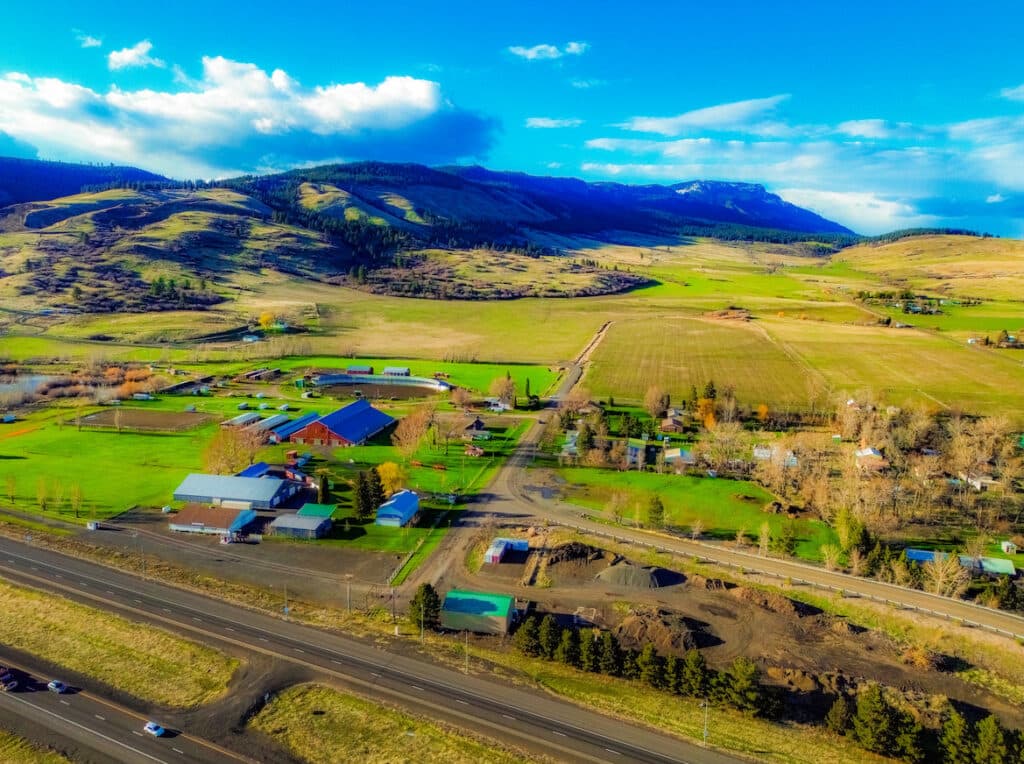
Union County’s Farm Loop is not a scenic shortcut so much as a working map of the Grande Ronde Valley. The 55-mile route between Cove and Union is now promoted as the Grande Ronde Farm Trail, a self-guided drive with 21 stops that lets visitors buy directly from farms, ranches, and small-town food businesses across the county.
What the trail covers
The trail stays entirely within Union County, with La Grande as the largest community along the route, and it runs beneath the frame of the Blue Mountains on one side and the Wallowa Mountains on the other. Travel Oregon says the drive takes about an hour without stops, which makes the loop easy to fit into a half-day outing or a full day with time built in for farm stands and roadside purchases.
The route’s value is practical as much as it is scenic. Visitor guidance from local tourism materials says many farms and markets reduce hours or close seasonally between November and March, so calling ahead is the safest way to avoid a locked gate or an empty stand. If a place is open, the best buys are often the kinds of products that can only be sold where they are grown, raised, or made.
Where to stop
The loop works because the stops are different enough to show how broad Union County agriculture really is. Visit Eastern Oregon highlights the Grande Ronde Goat Dairy as a real production dairy, Beyond Organic Beef as a ranch built around ecologically minded beef production, and the Wred Wriggler Worm Wranch, where red wiggler worms are used for composting, soil improvement, and nutrient-rich worm tea.
That mix matters because it shows the valley’s farm economy is not limited to one crop or one type of business. The trail also includes the Platz Family Farm, which offers rotating seasonal produce, u-pick options, and locally made gifts and art, giving visitors a chance to leave with both food and nonfood goods tied to the same working landscape.
Happy Walrus Farm, included in the Union County Chamber of Commerce brochure, pushes that diversification even further. It is described as offering produce from specialty crops, eggs, fruit groves, Dexter cattle, and spring-fed trout ponds, which makes it one of the clearest examples of how a single farm can carry several revenue streams at once.
A fall stop with a long season behind it
The best-known seasonal draw is Pick N Patch near Cove, at 62816 Lower Cove Road. Travel Oregon says the family had been growing pumpkins in the Grande Ronde Valley for more than 16 years before opening the patch to the public in 2014, and that it is typically open throughout October, starting October 8.
That timing gives the Farm Trail a different feel in autumn. Pick N Patch adds live music, crafts, and baked goods to the pumpkin patch, turning one stop into a simple day trip for families and anyone looking for a fall harvest outing close to home. It is the kind of place that shows how the loop is built around spending money locally, not just passing through the valley.
Why the loop fits the county’s history
The trail’s current appeal makes more sense when it is set against the Grande Ronde Valley’s agricultural past. Oregon history sources say that by the mid-1880s most of the valley floor was under cultivation, with wheat, barley, rye, potatoes, and fruit among the crops grown there. The railroad is credited with helping transform the valley into the more developed agricultural landscape seen today.
That history gives the loop real context. The Farm Trail is not a new idea dropped onto empty land, but a modern tourism route built on a century and a half of farming, ranching, and settlement. The Union County Chamber of Commerce brochure underscores that continuity by saying the trail highlights both traditional and modern farming methods, a useful shorthand for a county where older agricultural patterns still sit beside newer direct-to-consumer businesses.
What the trail says about Union County now
The route also reflects the county’s economy as it exists today. The U.S. Census of Agriculture remains the latest county-level benchmark from USDA National Agricultural Statistics Service, which is the standard source for tracking how many farms operate, what they produce, and how agriculture anchors the local economy over time. In that context, the Farm Trail is more than a tourism project: it is a way to keep farm income visible in the same places where people already live, work, and travel.
That visibility is part of the trail’s strength. A visitor can see goat dairies, orchards, ranches, micro-farms, and self-serve stands on the same drive, and the county can present its agriculture as an active business network rather than a memory of the past. For Union County, the Farm Trail works because it links La Grande, Cove, Union, and the smaller rural stops into one functioning market for local food, farm products, and direct sales.
This article was produced by Prism’s automated news system from verified source data, official records, and press releases, then run through automated quality and moderation checks before publishing. The system is built and supervised by the people who set the standards it runs under. Read our full AI policy.
Did this article answer your question?