Hot Lake Springs links Indigenous history, Oregon Trail travel and tourism
Hot Lake Springs ties Nez Perce healing, Oregon Trail travel and a restored resort into one Union County landmark with real tourism value.
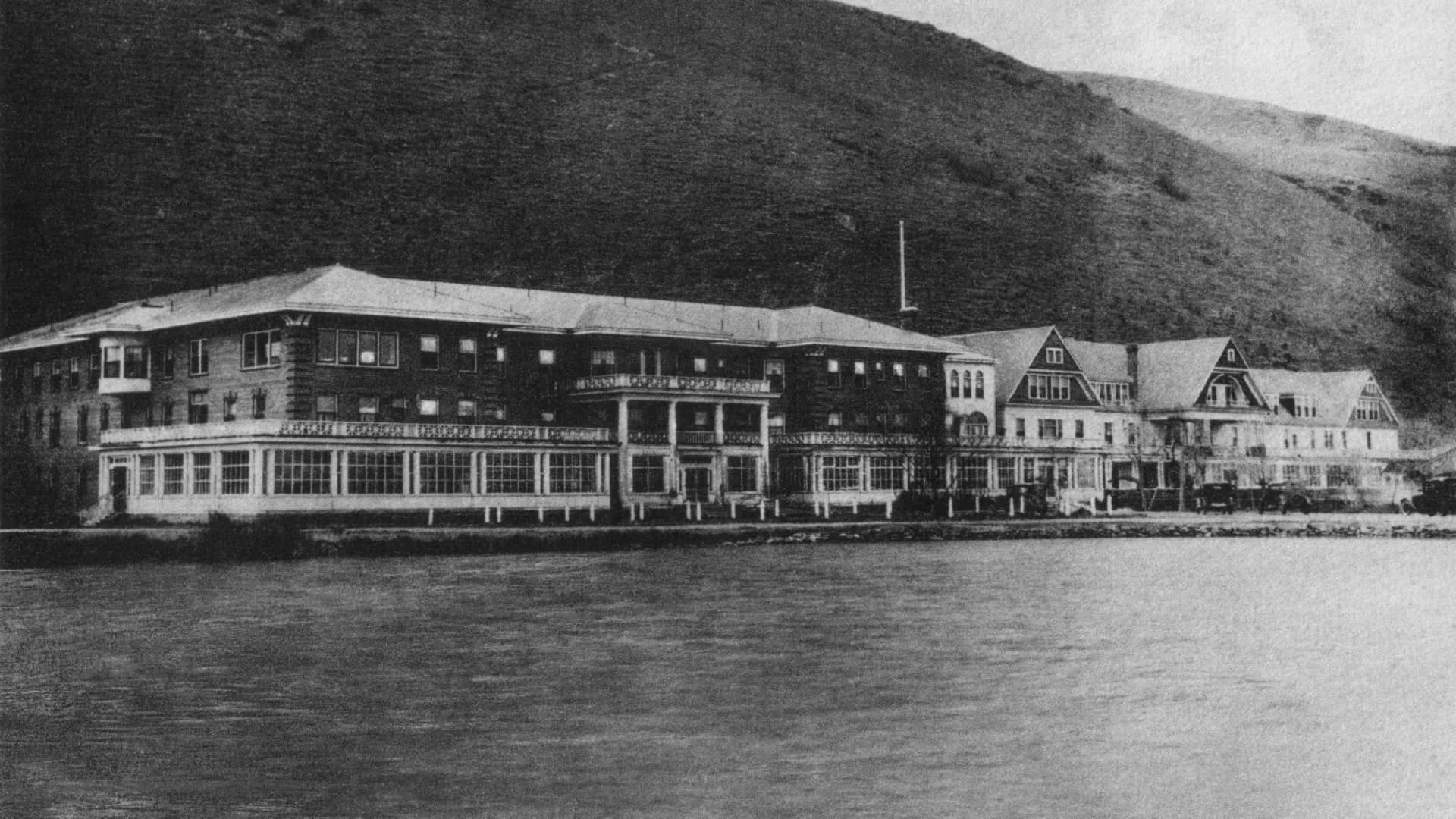
Hot Lake sits just eight miles south of La Grande, but its story reaches far beyond a roadside stop. The hot springs at the foot of the bluff began as a Native healing place, later served Oregon Trail travelers, then grew into one of the West’s most famous mineral-water resorts. Today, the property has been restored into a working hospitality site with soaking pools, lodging, food, and entertainment, making it both a heritage landmark and a current tourism engine for Union County.
A site with layers that are documented, not imagined
Before it became a resort, Hot Lake was used by Native peoples for the medicinal value of its water. Travel Oregon says the Nez Perce called the lake Ea-Kesh-Pa, and it identifies the springs as a place used for healing before settlement and colonization. That matters because the site’s earliest story is not a later overlay, but a foundational part of the place itself.
The Oregon Trail chapter is just as concrete. The overland route brought an estimated 300,000 to 400,000 travelers between 1840 and 1860, and Hot Lake became a stop for weary migrants moving through the interior West. In a county shaped by rail, ranching, and mountain geography, that link places Hot Lake inside one of the major migration corridors in American history.
From frontier stop to grand brick sanatorium
The first major built structure went up in 1864, when Fitzgerald Newhard built a wooden facility at the springs. It was more than a hotel by modern standards. The site functioned as a small service center with a post office, blacksmith shop, dance hall, barber shop, bath house, and other businesses, giving travelers a place to rest, repair, and resupply.
Rail access changed the scale of the property. When the Union Pacific Railroad arrived in 1884, access improved, and the site moved from frontier convenience to destination resort. By the early 1900s, a new brick hotel had replaced the earlier wooden structures. Architect John V. Bennes designed the 1906 hotel, and Travel Oregon notes that the building opened with just over 100 rooms.
The National Register nomination describes the Hot Lake Sanatorium as a three-story, U-shaped brick-and-concrete structure measuring about 216 feet across the front and 148 feet from front to rear, with roughly 65,000 square feet of floor space. That scale helps explain why the building still dominates the landscape today. In 1979, the property was listed in the National Register of Historic Places, confirming its significance long before the latest round of restoration work.
The resort’s peak and the hard turns that followed
When Dr. W. T. Phy took over in 1917, the resort became Hot Lake Sanatorium and earned the nickname the “Mayo Clinic of the West.” Historical accounts describe a hospital on the third floor and visitors and patients arriving from around the world, drawn by mineral-water treatments and the promise of care in a remote setting. The property’s heyday extended into the early 1930s, when Hot Lake was known as both a health destination and a social center.
The decline was abrupt. A 1934 fire destroyed most of the wooden structures, but the brick building survived. After that came a long cycle of wartime use, a nursing-home phase, abandonment in 1991, and years when the site’s future was uncertain. Union County approved development of the Hot Lake Recreational Vehicle Resort in 1985, the RV resort was built in 1988, and the property was split into several parcels in 1994. Those changes marked the transition from a single resort complex to a more fragmented landscape around the original hotel.
What visitors can access now
The modern chapter began after a 2003 purchase and moved forward again when the owners of Grande Hot Springs RV Resort bought the Hot Lake property in 2020. The site reopened in 2021 as The Lodge at Hot Lake Springs. That reopening gave Union County a restored destination that combines lodging, soaking, dining, and entertainment in one place rather than a single-use historic exhibit.
Today, visitors can use geothermal soaking pools, stay in the restored 1906 lodge, eat at the Thermal Pub & Eatery, and watch a film in the 60-seat movie theater. The soaking pools are fed by 170-degree hot springs water mixed with 77-degree geothermal mineral well water, a practical detail that shows how the property still depends on the same geothermal system that made it famous. Contemporary coverage says the resort employs 37 staff, which gives the site an economic footprint well beyond its historic value.
Restoration has also been targeted rather than cosmetic. The owners said the work would include the Grand Entry Porch, Veranda, Balustrade, and Historic Spring House. Those are the kinds of features that preserve the building’s identity while keeping the property usable for guests, event traffic, and day visitors.
Why Hot Lake matters to Union County now
Hot Lake is useful to Union County because it does several jobs at once. It preserves Indigenous history, the Oregon Trail era, and a major historic hotel in one place. It also gives travelers a reason to stop between La Grande and the Blue Mountains, where heritage tourism can translate into meals, overnight stays, and spending that reaches local payrolls and nearby businesses.
The site’s value is not just that it survived. It is that it changed in ways that still make sense for the county’s economy. A National Register landmark, a restored lodge, a working spa, a pub, and a small theater create a destination that can carry visitors for an hour, an afternoon, or a full night. In a region where history often sits behind glass, Hot Lake remains active, visible, and tied to the way Union County tells its own story.
This article was produced by Prism’s automated news system from verified source data, official records, and press releases, then run through automated quality and moderation checks before publishing. The system is built and supervised by the people who set the standards it runs under. Read our full AI policy.
Did this article answer your question?