La Grande bike park plan focuses on access, inclusion and community
La Grande’s bike park plan is really an access and economic test: can Union County build a place for kids, adaptive riders and BMX, and keep recreation money local?
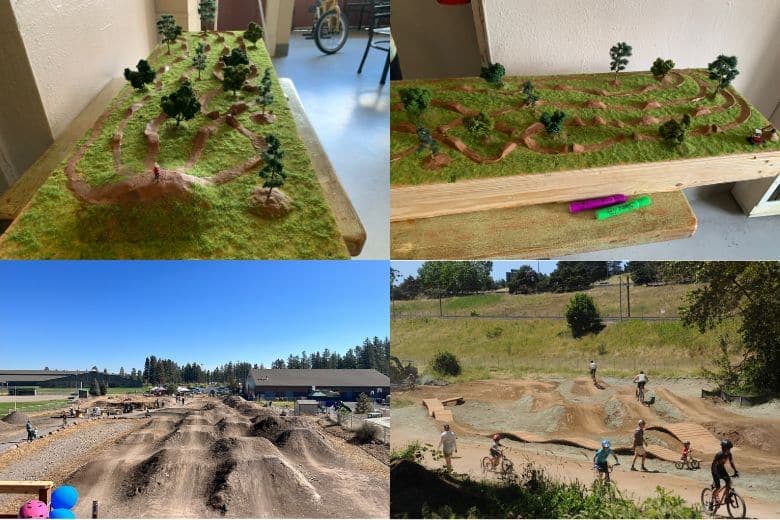
La Grande’s bike park proposal is less about adding one more amenity than about deciding whether Union County can build a place that serves more riders, more ages and more abilities without sending them elsewhere. The June 2025 feasibility report, prepared for Grande Ronde Gravity through Travel Oregon’s Recreation Ready program, lays out a destination-quality bike park in La Grande with a focus on accessibility, inclusion and community.
What the plan is actually asking La Grande to build
The report is a Phase I feasibility study, which matters because this is the stage where a project is tested before anyone pours concrete or moves dirt. Its purpose is to gauge whether the idea is realistic, gather stakeholder input and assess how the concept could work on the ground.
The park is intended to welcome mountain biking, adaptive mountain biking and BMX. That mix tells you the project is aiming beyond a single user group or a single style of riding, and that breadth is what makes it more than a specialty feature for a few experienced riders. It is being framed as a destination-quality space in La Grande itself, not just a satellite trail feature tucked far outside town.
Who would use it
The clearest users are the ones local recreation plans often leave out: younger riders who need a structured place to learn, families looking for a place to ride together, BMX riders who want a dedicated venue and adaptive riders who need a park designed with access in mind from the start. Grande Ronde Gravity, the local group behind the effort, describes itself as a collection of local riders working to expand BMX and downhill mountain biking in Eastern Oregon and lower the barriers to riding.
That local base matters because a bike park is not only for visitors passing through. It is also for the La Grande families who would use it after school, on weekends and during summer, and for riders who want a place in town to practice skills rather than make the long drive to another community. Grande Ronde Gravity’s BMX Library, which operates Wednesdays from 4 p.m. to 6 p.m. and Saturdays from 1 p.m. to 4 p.m., weather depending, shows there is already an organized community around bike access and rider development.
Why access and inclusion are more than buzzwords
The report’s emphasis on accessibility, inclusion and community gives the project a different civic weight than a standard trail pitch. Adaptive mountain biking is specifically named in the plan, which signals that the park is meant to work for riders who face physical barriers on traditional terrain. That is important in a county where recreation options should not depend on who can manage steep grades, remote trailheads or advanced technical features.
A park built around these principles could function as a low-barrier entry point for new riders, especially children who may never move beyond a paved path if there is nowhere safe and welcoming to build confidence. It also gives families a shared space where ability differences do not automatically split participation. In public health terms, that kind of design can support more physical activity across age and ability groups, not just among already-strong riders.
How it fits into Union County’s existing biking landscape
Union County already markets itself as a place to ride. The Union County Chamber of Commerce highlights the 134-mile Grande Ronde Scenic Bikeway and mountain biking trails at Mount Emily Recreation Area, and Oregon Parks Forever’s feature on Mount Emily Recreation Area places La Grande in the Grande Ronde Valley between the Blue and Wallowa mountain ranges. The new bike park would not replace those assets; it would add a different kind of access, one that is more structured, more central and more likely to be used for learning, progression and events.
That distinction matters for local economics. Scenic rides and backcountry trails bring people into the region, but a bike park can keep more of the spending and activity closer to town. A family that comes for a skills session, a BMX gathering or a youth ride clinic is also likely to buy meals, fill a gas tank, visit shops or stay overnight, which is the kind of recirculating recreation spending communities often want to hold onto instead of watching it drift to larger nearby destinations.
The outreach step shows this is still being shaped
This is not a project that appeared fully formed. Elkhorn Media Group reported on April 23, 2025 that plans for the bike park were in the early stages and that project organizers needed public feedback. Travel Oregon also posted a La Grande: Bike Park Community Gathering event page, underscoring that community input was part of the process, not an afterthought.
That public-facing outreach is the point where plans become either durable or decorative. If riders, parents, coaches, park staff and land managers help shape the park early, the result is more likely to fit local needs and less likely to stall when the first practical questions come up about location, maintenance and long-term use.
Why the project belongs in a longer local story
La Grande has been talking about biking for a long time. The La Grande Observer published a story in March 2006 headlined New book outlines La Grande-area mountain bike trails, which shows that organized interest in local riding is not new. More recently, the paper reported in October 2022 on a 5-year parks and recreation master plan that could be adopted by the city and county, showing that the region’s recreation planning has already been moving through formal government channels.
The bike park also fits the broader Travel Oregon Recreation Ready model. Travel Oregon has supported other destination-style planning efforts, including the Deathball Mountain Bike Trail System feasibility report near Blue River, which puts La Grande’s proposal in a state-level framework for building recreation assets that can draw visitors while serving residents. That is useful context for Union County, because it suggests the bike park is being treated as infrastructure, not just a wish list item.
The real test now is whether the June 2025 feasibility report becomes a next-step project with a site, a budget and an implementation path, or whether it joins the shelf of plans that inspire conversation but never leave paper. In La Grande, the question is not whether bikes belong in the landscape. It is whether Union County is ready to build a place where more of its riders can actually use them.
This article was produced by Prism’s automated news system from verified source data, official records, and press releases, then run through automated quality and moderation checks before publishing. The system is built and supervised by the people who set the standards it runs under. Read our full AI policy.
Did this article answer your question?