Union County chamber page highlights communities and rugged mountain beauty
Union County’s branding leans on eight communities, rugged mountain scenery, and a FY 2025-26 tourism fund, turning image into a test of access and local commerce.
Union County’s chamber page does more than greet visitors. It frames the county as a place made up of eight named communities, rugged mountain scenery, and a network of small-town destinations that are meant to work together rather than compete for attention. In a county that covers 2,038 square miles and had 26,196 residents in the 2020 Census, that kind of place-based branding is a practical map as much as a marketing pitch.
A county of eight communities, not one destination
The Union County Chamber of Commerce, established in 1932, lists Cove, Elgin, Imbler, Island City, La Grande, North Powder, Summerville, and Union as the communities that define the county’s civic landscape. That list matters because it signals how people actually move through Union County: by town-to-town connections, not by one central tourist district. La Grande may be the largest anchor, and the county history page places it at 2,788 feet, but the chamber’s framing makes clear that the county’s identity is regional.
The county’s own history also puts the scale in perspective. Union County was established on Oct. 14, 1864, and today its economy is built around agriculture, forest products, manufacturing, education, and state and local government. That mix explains why a chamber page has to do more than promote scenery; it has to give residents, employers, and visitors a quick read on where the county’s towns fit into daily life.
The scenery is part of the economy, not just the backdrop
Union County’s public-facing image leans hard into the land itself. The county website features views of the Eagle Cap Mountains, Needlepoint Pass, Hidden Lake, and marsh scenery, all of which reinforce the same message: the county sells access to rugged, high-country Eastern Oregon as much as it sells downtowns or institutions. The phrase “untamed, rugged mountainous beauty” is not just decorative language, because it points to the geography that shapes travel routes, outdoor recreation, and the way visitors experience the county.
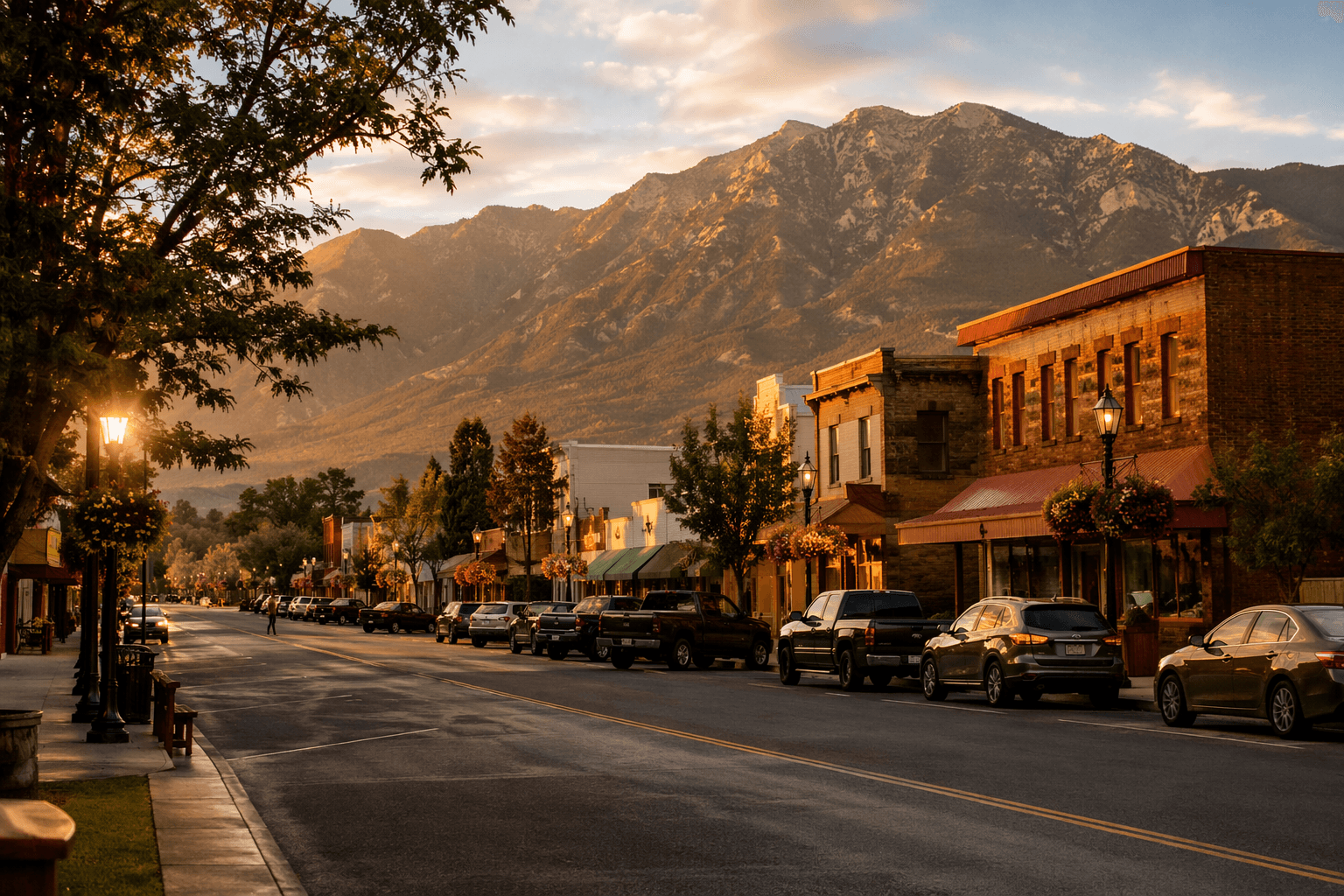
That matters for local business as well. A county shaped by mountain passes, forest access, and scenic drives tends to spread visitor spending across gas stations, cafes, shops, museums, and lodging in multiple towns rather than concentrating it in one destination. The chamber page, in that sense, is a signpost for how Union County wants its geography to be understood: as a cluster of communities connected by terrain, heritage, and practical access.
What downtown Union adds to the county story
Union gives the county’s branding a more grounded, small-town face. Visit Union, OR describes downtown Union with tree-lined streets, Victorian buildings, the Union County Museum, and the Carnegie Library, which ties heritage directly to the walkable core of town. Nearby Catherine Creek State Park and Buffalo Peak Golf Course broaden the experience beyond the historic blocks, linking downtown to outdoor recreation and a second layer of visitor activity.
The City of Union sharpens that same image with its slogan, “Where adventure begins.” Taken together, those civic and tourism messages show how the county’s identity is being built from two directions at once: historic downtown character on one side, and mountain recreation on the other. For local businesses, that combination can be useful because it gives visitors more reasons to stop for longer than a single drive-through visit.
Public investment is helping turn branding into visitor traffic
Union County is not relying on imagery alone. The county is currently accepting applications for community events or attractions intended to increase economic growth and impact tourism in FY 2025-26, which shows that the county wants to translate scenic branding into actual activity on the ground. That funding approach suggests a practical question behind the marketing: which events, institutions, and attractions can convert a mountain identity into spending, foot traffic, and repeat visits?
The Union County Museum Society gives that effort historical depth. Its mission is to collect, preserve, study, and exhibit artifacts about the human story in Union County, and its agriculture, transportation, and timber exhibits reflect the county’s longstanding economic base. Those themes line up with the broader county economy and with the kinds of stories visitors encounter in town centers, where museums and libraries often do as much work as scenic overlooks in shaping public understanding.
What the chamber page really tells you
Read closely, the chamber page is less a brochure than a countywide frame of reference. It says Union County is not just La Grande, not just a pass through the mountains, and not just a tourism slogan; it is a set of communities with a shared identity, a working economy, and enough history to support institutions like the museum and the Carnegie Library. The county’s challenge is the same as its opportunity: to make rugged beauty legible enough that residents, businesses, and visitors can find their way through it.
This article was produced by Prism’s automated news system from verified source data, official records, and press releases, then run through automated quality and moderation checks before publishing. The system is built and supervised by the people who set the standards it runs under. Read our full AI policy.
Did this article answer your question?