Union County maintains 650 miles of roads, 89 bridges across vast county
Union County stretches across 2,038 square miles, where 650 miles of county roads and 89 bridges carry school buses, farm traffic, commuters, and emergency crews. A narrow funding base makes every mile and crossing matter.
Across 2,038 square miles, Union County maintains 650 miles of county road and 89 bridges, a web that keeps scattered communities reachable across the Blue Mountains, the Grande Ronde Valley, and the long distances between them. County officials define the Road Department’s job simply: provide a safe and efficient roadway system.
Why the road map matters here
In a compact city, a damaged street can be a nuisance. In Union County, one closed road or weakened bridge can change the way people get to school, reach the doctor, move hay or livestock, or make a freight run to La Grande. Bridges are often the most vulnerable points in a rural system: if one fails, detours can add time, fuel costs, and risk to already long trips.
Union County was established on Oct. 14, 1864, and its 2020 Census population was 26,196. That is a large landscape serving a relatively small population. Roads connect farms to markets, rural homes to town, and emergency responders to places that may be far apart in both miles and weather conditions.
What Public Works actually covers
Union County Public Works is broader than roads alone. The department includes the Airport, Road Department, Equipment Maintenance Department, Traffic Control, Vegetation Management, and Parks. Transportation, maintenance, and public access are tied together in a county where one department’s work can affect another’s.
The county identifies Doug Wright as the Public Works Director on its applications and forms page, giving residents a named point of contact for a department that reaches into so many parts of daily life. When road graders, traffic control, equipment repair, vegetation management, and bridge work all sit under the same umbrella, the county can coordinate work across long distances and different kinds of assets. A fallen tree, worn pavement, or equipment breakdown can delay movement on the same road corridors people use for work and school.
How the funding picture shapes the work
Union County’s current Public Works funding comes exclusively from timber receipts and gasoline taxes. That is a narrow base, especially for a county responsible for such a large road and bridge network. Unlike places with broad local sales taxes or large urban tax bases, Union County has to stretch revenue tied to natural-resource receipts and fuel use across a wide network that needs grading, drainage, resurfacing, winter response, and bridge upkeep.
If a road loses its edge, a bridge needs repair, or vegetation begins to narrow a shoulder, the consequence is not just a maintenance issue on a spreadsheet. It can affect school bus routes, the reliability of commutes into La Grande, the ability of trucks to move timber, crops, or manufactured goods, and the speed of emergency response when a road is slick, washed out, or blocked.
What residents feel when the system slips
The county’s roads carry daily travel in a place built around agriculture, forest products, manufacturing, education, and state and local government. That economy depends on roads that can carry heavy loads, year-round traffic, and the everyday trips that make rural communities function. During harvest season, farm vehicles need room and dependable surfaces. In winter, emergency crews need bridges and county roads that remain passable long enough to reach people safely.
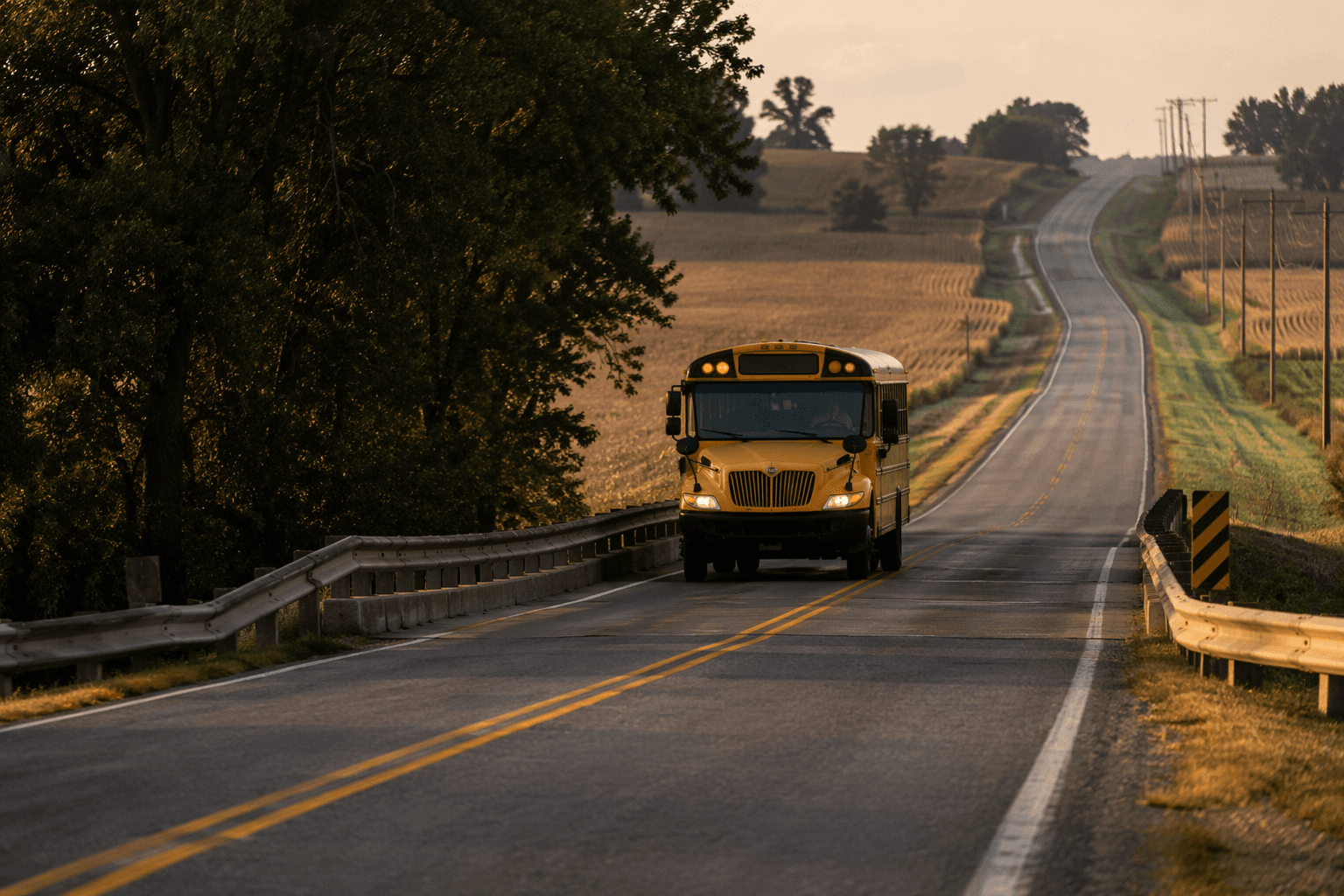
School transportation is another practical test. Routes across a county this large are more sensitive to washouts, delays, and detours than routes in a city with dense alternate streets. A single closure can lengthen a bus run, disrupt schedules, and complicate access to schools or after-school activities. For families living outside La Grande or far from main corridors, the condition of county roads can determine whether a trip is routine or uncertain.
Union County in the bigger Oregon picture
The American Society of Civil Engineers gave Oregon’s infrastructure a C- in its 2024 Oregon Infrastructure Report Card, placing roads and bridges among the systems under strain. Later in 2024, Oregon’s 36 counties would need an additional $834 million each year for roads and bridges.
Union County must keep a large amount of infrastructure in working order with a limited funding stream. Every mile graded, every bridge inspected, every shoulder cleared, and every drain kept open helps preserve access for the people, businesses, and public services that depend on those routes every day.
This article was produced by Prism’s automated news system from verified source data, official records, and press releases, then run through automated quality and moderation checks before publishing. The system is built and supervised by the people who set the standards it runs under. Read our full AI policy.
Did this article answer your question?