Union County museum preserves cowboy history and local heritage
Five buildings in Union turn cowboy lore, farm records and railroad history into a hands-on stop for families, students and summer visitors.
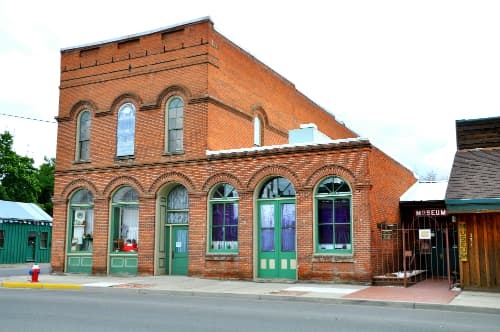
Union County’s cowboy story is not tucked away as nostalgia. At 333 South Main Street in Union, the Union County Heritage and Cowboy Museum turns five buildings into a county-specific history center, with artifacts and stories that cover more than 150 years of local life. Open Wednesday through Saturday from 11 a.m. to 3 p.m. during the season from Mother’s Day through September, it gives families, school groups and summer visitors a compact way to see how ranching, railroads, timber, transportation and town life shaped the county.
A county archive in five buildings
The museum’s own mission is broad enough to explain why it matters locally: it collects, preserves, studies and exhibits artifacts that tell the story of people and the environment in Union County. That shows up in the range of material on display, from agricultural implements and carpenter’s and blacksmith shops to Chinese history, Native American history, railroad history, the Oregon Trail and transportation. The result is not a single-theme attraction but a walk through the county’s working past, with each building adding another layer to how Union County grew.
Several of the museum’s named exhibits deepen that picture. Visitors can move from the First National Bank exhibit to Settlement Period Rooms, a Livery Station, a memorial courtyard and a Hot Lake history display. In practical terms, that makes the museum useful for more than casual browsing: it gives residents a place to see the records, tools and spaces that explain how communities in the county were built and how they connected to one another.
What stands out inside
The agriculture, transportation and timber building is one of the museum’s most useful stops because it gathers the county’s everyday history in one place. It includes Union County Century Farm records, local ranch brands, tools of the trades, railroad history, merchant exhibits and a vintage Union fire truck. For anyone trying to understand how money moved through the county, how farms stayed in families, or how goods reached local businesses, that building connects the dots.
The welcome lobby also does more work than a typical entrance. It holds the gift shop, a research area, a docent station and historical photos of each Union County community. The lobby also includes exhibits from the Hot Lake Sanitorium, which gives visitors another direct link to a well-known part of the county’s past. That research setup makes the museum especially useful for family-history work, local projects and visitors who want more than a quick look at displays.
Inside the museum, the most practical way to take it in is to move by topic rather than trying to treat it as one long gallery. The clearest groupings are:
- ranching and agriculture, including ranch brands, farm tools and Century Farm records
- movement and commerce, including railroad history, transportation exhibits and merchant displays
- community life, including the First National Bank exhibit, Settlement Period Rooms and the Livery Station
- place-based history, including the Hot Lake history display and photos of county communities
That structure makes the museum easy to use whether the goal is a school visit, a summer stop or a deeper look at how Union County developed.
The cowboy exhibit that came home
The headline draw is Cowboys: Then & Now, a long-running collection that tracks cattle and cowboys in America from their arrival on Spanish ships to modern ranching. The exhibit includes cowboy tack and gear, cattle breeds and the role Hollywood played in building cowboy legends and lore. It gives the museum a visible link to the image many people carry of Eastern Oregon, while also showing that cowboy culture was shaped by work, migration and popular media, not just by myth.
The exhibit also has a clear Union County connection. The museum acquired it from the Oregon Cattlemen’s Foundation in 1997 after its original Portland home closed. That move matters because it brought the collection back to cattle country, where ranching is part of the region’s identity rather than a distant subject. For local visitors, that backstory gives the exhibit a sense of place that fits the county’s own agricultural and transportation history.
Why this museum fits Union County
Union County itself was formed in 1864, and Wallowa County was later created from its eastern region in 1887. The county’s history page ties that split to population growth and development in eastern Oregon in the early 1860s, which makes a museum focused on settlement, freight movement, ranching and civic life feel like a natural extension of the county’s origin story. The county seat is La Grande, while the museum sits in the city of Union, giving downtown Union a heritage stop that also helps draw people into Main Street.
The population numbers also show why a local museum like this carries real weight. Union County had 26,196 residents in the 2020 census, and the U.S. Census Bureau estimates 25,900 residents as of July 1, 2025. In a county that size, the museum acts as a concentrated archive for community memory, especially for people tracing farm families, school histories or business roots across the region.
That smaller-scale setting also makes the museum a practical stop for visitors already exploring Union’s historic downtown. The phone number listed on the museum’s contact page is 541-962-6003, which makes it straightforward to check seasonal access before a trip. For residents, it remains one of the clearest places to see how Union County’s cowboy heritage, farm economy and community records still connect to life here now.
This article was produced by Prism’s automated news system from verified source data, official records, and press releases, then run through automated quality and moderation checks before publishing. The system is built and supervised by the people who set the standards it runs under. Read our full AI policy.
Know something we missed? Have a correction or additional information?
Submit a Tip