Union Main Street Historic District showcases Union’s historic downtown
Union’s 18.2-acre Main Street Historic District turns a downtown walk into a history stop and a shop-local afternoon, anchored by the 1921 Historic Union Hotel and the Carnegie Library museum.
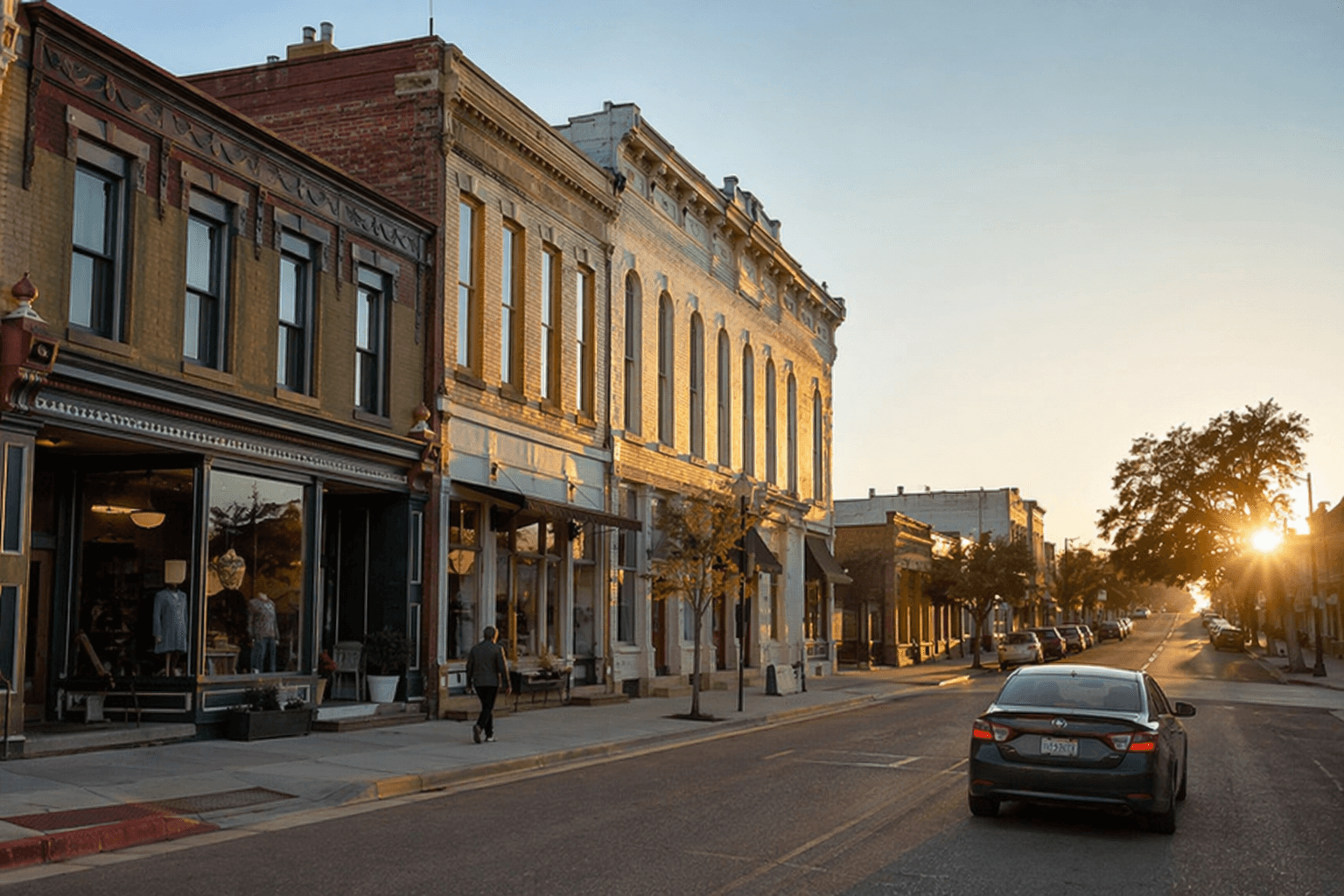
The Union Main Street Historic District stretches about 18.2 acres along Main Street between Birch and Fulton streets. Its mix of 132 contributing and 82 noncontributing resources still reads like the historic business core of Union. A self-guided stroll here doubles as a practical route for spending time, and money, in the center of Union County’s smallest city.
A downtown built to be walked
The district was added to the National Register of Historic Places on August 20, 1997, but the story it preserves starts with the original 1864 town plat. Union’s historic business core was laid out in a grid oriented to the cardinal points, which makes the downtown easy to navigate on foot. Main Street is the spine, and the blocks between Birch and Fulton hold the oldest layers of the town’s commercial life.
Much of the streetscape still carries its historic fabric. Even where later construction appears, the older pattern of the town remains visible. A walk can move from history to a coffee break, a museum stop, and a purchase from a local business without leaving the district.
Why Union’s main street became the county’s center
Union’s downtown reflects a boom period that began in the 1860s. The town was first settled in 1862 on Catherine Creek, then platted in 1864. It was named to express loyalty to the Union during the Civil War, and in its first year it grew to more than 100 residents. As roads linked Union to La Grande, Summerville, and the Powder River Valley, the town became a stopping point for travelers, miners, and freighters moving through the Blue Mountains.
That early momentum made Union county seat in 1874, a role it held until a 1904 vote returned the seat to La Grande in 1905. The town’s fortunes shifted again when the Oregon Railway & Navigation Company bypassed Union in 1885, though a two-mile connecting line was built in 1891 and 1892. The downtown contains a layered mix of civic and commercial buildings, reflecting its years as a county hub and its adaptation after transportation and political power moved elsewhere. Union County itself was established on October 14, 1864, and today the county covers 2,038 square miles, while the city of Union had 2,152 residents in the 2020 Census.
The best stops for a history walk that also supports local business
The Historic Union Hotel is the anchor for a self-guided tour. The three-story brick building opened in 1921, when local businessmen saw a need for modern accommodations and dining for motorists traveling Highway 30 through eastern Oregon. It is the largest commercial structure on Main Street, and restoration work that began in the 1990s is still part of its story today. With more than a dozen unique rooms and a lounge, the hotel remains a functioning part of the local visitor economy, where a history walk can turn into lunch, a drink, or an overnight stay.
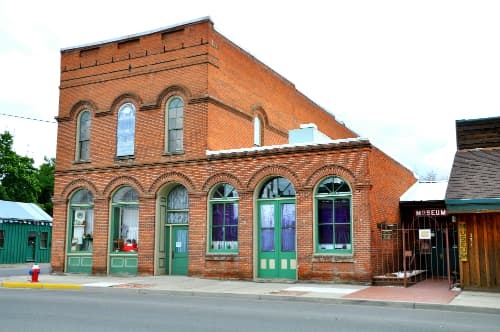
Other buildings in the district add important layers to the route. The Union Drug Store building, built in 1903, sits on an early dwelling site and later became part of the Union County Museum’s exhibit space. The one-story annex portion dates to 1882 and once served as a post office, while the Union County Museum society began developing the building for exhibits in 1968. Nearby, the Abel E. Eaton house, built in 1904, reflects the ambitions of Union’s business class, and Union High School, built in 1911, still carries the presence of an early civic landmark.
Where the afternoon spending fits in
A walk through Main Street works best when it is treated as a route, not a checklist. Start with the Union County Museum, housed in the renovated Union County Carnegie Library, which became its permanent home after a 2019 renovation. The museum holds more than 25,000 items tied to county history, and its collections range from the Cowboys Then & Now Collection to displays on agriculture, timber, and transportation. It also offers guided or self-guided tours upon request, making it a practical first stop for orienting yourself before you head back out onto Main Street.
From there, keep the pace slow and the stops deliberate. Pause at the Historic Union Hotel to see how the early automobile era changed downtown hospitality. Step past the Union Drug Store building and the old school building to read the shift from frontier settlement to organized civic life. Then leave room for the parts of the afternoon that keep a historic district alive now: a purchase from a local store, a coffee or meal at a Main Street cafe, or a drink in the hotel lounge.
What to notice as you walk
- The original 1864 town plat, still legible in the downtown grid.
- The contrast between the three-story brick Historic Union Hotel and the smaller commercial blocks around it.
- The 1882 annex on the Union Drug Store building, which shows how one site accumulated layers of use.
- The 1904 Abel E. Eaton house and the 1911 Union High School, which mark the transition from business district to civic center.
- The museum’s permanent home in the renovated Carnegie Library, a reminder that preservation here is tied to active use.
This article was produced by Prism’s automated news system from verified source data, official records, and press releases, then run through automated quality and moderation checks before publishing. The system is built and supervised by the people who set the standards it runs under. Read our full AI policy.
Know something we missed? Have a correction or additional information?
Submit a Tip