Union County parks offer free camping and summer swimming spots
Free camping, a rare Grande Ronde swimming hole, and low-frills reservoir sites make Union County one of Oregon’s best budget summer escapes.
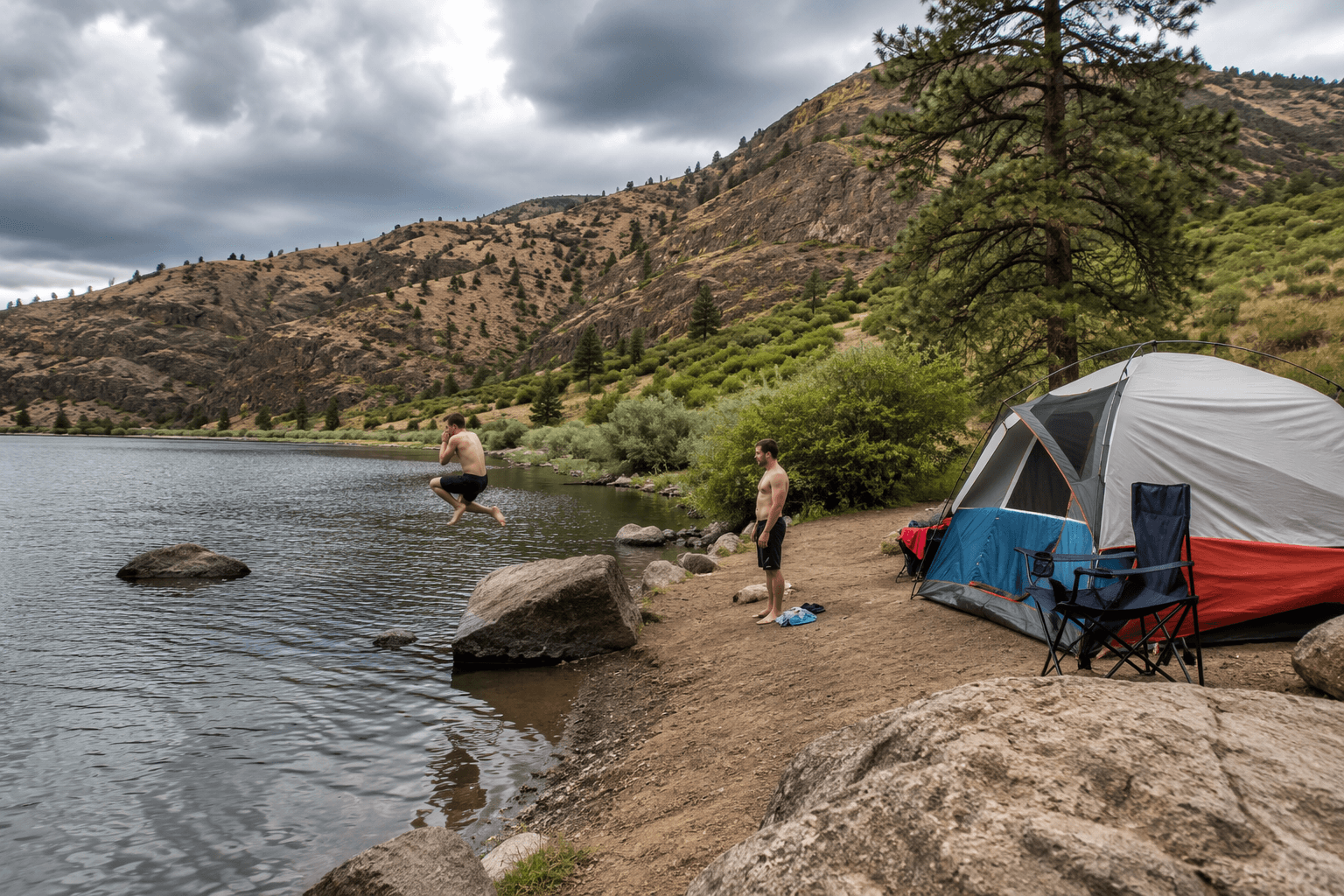
Union County’s park system turns a summer outing into a budget play: camping is free, the water access is close to town, and the tradeoff is a deliberately simple setup. In the Blue Mountains of Eastern Oregon, that means families can choose between a river swimming hole and several reservoir parks without paying for a campsite fee.
Free camping, simple amenities
The county says its parks are in the Blue Mountains and that funding comes from Oregon State Parks and the Oregon State Marine Board. That public backing helps keep the county’s biggest draw straightforward: camping is free of charge.
The price point matters because the parks are not built like full-service resorts. The sites are primitive, the restrooms are vaulted toilets, and the recreational infrastructure is limited to the basics that make a weekend possible rather than polished. For families already carrying their own tent, trailer, food, and gear, that can mean a weekend without the nightly campground bill that usually comes with more developed destinations.
Perry Swimming Hole: a no-fee river stop
Perry Swimming Hole is the most direct summer cooling-off spot in the system. The county places it two miles west of La Grande, reached from I-84 West at exit 257, and describes it as one of the few deep spots on the Grande Ronde River.
The park is day-use only and is popular during the summer months, which fits its role as a quick stop rather than an overnight base. The county also says swimming is at your own risk, a reminder that the low-cost appeal comes with a more hands-on style of recreation than a staffed pool or developed beach. For a hot day, though, it offers exactly what a lot of local users are looking for: a free place to get in the water close to town.
Pilcher Creek Reservoir: the most rounded campground option
Pilcher Creek Reservoir, about 12 miles west of North Powder, gives the county’s free-camping model a more complete feel. The park has 17 primitive camping sites, vaulted toilets, a dock, and a boat ramp with a 5 mph speed limit.
The recreation mix is broader than camping alone. The county lists fishing and bird watching as part of the appeal, and it notes a nearby winter elk feeding station, which gives the site a seasonal wildlife dimension beyond summer use. Pilcher Creek is the closest thing in the county’s system to a low-frills base camp, with enough access and infrastructure to support a night or two without turning the outing into a full-service resort stay.
Thief Valley Reservoir: high desert views and more water access
Roughly 15 miles southeast of Union, Thief Valley Reservoir extends the county’s free-camping network into a striking high-desert setting. The county says the park has 10 primitive camping sites, vaulted toilets, a dock, and a boat ramp.
The location is part of the draw. Union County describes the reservoir as sitting in a unique high-desert landscape with views of the Wallowa and Elkhorn Mountains and a wind farm on the horizon. Fishing and windsurfing are among the main activities, which gives the site a different feel from the calmer river stop at Perry or the wildlife-oriented setting at Pilcher Creek. It is a place where the scenery is as much a feature as the water.
Wolf Creek Reservoir: county-managed recreation with outside ownership
Wolf Creek Reservoir, about eight miles west of North Powder, rounds out the county’s reservoir parks with a slightly more developed mix of amenities. The site includes a boat ramp, boarding float, vaulted toilets, and picnic areas, along with fishing, water-skiing, and jet skiing.
Ownership and maintenance make Wolf Creek an especially clear example of how local recreation depends on layered public arrangements. The reservoir is owned and operated by the Powder Valley Water Control District, which allows recreation facilities on the southeast portion of the reservoir. Union County Parks Department handles maintenance and operations, with support from Oregon Parks and Recreation and the Oregon State Marine Board. A 2014 county commission document said state recreation funding would help develop a campground there, and Union County later issued a 2016 bid request to replace the Thief Valley dock system and a separate request for quotation to replace the Wolf Creek dock system.
MERA shows the county’s wider recreation footprint
The parks system is not limited to the reservoir shoreline. Union County says Mt. Emily Recreation Area, or MERA, was established in 2008 with grants from the Oregon State Parks and Recreation Department ATV Grant Program and the Blue Mountain Habitat Restoration Grant Program. The county says MERA spans from about 3,000 feet on the Grande Ronde Valley floor to about 5,600 feet in elevation, which gives the county a much broader recreational range than the water sites alone.
That broader footprint also shows up in the county’s staffing. Union County’s Parks Coordinator job description says the role oversees MERA and the parks at Thief Valley Reservoir, Wolf Creek Reservoir, Pilcher Creek Reservoir, and the Perry Swimming Area. In practical terms, the county is managing a linked system of river access, reservoir camping, and upland trail country rather than a scattering of unrelated park stops.
Why the bargain matters locally
Oregon Parks and Recreation Department research says outdoor recreation in Oregon supported $16 billion in spending and 192,000 jobs in 2022, which helps explain why small county park systems still matter. Union County’s sites give residents and visitors a low-cost way into that larger economy, while keeping the basics local: a swim at Perry, a campsite at Pilcher or Thief Valley, a boat launch at Wolf Creek, and a public trail and habitat system at MERA.
The county’s parks are built for people who want water, scenery, and a place to stay the night without paying for a full resort. That mix of free camping, simple facilities, and state-county maintenance is what keeps Union County’s summer recreation affordable and usable.
This article was produced by Prism’s automated news system from verified source data, official records, and press releases, then run through automated quality and moderation checks before publishing. The system is built and supervised by the people who set the standards it runs under. Read our full AI policy.
Did this article answer your question?