Union County seeks state drought declaration as dry conditions worsen
Union County asked for a state drought declaration as dry conditions tightened across farms, ranches and fire districts, with all 25,748 residents now under drought conditions.

Union County asked Oregon for a state drought declaration as dry weather deepened into a practical threat for ranchers, hay growers and irrigation users heading toward the hottest stretch of summer. The request came as drought conditions strengthened across Oregon and Idaho, and Union County’s own indicators worsened.
A state drought declaration would unlock tools that are not otherwise available, including expedited review processes, reduced fees and temporary emergency water-use options for water right holders. The Oregon Water Resources Department routes the request through the Drought Readiness Council, which reviews local requests before recommending action to the governor, with the Water Supply Availability Committee providing the scientific foundation. Union County was the only area in Eastern Oregon that did not already have the designation.

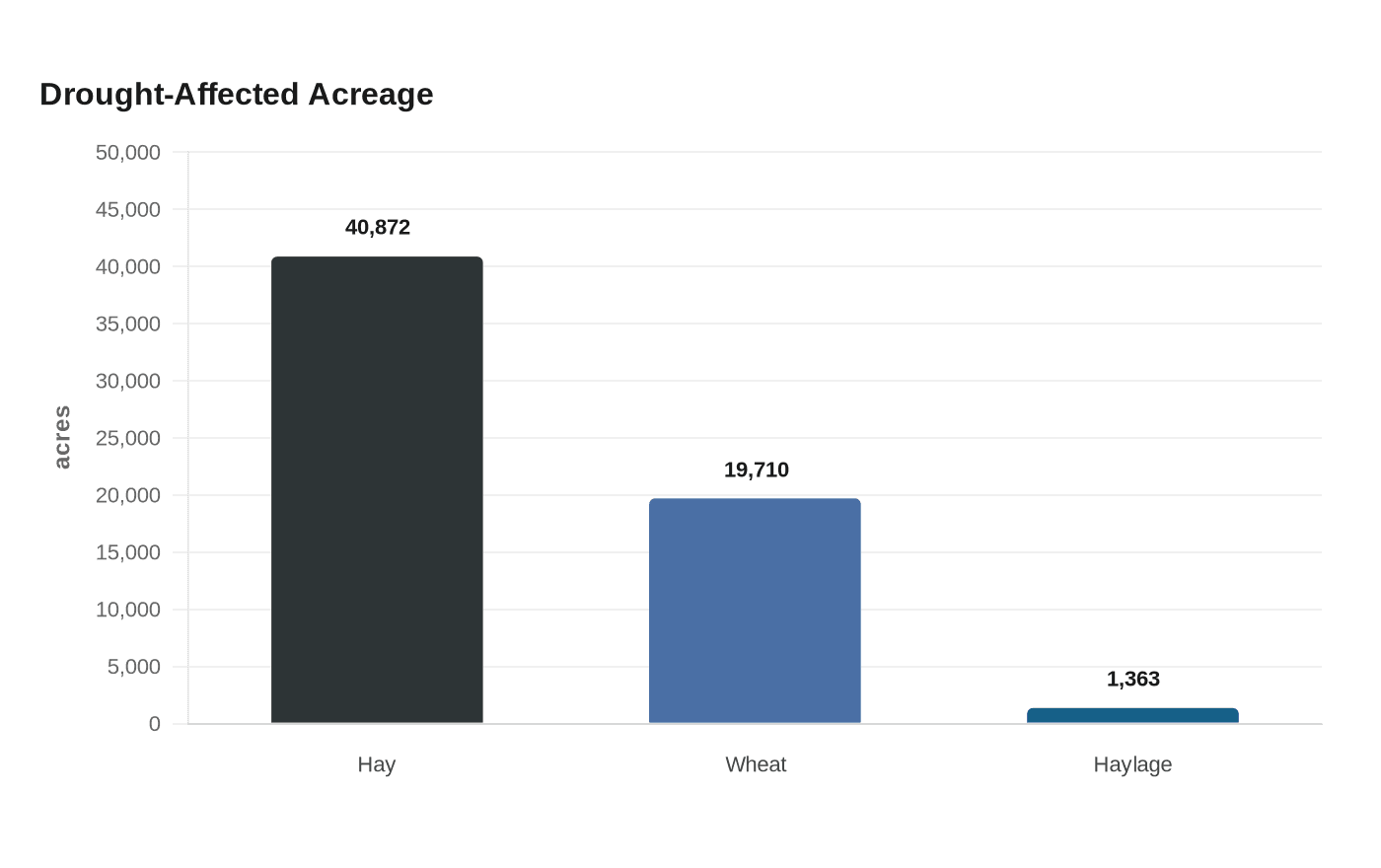
Drought.gov estimated 25,748 people in Union County were affected, or 100% of the county’s population. It also ranked Union County’s May as the 9th driest on record and its January-through-May period as the 26th driest over the past 132 years. Drought.gov estimated 40,872 acres of hay, 19,710 acres of wheat, 1,363 acres of haylage, 16,538 cattle and 882 sheep in drought-affected conditions.
Dry pasture and weaker irrigation stream flows can push up feed costs, tighten water planning for farms and ranches, and force producers to make faster decisions about grazing and hay supplies. The county’s 2026 Community Wildfire Protection Plan identified 57 communities at risk and put Union County’s wildfire risk to homes higher than 94% of counties in the nation.
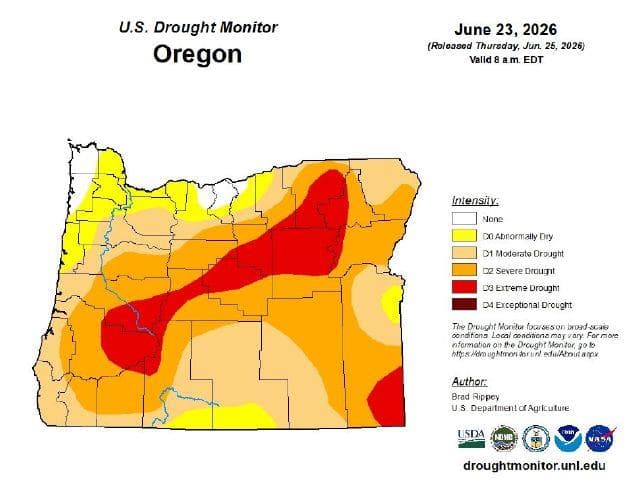
Union County had already declared its own drought emergency in July 2025, when county commissioners voted unanimously and emergency manager Nick Vora said the entire county was experiencing drought conditions, with about half the county in severe drought and the rest in moderate drought. At that time, officials cited rainfall running below 50% of normal for more than 60 days, along with falling crop yields and irrigation stream flows.
Governor Tina Kotek had already declared drought emergencies for Josephine and Wasco counties, and by late June 2026, 19 of Oregon’s 36 counties were under drought emergency status. The Oregon Water Resources Department identified the state as facing potentially extraordinary drought in 2026, driven by historically low snowpack, one of the warmest winters in state history and multi-year precipitation deficits.
This article was produced by Prism’s automated news system from verified source data, official records, and press releases, then run through automated quality and moderation checks before publishing. The system is built and supervised by the people who set the standards it runs under. Read our full AI policy.
Did this article answer your question?