Sen. Yaw Pushes Child Smoking Ban as Prescribed Burns Begin Regionally
Sen. Gene Yaw wants to ticket drivers who smoke with children under 13 in the car; prescribed burn season is now underway across Central Pennsylvania.
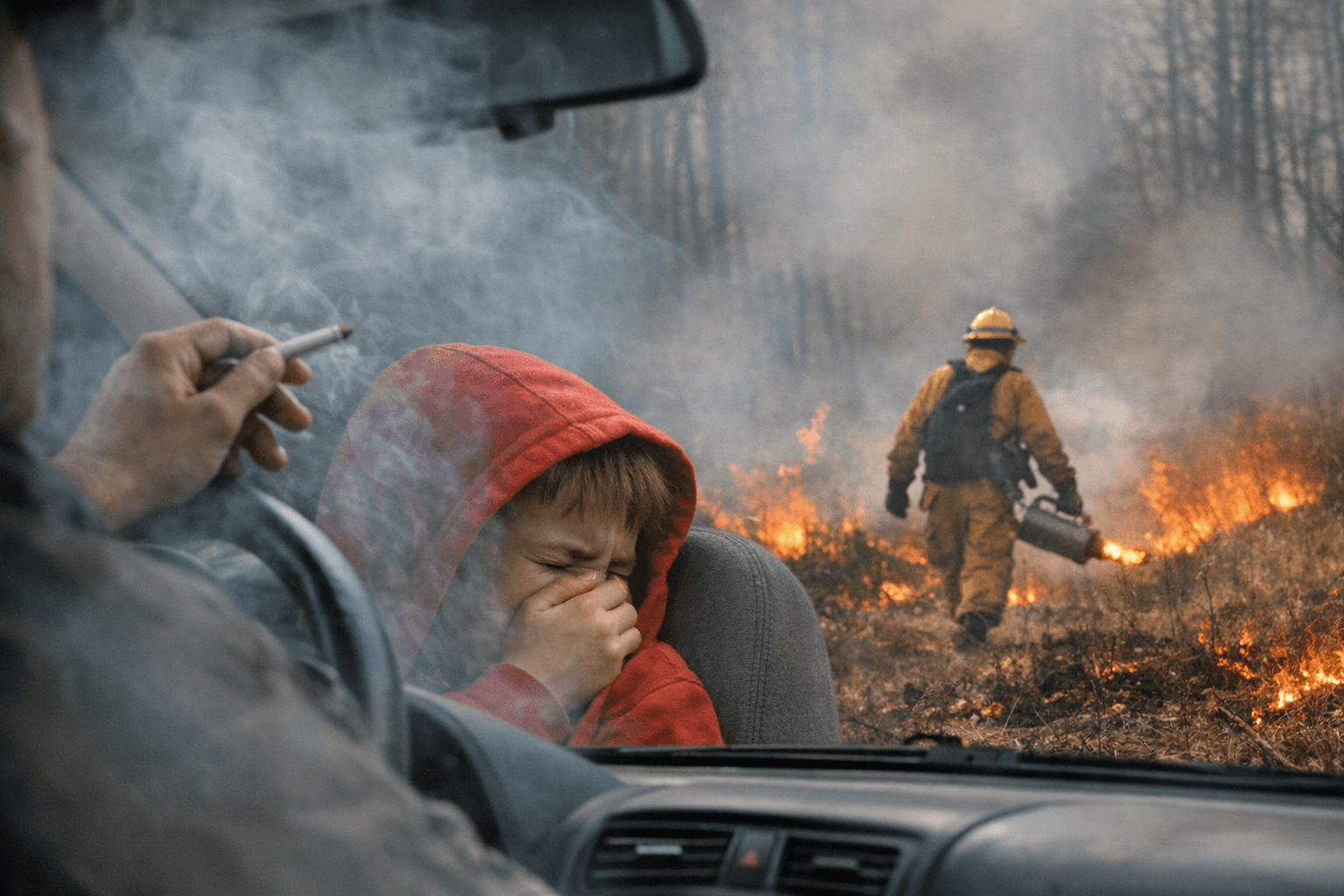
State Sen. Gene Yaw, a Lycoming County Republican representing Senate District 23, wants to treat secondhand smoke in a car with a child under 13 the same way Pennsylvania law treats a driver running a red light: a citation, issued on the spot, by any officer already authorized to enforce the Vehicle Code.
Yaw circulated a co-sponsorship memo to fellow senators outlining the measure, which would amend Title 75 of the Pennsylvania Consolidated Statutes to make it a summary offense to smoke in a vehicle while transporting a child 12 or younger. The prohibition would cover the full range of products, including cigarettes, cigars, pipes, and electronic smoking devices. Because the offense would live inside Title 75, state police and local departments already writing traffic citations would have immediate authority to enforce it, with no new agency or administrative layer required.
"Children are especially vulnerable to the harmful effects of secondhand smoke, particularly in enclosed spaces like vehicles where toxins can quickly reach dangerous levels," Yaw said. "This bill is a simple, commonsense step to protect their health and well-being."
For Union County families, childcare providers, and school transportation operators, the practical consequence is clear: a summary offense carries no jail time but does result in a fine and a mark on the defendant's record. It would function the way seatbelt enforcement functions now, a standard traffic stop outcome rather than a criminal proceeding. The bill has not yet cleared committee, and residents wanting to track its progress or submit comment can contact Yaw's district office before Senate hearings begin.
While the smoking bill moves through Harrisburg, a separate air-quality concern is already present across the region. Prescribed fire season is underway in Central Pennsylvania, with the Pennsylvania Game Commission and the state Department of Conservation and Natural Resources Bureau of Forestry conducting controlled burns on state game lands and forested tracts through March, April, and May. These burns are authorized in advance through a formal burn plan submitted to the DCNR Bureau of Forestry, and the District Forest Fire Warden with jurisdiction over each area must be notified before any ignition. On burn days, the target area is closed to the public and a contained test fire is lit mid-to-late morning before crews proceed with the full burn.
Smoke from these burns can drift across Union County roads and into residential areas when winds shift. Residents should close windows and vehicle vents if smoke affects indoor air quality. Planned burns that have been publicly announced do not require a 911 call; the Union County 24-hour non-emergency dispatch line at (570) 523-1113 is the correct contact for questions or concerns that fall short of an immediate emergency. If a fire appears to have spread beyond its planned perimeter or smoke is causing acute breathing distress, call 911 directly. The Union County Emergency Management Agency coordinates with local fire companies on burn scheduling, and WKOK 1070 and WQKX will carry public notifications as burn dates are confirmed.
Both items carry the same underlying logic: rules only protect people when residents know they exist and understand how enforcement actually works.
This article was produced by Prism’s automated news system from verified source data, official records, and press releases, then run through automated quality and moderation checks before publishing. The system is built and supervised by the people who set the standards it runs under. Read our full AI policy.
Did this article answer your question?