Union County conservation district sells tree seedlings for land management
Union County’s tree seedling sale gives landowners a low-cost way to fight erosion, add privacy, and build habitat, with 10 seedlings sold for $15.
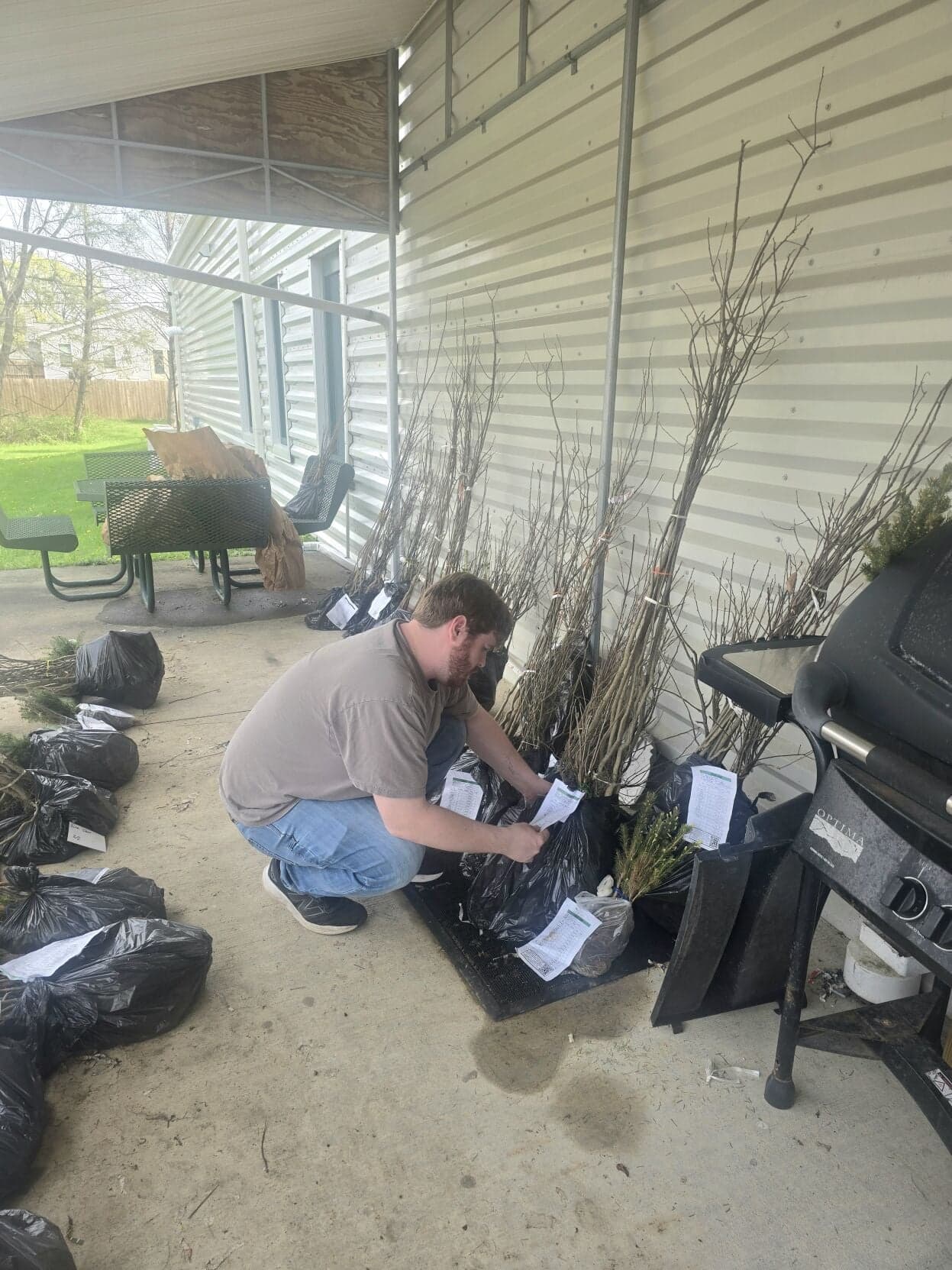
Union County landowners looking for a low-cost fix for bare ground, wind exposure, or a thin streambank can turn to the conservation district’s tree seedling sale. The district, run by local volunteers and rooted in state conservation law, uses the sale to connect everyday planting decisions in places like Lewisburg, Mifflinburg, and Allenwood to long-term land management.
Why the conservation district matters
The Union County Conservation District was formed on March 6, 1957, under Pennsylvania’s Act 217, the State Soil and Conservation Law. It operates as a legal subdivision of state government, but its board is made up of local citizen volunteers, with farm members, urban members, and one county commissioner representative. The district says that mix is intentional, because the same office that helps a farmer manage runoff also helps a homeowner think through shade trees, screening, and yard drainage.
That structure matters because Pennsylvania’s conservation district system was built to give counties a local vehicle for soil and water protection. The state Conservation Commission provides administrative, financial, educational, and other assistance, which gives county districts real operational reach instead of leaving land stewardship entirely to informal advice or one-off projects. Union County’s board expanded from seven to nine members in 1997, a small but telling sign that the district has grown into a standing part of county government rather than a short-term program.
A practical planting tool, not just a sale
The annual seedling sale is the district’s most visible public-facing program, and it is built around problems landowners actually have. The catalog lists uses that include Christmas trees, windbreaks, landscaping, erosion control, ornamental plantings, shade, and wildlife habitat. That makes the program useful for farm fields, streamside lots, and residential parcels where a few carefully placed trees can do work that mowing alone cannot.
For privacy screening and windbreaks, evergreen choices such as white spruce and Canaan fir are a straightforward fit. For streamside property owners and anyone trying to soften a wet corner of a lot, species like American elderberry, silver maple, American persimmon, chestnut oak, and shagbark hickory bring wildlife value along with cover. The district is selling more than seedlings here; it is offering a way to turn open or problem ground into a buffer that can slow wind, catch water, and give roots a chance to hold soil in place.
What the 2026 sale included
The 2026 sale bundled 10 seedlings for $15, which put each plant at about $1.50 before any add-ons. The catalog included white spruce, Canaan fir, Chinese chestnut, American elderberry, shagbark hickory, chestnut oak, silver maple, and American persimmon. The flyer also listed soil test kits and tree tubes with stakes, two small extras that matter when the goal is not just to plant but to get young trees established.

The district described the seedlings as bare-root and guaranteed live at delivery, a detail that makes the sale especially practical for anyone buying on a budget. Bare-root stock is easier to move in quantity, and the live-at-delivery guarantee gives buyers a clearer standard than a generic garden-center display. For landowners trying to cover a fence line, screen a driveway, or start a windbreak without a large upfront expense, that combination is the core attraction.
Orders for the 2026 sale were due by April 1, 2026, with pickup scheduled for April 15 and April 16 at the Union County Government Center in Lewisburg. That timing turns the sale into a seasonal planting window rather than a permanent inventory, so buyers need to plan ahead and be ready to plant soon after pickup. The county’s office is at 155 North 15th Street in Lewisburg, inside the Government Center, which gives residents a fixed place to connect with the program when the sale opens again.
How landowners use the district beyond the seedling sale
The seedling program is only one piece of the district’s work. Union County lists Chapter 102 erosion and sediment control, Chapter 105 dam safety and wetland and stream encroachment assistance, Chesapeake Bay Program work, nutrient management, ag-land preservation, dirt and gravel roads, watershed groups, environmental education, and equipment rental among its services. That range shows why farmers, streamside owners, and rural homeowners often deal with the district on practical land-use questions, not abstract policy debates.
The district also says its Chesapeake Bay Program special-projects cost-share can cover 80% of eligible practices that reduce runoff and improve water quality, and that all watersheds in Union County are eligible. That is important for anyone trying to cut stormwater problems, slow water leaving a field, or improve a drainage area near a stream or ditch. A tree planting may be the visible part, but it often connects to a larger runoff-control plan that can include soil work, buffers, or other approved practices.
Where to find help in Lewisburg
The district holds regular monthly board meetings on the second Wednesday evening at 7 p.m., giving residents a predictable point of contact if they want to ask about seedlings, erosion, or a property problem that needs technical help. Its staff includes Greg Bonsall, the director; Caroline Benfer Martin, Chesapeake Bay Technician; Jared Poole, Erosion and Sediment Pollution Control Specialist; Savannah Rhoads, Watershed Specialist; Ian Abernethy, Nutrient Management Specialist; and Sadie Borger, ACT and Environmental Educator. That staffing mix is another sign that the office is built to handle both tree-sale logistics and more technical conservation questions.
The district also points residents toward Penn State Cooperative Extension, USDA Natural Resources Conservation Service, the Pennsylvania Department of Agriculture, the Pennsylvania Department of Environmental Protection, and the Pennsylvania Association of Conservation Districts. Taken together, those links show how a simple seedling sale fits inside a broader conservation network that can help a landowner move from a drainage problem or bare lot to a specific planting plan. In Union County, the cheapest tree on the list can still be part of a much larger fix.
This article was produced by Prism’s automated news system from verified source data, official records, and press releases, then run through automated quality and moderation checks before publishing. The system is built and supervised by the people who set the standards it runs under. Read our full AI policy.
Did this article answer your question?