Del Rio cotton gin reborn as Gin House Jazz Club
A 1908 cotton gin in Del Rio now hosts live jazz, food, and a creekside garden, turning preservation into a place locals can actually use.
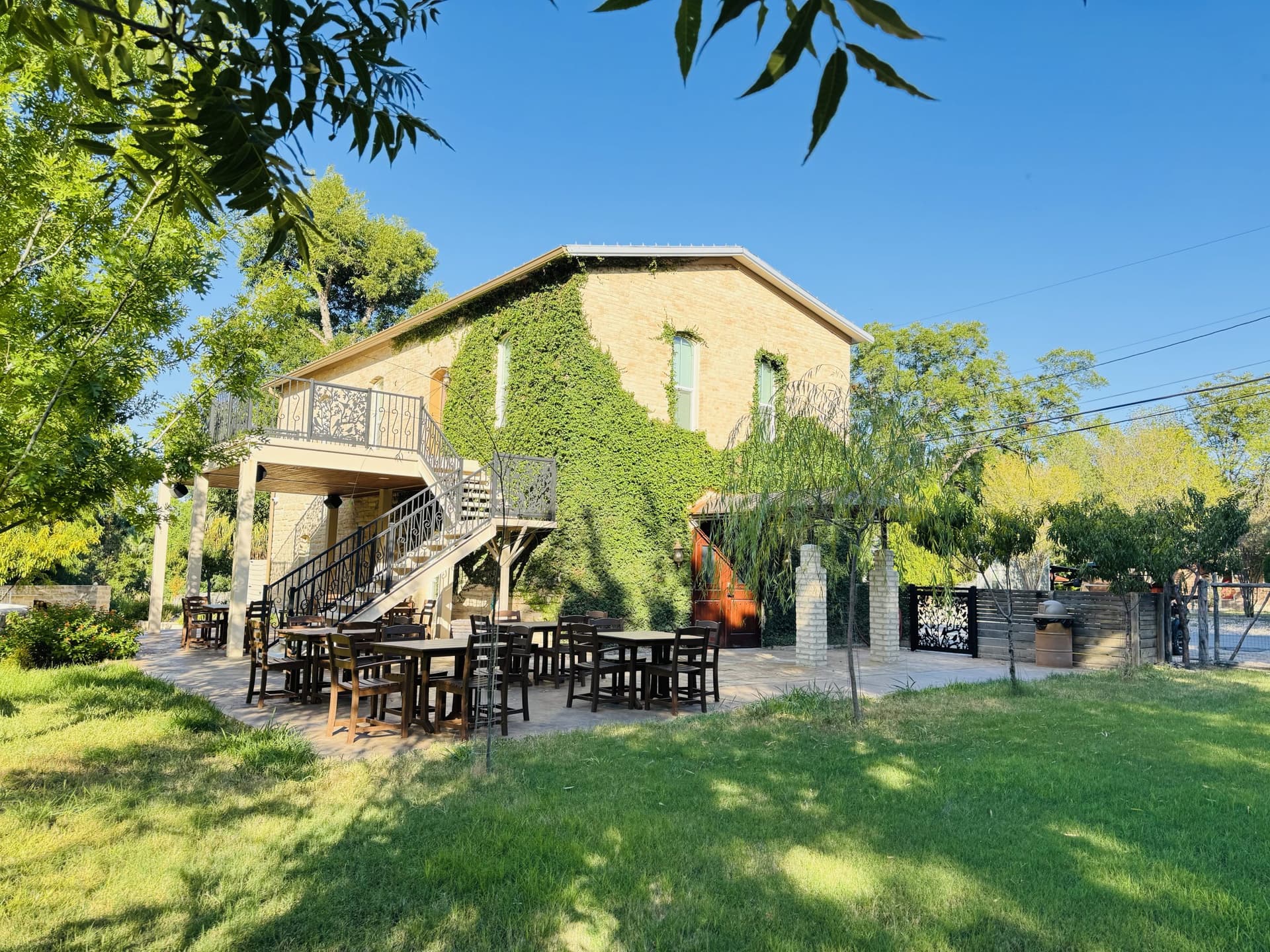
Del Rio’s Gin House Jazz Club turns a once-abandoned cotton gin into an active gathering place, and that is what makes the building matter now. The old Cassinelli Gin House, completed in 1908 by G.B. Cassinelli, an Italian businessman and stonemason, spent years sitting empty before a Del Rio couple spent two years bringing it back to life as a live music venue. Its value today is not just that it survives, but that it still draws people in.
A landmark that still shows its working past
The building’s origin story is tied to the town’s industrial history. Texas Highways identifies it as a former cotton gin from the early 1900s, and the structure still carries the look of that past through stone walls and exposed beams. Those details matter because the place was not stripped down and replaced with something generic; it was carefully repurposed so the old shell remains visible inside the new use.
That layered design gives the Gin House a different kind of presence than a restored building that sits behind ropes or only opens for tours. The room itself tells the story of Del Rio’s working years, while the music, food, and social spaces tell the story of what the city needs now. The result is a building that works as memory and as a venue at the same time.
What happens there now
The downstairs room holds 49 guests, which keeps the club intimate and gives the music room to breathe. Live jazz runs Wednesday through Saturday at 7 p.m., a schedule that makes the venue part of the weekly rhythm rather than a one-off destination. That regularity is part of the club’s appeal: it gives local music a dependable stage and gives residents a reason to return.
The upstairs lounge broadens the experience beyond the performance space. It includes a library, a record player, and games, creating a second layer of use for people who want to linger before or after a set. That combination makes the venue feel less like a single-purpose room and more like a place built for spending time.
Outside, the property opens to a garden by the creek with picnic tables. The venue also serves food through a truck with burgers, wings, pizza, and charcuterie boxes, which means a night there can become dinner, music, and a long conversation in the same stop. The outdoor space is family-friendly, while indoor seating is for adults only, so the building is serving more than one kind of gathering without flattening the atmosphere.
Why the Gin House matters beyond nostalgia
The strongest case for the Gin House is not that it is old. It is that it still functions as a shared space in Del Rio. A preserved building that no one uses is a museum piece; a preserved building that hosts weekly jazz, feeds people, and gives families and adults separate ways to enjoy the property becomes part of the local economy and social life.
That distinction matters in Val Verde County because historic preservation only carries weight when it supports present-day use. The Gin House does that by turning a former industrial site into a place where people sit down, listen, eat, and stay awhile. The building’s stone walls and exposed beams give the room character, but the schedule, the seating, and the food are what keep it alive.
For Del Rio, the loss would not just be architectural. It would mean losing one of the few places where the town’s older built environment still hosts current culture in real time. A century-old cotton gin is now a room for live jazz, a creekside garden, a lounge with records, and a small indoor audience of 49 people at a time. That mix gives the city a landmark with a pulse, not a relic without a purpose.
How to use the space
The Gin House is built for different kinds of visits depending on what you want from the evening. The downstairs jazz room is the tightest and most focused setting, while the upstairs lounge works for slower conversation and casual time around the record player and games. The outdoor garden by the creek is the easiest place for families, and the adult-only indoor seating keeps the performance area more tailored to the club feel.
Reservations are handled by text, which makes planning straightforward for anyone trying to catch one of the Wednesday-through-Saturday sets. Because the venue is small, with only 49 seats downstairs, timing matters more than it would at a larger hall. That scale is part of the appeal: the place feels local, immediate, and close to the music.
In a town like Del Rio, the best-preserved buildings are not always the ones left untouched. The Gin House shows a stronger model, one where the old structure stays visible, the culture stays audible, and the space keeps earning its place in everyday life.
This article was produced by Prism’s automated news system from verified source data, official records, and press releases, then run through automated quality and moderation checks before publishing. The system is built and supervised by the people who set the standards it runs under. Read our full AI policy.
Did this article answer your question?