Sabinal Coach Gets 30 Years for Attempted Online Enticement of Minor
Geolocation data put a Sabinal coach 40 meters from his own school when he solicited a minor on Snapchat. He was sentenced to 30 years in federal prison.
A Sabinal High School coach who opened a Snapchat conversation with someone claiming to be a 14-year-old boy while geolocation data placed his phone within 40 meters of his own school building was sentenced April 3 to 30 years in federal prison, with a Del Rio courtroom delivering the result under the federal statute governing online child enticement.
Kenneth Wayne Mulkey, 44, was convicted of attempted coercion and enticement of a minor in the Western District of Texas. The contact began Oct. 11, 2024, when Mulkey used Snapchat to message the purported teenager in Orlando, Florida, identifying himself as a 40-year-old coach and immediately requesting explicit photographs. He then sent an explicit image of himself and continued with sexually explicit messaging. Geolocation records tied the initial exchange precisely to the Sabinal High School campus. Mulkey was arrested Jan. 31, 2025, indicted Feb. 19 and pleaded guilty Aug. 11, 2025. Assistant U.S. Attorney Nallely Duarte prosecuted.
The Mulkey case follows the pattern federal prosecutors track consistently in online enticement investigations: an adult leverages a platform popular with teenagers, presents a credible identity rooted in authority or familiarity, and escalates toward explicit content before law enforcement intervenes. Because the contact crosses state lines the moment a message is sent, the offense falls under federal jurisdiction, which is what brought the case before the Del Rio court.
U.S. Attorney Justin R. Simmons addressed the breach of institutional trust directly. "As parents and community members, we place an incredible amount of trust in the educators, administrators and coaches that our children interact with on a regular, sometimes daily, basis," Simmons said.
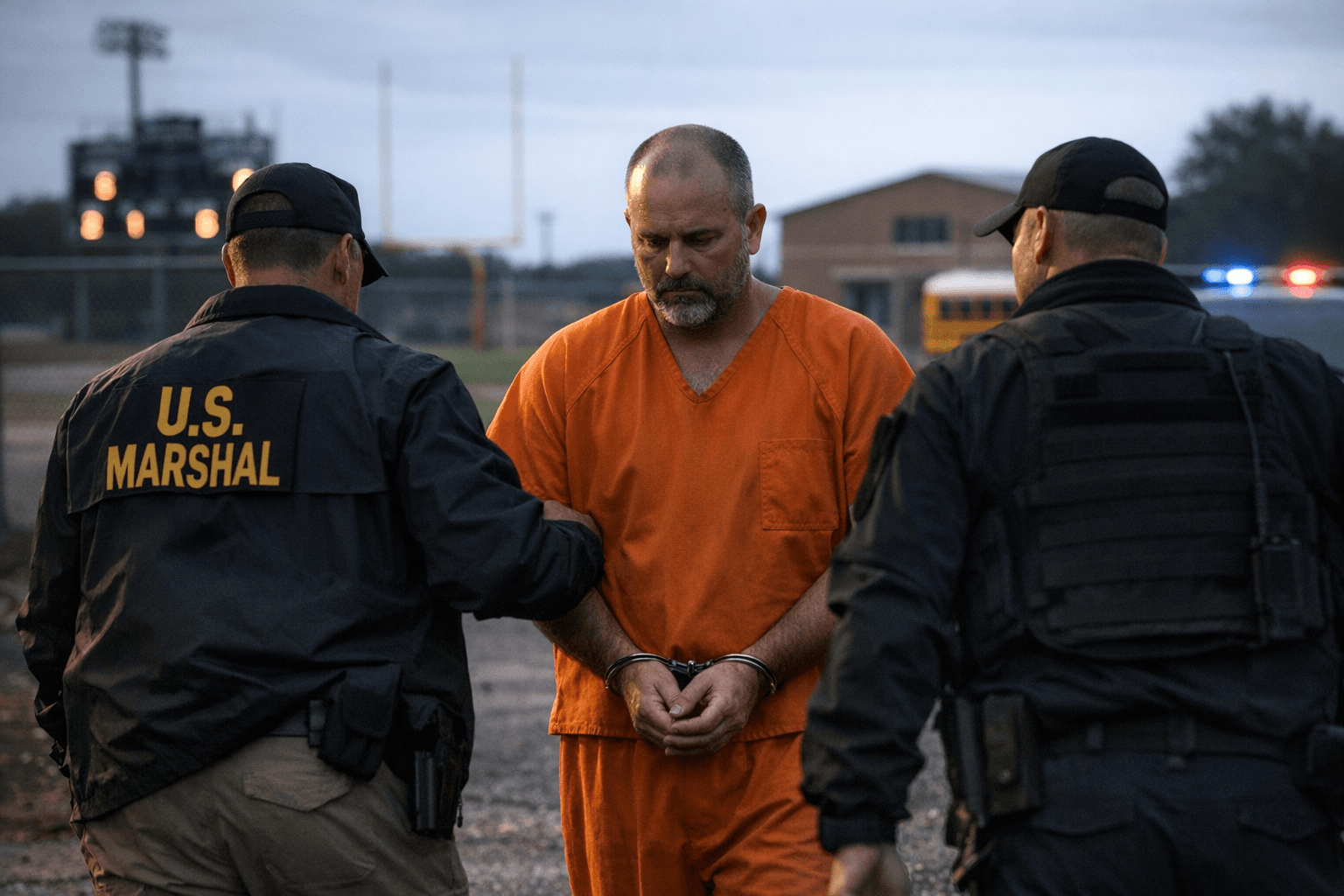
The investigation was coordinated by ICE Homeland Security Investigations working with the Orange County, Florida Sheriff's Office and the Uvalde County Sheriff's Office, illustrating how a single Snapchat message can mobilize law enforcement across multiple states.
Families in Val Verde and Uvalde counties who suspect online solicitation or exploitation have several concrete reporting options. The National Center for Missing and Exploited Children operates a 24-hour CyberTipline at 1-800-843-5678 and at report.cybertip.org; trained staff review every submission and route it to the appropriate agency. The FBI accepts tips at tips.fbi.gov. In Texas, the Department of Family and Protective Services Abuse Hotline at 1-800-252-5400, or online at txabusehotline.org, is the required destination when a suspected abuser holds a caretaker role, including school staff. Texas law requires educators and other professionals who develop reasonable cause to suspect abuse to file a report within 24 hours. In any immediate-danger situation, 911 is the first call.
Project Safe Childhood, the DOJ initiative under which Mulkey was charged, coordinates federal, state and local resources specifically to pursue cases that cross jurisdictions. The active partnership with the Uvalde County Sheriff's Office in this prosecution shows that framework operates directly in the communities surrounding Del Rio.
This article was produced by Prism’s automated news system from verified source data, official records, and press releases, then run through automated quality and moderation checks before publishing. The system is built and supervised by the people who set the standards it runs under. Read our full AI policy.
Did this article answer your question?