Two kayakers from Mexico drown in Rio Grande near Amistad Dam
Two kayakers from Ciudad Acuna drowned below Amistad Dam, sending Val Verde County and Border Patrol into a cross-border recovery on one of the river’s most dangerous stretches.
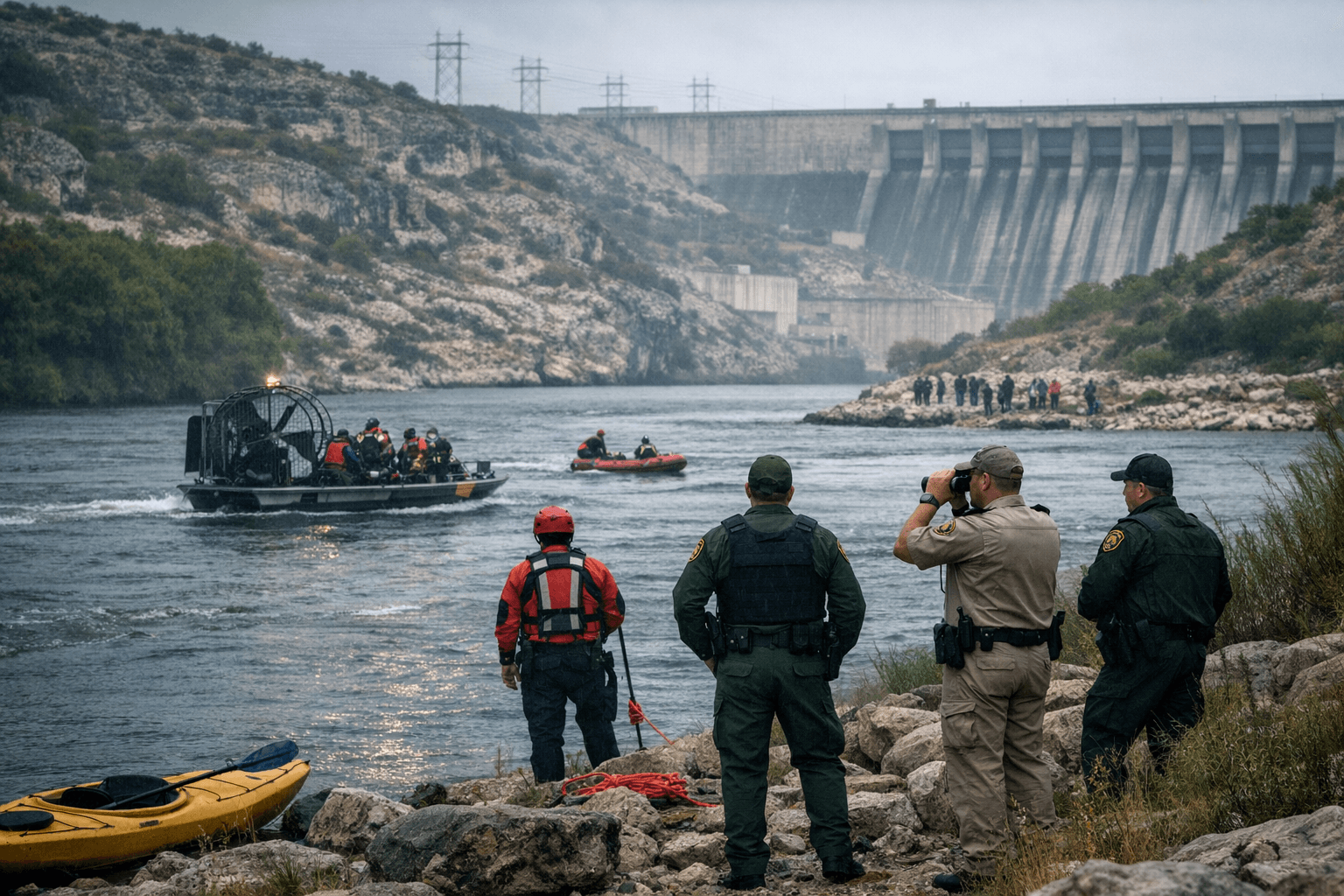
Two kayakers from Mexico drowned in the Rio Grande below Amistad Dam, a fatal accident that pulled Val Verde County deputies and U.S. Border Patrol agents into a recovery operation on both sides of the river.
Sheriff Joe Frank Martinez said he was notified around 11 a.m. on April 26 and that rescue crews moved quickly, but CPR attempts were unsuccessful. The victims were identified as a 17-year-old male and an older man who reportedly worked as an engineer for the International Boundary and Water Commission. Martinez said the two were part of a larger kayaking group of about 10 to 15 people from Ciudad Acuna, Coahuila.
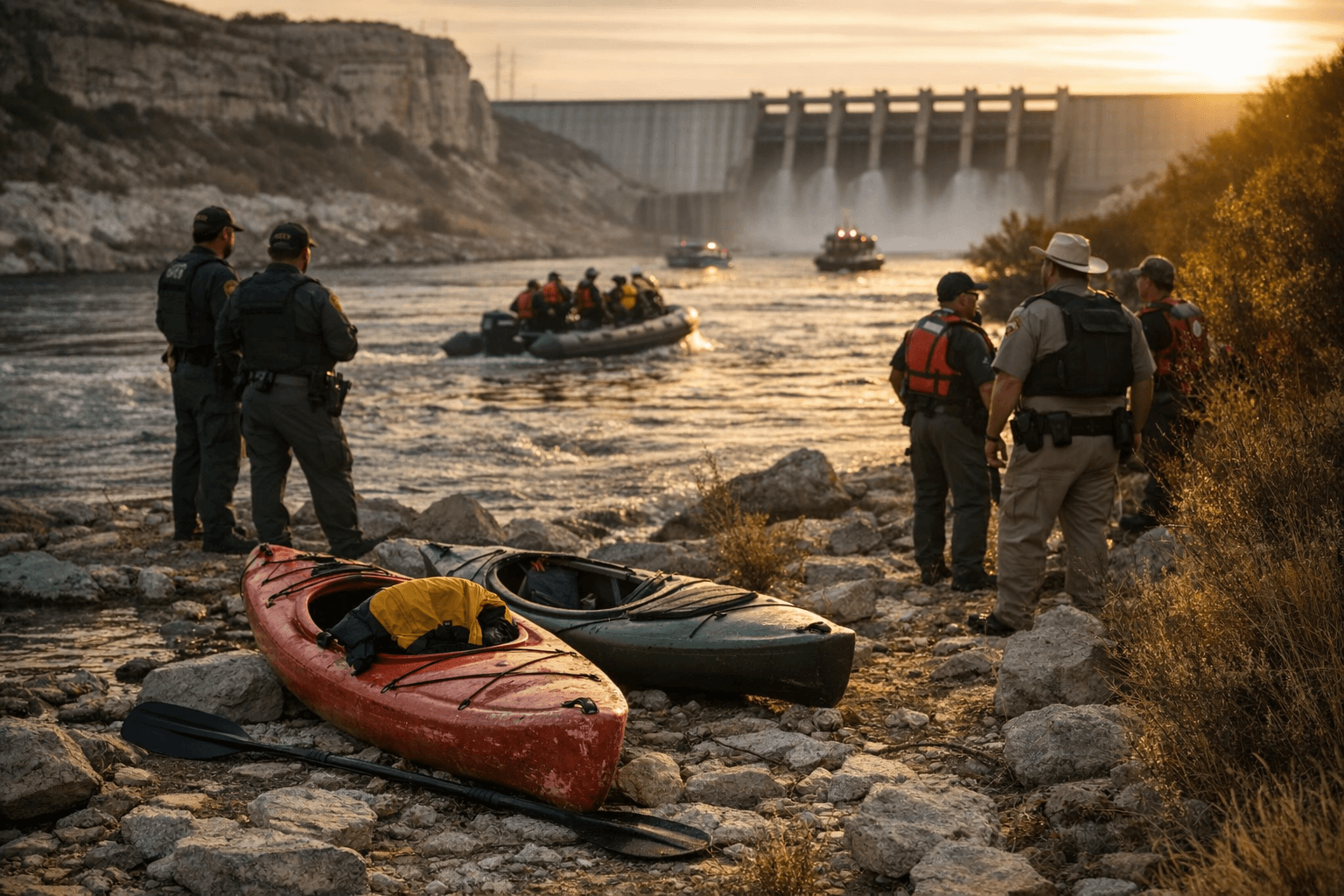
One body was recovered on the Mexico side of the river, while Border Patrol agents recovered the other on the U.S. side. Both were found some distance below Amistad Dam, where the Rio Grande can turn hazardous quickly and leave little room for error even for experienced paddlers.
The location adds to the seriousness of the drowning. Amistad National Recreation Area stretches across about 74 miles of the Rio Grande and holds roughly 60,000 surface acres of water. The National Park Service says the river boundary at Amistad is marked by buoys numbered RG1 through RG28, and the lower Rio Grande area below Amistad Dam is closed to general public access unless escorted by a park employee because of safety and homeland-security concerns.
Park guidance also warns that boating and paddling conditions can change fast. The National Park Service recommends that all passengers wear life jackets, and its paddling information urges caution beyond river mile 36, where strong headwinds, choppy lake water and motorized traffic can create dangerous conditions. Limited cell coverage on the water can make an emergency even harder to manage.
Amistad Dam itself, completed in 1969 as a joint U.S.-Mexico project, sits at the center of a waterway that serves as both a recreation destination and a border crossing point for emergency responders. Recent reporting has also noted repairs agreed to by the United States and Mexico after longstanding seepage and sinkhole concerns, underscoring the importance of the structure and the stretch of river below it.
For Del Rio and Val Verde County, the deaths are a sharp reminder that the river can become deadly in minutes, and that every call below the dam can quickly become an international response.
This article was produced by Prism’s automated news system from verified source data, official records, and press releases, then run through automated quality and moderation checks before publishing. The system is built and supervised by the people who set the standards it runs under. Read our full AI policy.
Did this article answer your question?