Val Verde County court weighs road lights, flood and safety projects
Three votes could change daily life in Val Verde County: brighter Cienegas Road nights, better flood alerts, and grant money for safety work.
Public safety and grants collide on the June 3 agenda
The most immediate decisions before Val Verde County on June 3 were not ceremonial. They were practical votes that could affect how safely people drive Cienegas Road at night, how quickly flood-prone neighborhoods get warned, and whether the county can unlock outside money for projects in Del Rio, Comstock, Langtry and nearby unincorporated areas. The commissioners court meeting, posted May 29 and scheduled for 9:00 a.m. in Del Rio, put those choices on the same agenda for a county that is trying to move from planning to action.
That matters because the agenda is not just a list of line items. It is a map of what county government thinks is urgent: road lighting, pedestrian safety, flood warning, emergency response, and grant applications that can make or break the pace of future improvements.
Cienegas Road lighting becomes a test of safety and timing
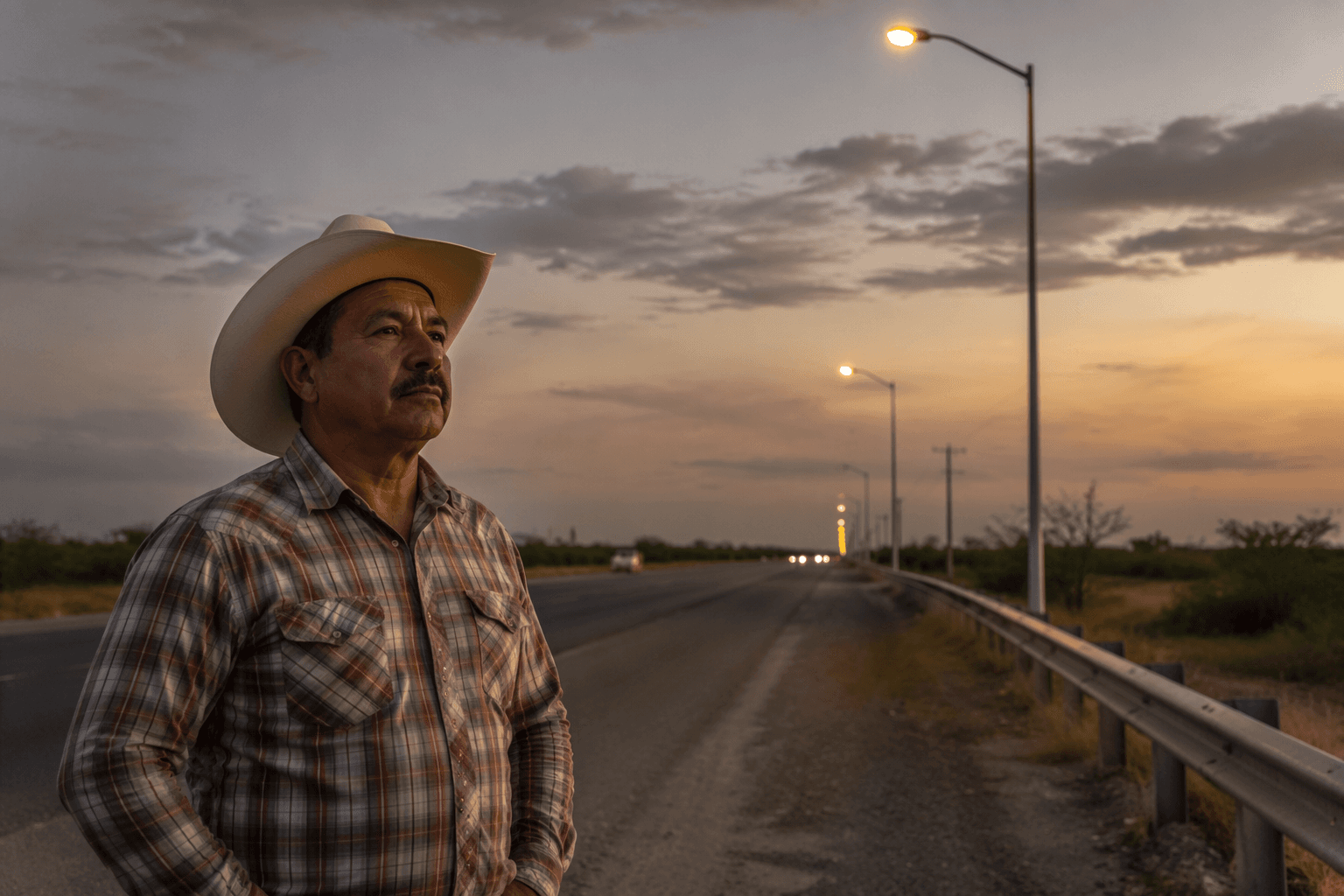
The clearest local flashpoint is the proposed Cienegas Road new street lighting project. The court was set to review past voting history, give Precinct 4 constituents a formal status update, and deal directly with opposition to new lighting along Cienegas Road, especially near the duck pond area. If commissioners approved the item, the county could move forward with six LED streetlights, along with the hardware and infrastructure needed to install them.
The timing tells its own story. Val Verde County opened bids for the Cienegas Road Project on January 29, 2026, after publishing the invitation to bid on December 19, 2025. That means the project had already advanced into procurement months before the June court discussion. The June vote therefore was not about whether the county had ever considered the work. It was about whether county leaders were ready to keep pushing it toward construction.
For residents, the difference is concrete. Approval would likely mean brighter nighttime visibility and a stronger safety posture in an area where county leaders say concerns have already been raised. A delay could leave the duck pond stretch unchanged while the county revisits its own earlier decisions. A scaled-back vote could reduce the number of lights or slow the installation of related infrastructure, which would weaken the safety benefit people are expecting.
Road safety is tied to broader Cienegas-area planning
Cienegas Road is not the only transportation item with momentum. Val Verde County also previously discussed a public hearing for the TxDOT 2025 Transportation Alternative Project for Cienegas Terrace Colonia pedestrian improvements, with that discussion appearing on the May 21, 2025 agenda and a public hearing date set for June 4, 2025 at 9:10 a.m. That earlier step shows the county has been working the Cienegas-area mobility problem from more than one angle: lighting, walking safety, and transportation access.
The state-level backdrop matters too. TxDOT announced its 2025 Transportation Alternatives Set-Aside call for projects on January 3, 2025, aimed at bicyclist and pedestrian infrastructure and planning. In practice, that means Val Verde County is competing in a funding environment where better plans can turn into federal or state support, but only if the county keeps its paperwork, timing and local approvals moving.
If commissioners approve the current lighting and grant-related items, residents could see the county build a more complete safety package around Cienegas Road and Cienegas Terrace Colonia. If they stall, the county risks fragmenting a safety effort that has already been under way for more than a year.
Flood warning and emergency readiness remain a life-or-death issue
The agenda also reaches well beyond roads. Commissioners were set to discuss a Flood Early Warning System Implementation Plan, priorities for sirens and flood monitoring, and a SAFER fire and emergency response grant opportunity. These are not abstract planning exercises in a county where flood hazards can cause loss of life, property damage, disruption of commerce and government services, and extraordinary public expenditures, according to the county’s flood damage prevention plan.
That language explains why flood warning systems keep returning to the agenda. A December 18, 2024 county agenda already referenced an extension request for the Val Verde County Flood Infrastructure Project Flood Early Warning System, which shows the effort has been alive for months rather than days. The June discussion suggests the county is still working through where warning equipment should go, which sirens matter most, and how to connect flood monitoring with emergency response.
The stakes are straightforward. If the court approves and funds the plan, residents in flood-prone areas could gain faster warnings, more targeted siren coverage and better notice before water rises. If the county delays, vulnerable neighborhoods remain dependent on older warning tools and slower response. If the court scales back the work, the result may be a patchwork system that leaves gaps in exactly the places where warnings matter most.
Val Verde County Fire Rescue’s mission, to safeguard life, health, property, environment and education, is a good fit for those choices. The agenda shows that flood monitoring, sirens and fire-response grants are being treated as part of the same public-safety system, not as separate bureaucracy.
Grant money could decide how far the county can go
Several agenda items show how much of this work depends on outside money. One request asked commissioners to authorize Esser & Company Consulting LLC to update the Parks and Recreation Master Plan so the county could pick up five additional points toward the Outdoor Recreation Grant application for the Comstock Park Project. Another asked the court to ratify a $5 million Safe Streets and Roads for All planning and demonstration grant submission tied to the Cienegas Road Project.
That is an important distinction for residents. The county is not simply voting on projects. It is voting on whether to improve its odds in grant competitions that can determine whether projects get built at all. A favorable vote could strengthen the county’s hand with outside funders and move Comstock Park and Cienegas Road closer to construction. A delay could cost points, weaken applications and slow the flow of money into local capital projects.
The county’s 2025-2026 proposed budget reinforces that reality by listing grants as a distinct revenue category. In other words, outside funding is not a side strategy. It is central to how Val Verde County plans roads, parks, water, and emergency infrastructure.
The court also had to consider items such as the San Felipe Booster Station award, water-line change orders and trust property issues, all of which point to the same underlying problem: the county is trying to keep infrastructure moving without losing control of costs or timing. The June 3 agenda showed a government balancing immediate safety needs against the slower grind of grant writing, procurement and construction administration.
For residents in Del Rio, Comstock, Langtry and the county’s outlying areas, the key question was not whether the meeting would be busy. It was whether county leaders would turn long-running safety concerns into funded, buildable projects. The votes on lights, flood warnings and grants were the kind that can change daily life long after the gavel falls.
This article was produced by Prism’s automated news system from verified source data, official records, and press releases, then run through automated quality and moderation checks before publishing. The system is built and supervised by the people who set the standards it runs under. Read our full AI policy.
Know something we missed? Have a correction or additional information?
Submit a Tip