Val Verde County Courthouse restored as historic civic centerpiece
The courthouse still handles county business in downtown Del Rio, and its 2004 restoration kept an 1887 landmark at the center of Val Verde County’s civic life.
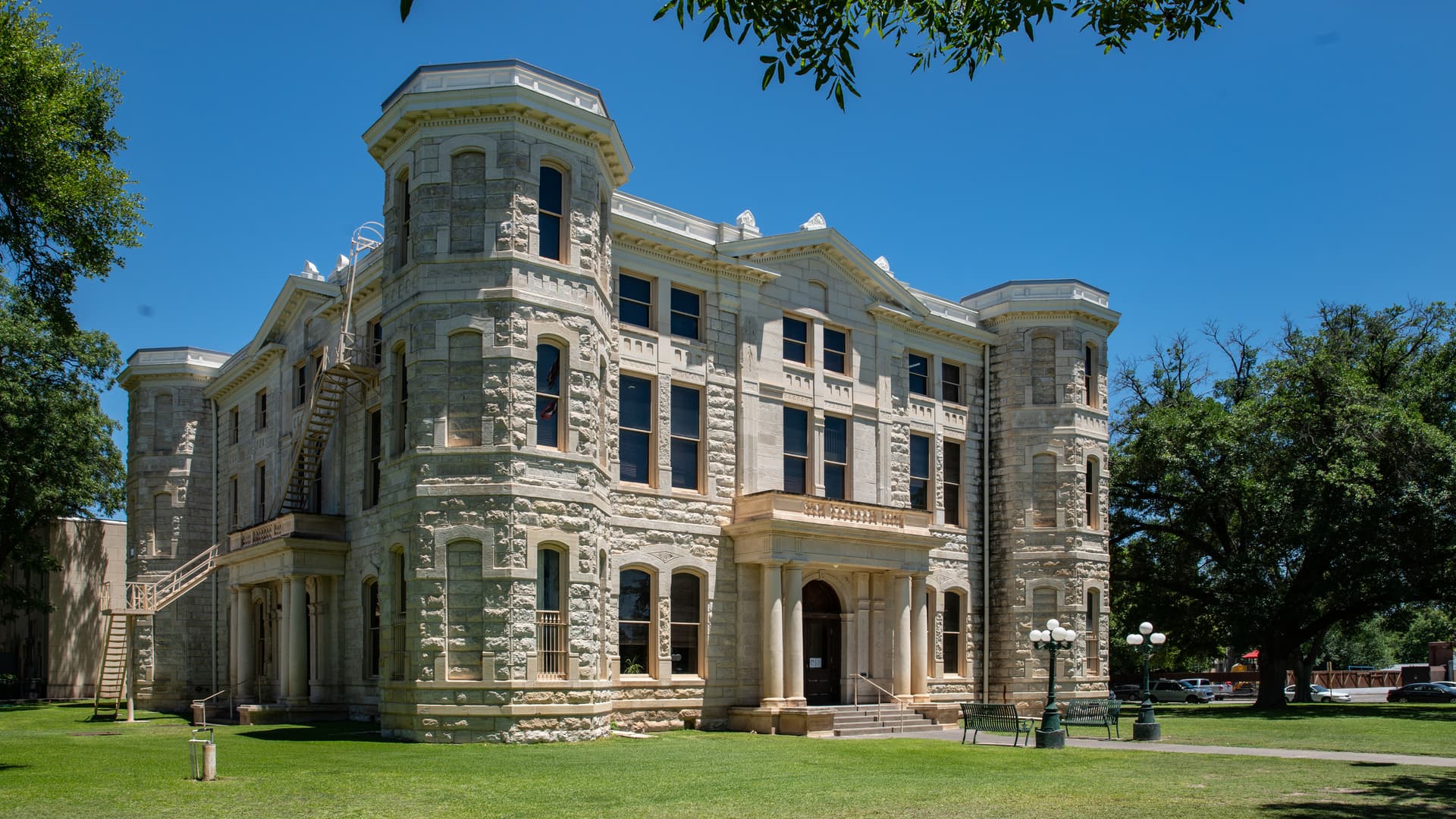
The Val Verde County Courthouse still does the work of county government at 400 Pecan Street, and that is why the building matters now, not just as a relic. It is the county’s first and only courthouse, still active, still visible from the center of Del Rio, and still tied to the county seat that took root here in 1885.
Why the courthouse still anchors Del Rio
Val Verde County was organized in 1885 from sections of Crockett, Kinney and Pecos counties, and Del Rio became the county seat the same year. That made the town the natural place for county government, even before the courthouse rose on the block now identified with East Greenwood Street and Pecan Street. The county name itself reaches back to the Battle of Val Verde in New Mexico, a Civil War fight involving Texas Confederate forces, which gives the courthouse square a nameplate that reaches far beyond the Rio Grande.
Del Rio’s early growth depended on more than one engine. The Southern Pacific Railroad reached the town in 1881, San Felipe Springs helped anchor local settlement, and the economy drew on the military, ranching and agriculture, government-related employment, retail business, tourism and ties with Mexico. The courthouse belongs inside that story because it represents the moment the county’s institutions became permanent. Before the current building, county offices rented space in a commercial building on Perry Street, a practical stopgap that underscored how young the county seat still was.
That is the real civic value of the courthouse today. It is not only a preserved landmark in a county that values its past; it is also a working government building that still marks the center of local authority in the same downtown area where Del Rio’s commercial life developed.
From Second Empire to Classical Revival
The courthouse began as a different building from the one seen today. The Texas Historical Commission says Larmour & Watson designed it in 1887, and the original structure followed the Second Empire style, complete with a mansard roof and corner turrets. That first version gave the courthouse a more vertical, ornate profile, the kind of late-19th-century design that signaled ambition on a frontier county seat.
A 1915 alteration changed the roofline and much of the building’s silhouette. The current metal roof and central dome date to that work, and the later redesign is associated with Atlee B. Ayres. The courthouse’s limestone exterior still carries classical details, including triangular pediments and dentils, so the building now reads as a hybrid of its original design and its early-20th-century makeover.
That contrast is one of the most striking things about the building. The courthouse did not simply age in place; it changed shape as the county changed with it. A visitor seeing the dome, the classical trim and the limestone facade is looking at a building that records two different eras of local confidence in one structure.
What the restoration saved
The restoration was more than cosmetic. The Texas Historical Commission says the work included cleaning and patching the exterior masonry, replicating hardware and rebuilding the 1915 exterior masonry porches at all four entries. Those are the details that keep the courthouse legible as a historic building while also keeping it usable as a county facility.
The building was rededicated on July 23, 2004, after rehabilitation that is also tied to Volz and Associates. That date matters because it marks the point when the courthouse became not just old, but deliberately preserved. The restoration protected the features that carry the county’s visual identity: the masonry, the entry porches, the roofline and the classical exterior details that frame the square.

This is the preservation lesson Val Verde County offers in concrete form. Texas has a state courthouse preservation initiative, and this building stands as one of its clear local results. The courthouse was not removed from civic life and turned into a static monument. It was repaired so it could remain the county’s operating courthouse while still serving as a historic centerpiece.
What to notice at the courthouse square
Standing at the courthouse, the first thing to take in is the limestone exterior and the classical detailing. The triangular pediments and dentils give the building a formal presence that distinguishes it from surrounding downtown structures, while the dome and metal roof reflect the 1915 alteration that replaced the original roofline. The rebuilt porches at the four entries are another clue that the courthouse has been restored with its layered history intact.
The address also matters. At 400 Pecan Street, also identified with East Greenwood Street, the courthouse sits in the county seat and the commercial heart of Del Rio. That location is part of the story: county government, downtown commerce and local memory all meet on the same block. For a county shaped by the railroad, ranching, military activity, trade and cross-border ties, that concentration of civic life in one place is exactly what the courthouse was built to express.
Val Verde County’s courthouse remains a working seat of government, but it also does something more durable. It keeps the county’s origin story visible, from the railroad era and the first county offices on Perry Street to the 2004 restoration that saved the building’s place in downtown Del Rio.
This article was produced by Prism’s automated news system from verified source data, official records, and press releases, then run through automated quality and moderation checks before publishing. The system is built and supervised by the people who set the standards it runs under. Read our full AI policy.
Did this article answer your question?