Val Verde Medical Center explains peptides, benefits, risks and online hype
Peptides can be real medicines, but Val Verde Regional Medical Center says the online market is full of hype. The safest first step is to know whether a product is FDA-approved or just being marketed that way.

What peptides are, and why everyone is talking about them
Val Verde Regional Medical Center is putting a practical question in front of local readers: what are peptides, do they work, and are they safe? The answer starts with the basics. Peptides are short chains of amino acids, the building blocks of protein, and the body makes them naturally. They can signal cells to do different jobs, including making more collagen or helping control appetite.
That biology is part of why peptides have become a hot word in wellness marketing. The medical center’s explanation matters because the term now shows up in everything from anti-aging ads to recovery claims, but not every product using that label has the same level of evidence, regulation, or safety.
Where the science is real
Some peptide-based medicines are legitimate, FDA-approved treatments, not trends. A familiar example is the group of GLP-1 medications used for weight management and other medical conditions. These are prescription drugs with real clinical uses, and they are not the same thing as a random product promoted online as a shortcut to weight loss or youth.
The difference is important because approved therapies have gone through formal review, while unapproved products may be sold with dramatic promises and little proof. Val Verde Regional Medical Center’s guidance keeps that distinction front and center: peptides are not a cure-all, and the fact that something is being called a peptide does not make it medically sound.
Why the market exploded so quickly
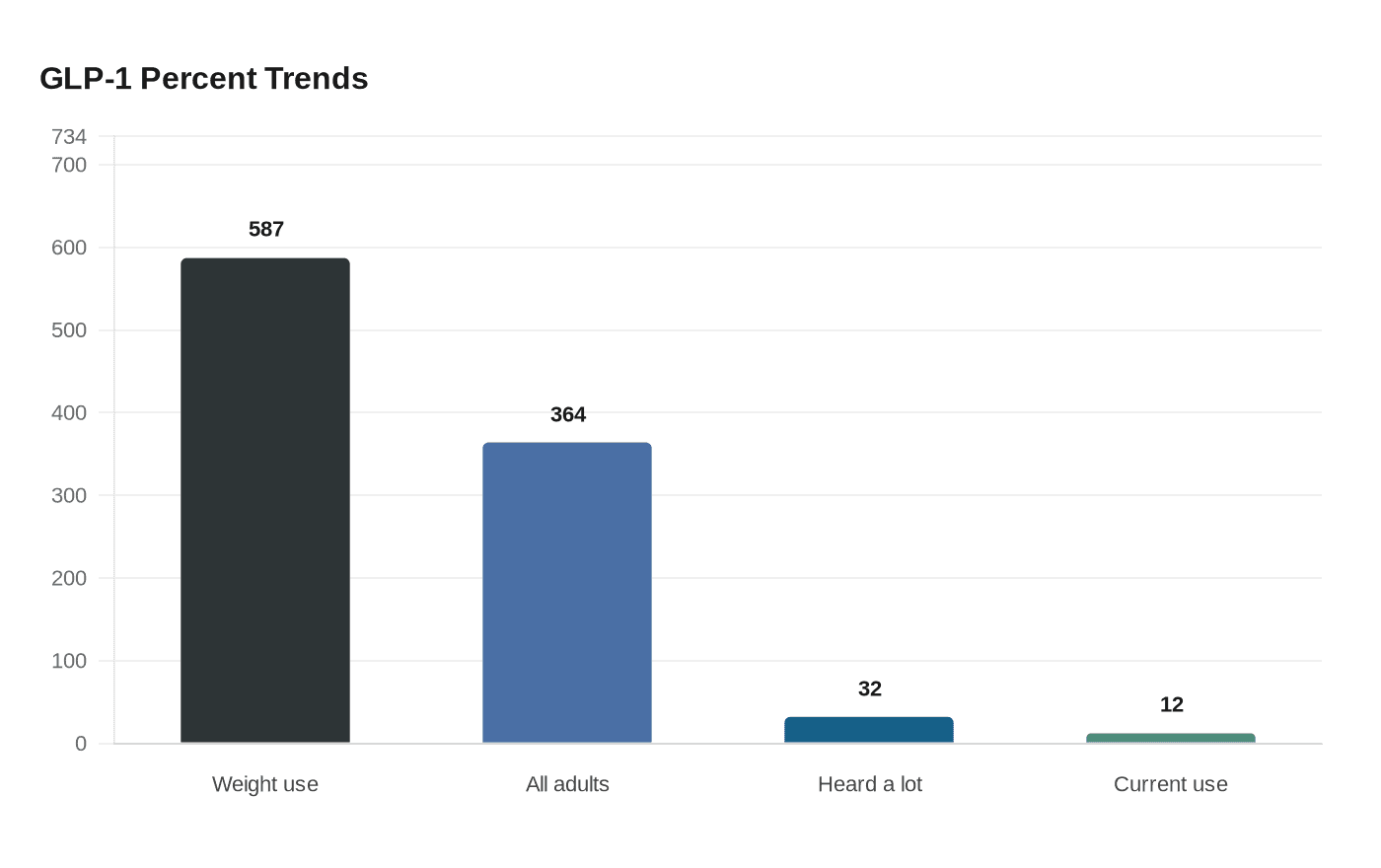
The popularity of GLP-1 drugs helps explain why peptides are now everywhere in conversation. FAIR Health reported that prescriptions for GLP-1 drugs to treat overweight or obesity increased 587 percent from 2019 to 2024. Over the same period, all adult GLP-1 prescriptions rose 364 percent, a surge that shows how quickly these medicines moved from niche treatment into the mainstream.
Public awareness has climbed just as sharply. KFF found in May 2024 that 32 percent of adults said they had heard “a lot” about GLP-1 drugs, and by November 2025, 12 percent of U.S. adults said they were currently taking a GLP-1 drug for weight loss, diabetes, or another condition. That level of visibility has helped create a flood of claims, some grounded in evidence and others aimed at selling hope.
The red flags in online hype
The biggest public-health concern is the gray market. The medical center’s explainer warns that unapproved peptide products are growing in popularity, often promoted as anti-aging aids, recovery boosters, or tissue-repair solutions. Those claims may sound confident, but confidence is not the same thing as proof.
- claims of dramatic results without clear evidence
- products sold as if they are the same as prescription medicines
- vague language about “repair,” “recovery,” or “optimization”
- pressure to buy quickly through social media or informal word of mouth
- little explanation of where the product came from or how it was stored
The red flags are familiar:
In a community where people may see these pitches online or hear about them from friends, that can lead to wasted money at best and avoidable health risk at worst.
Why regulators are stepping in
Federal regulators are treating the unapproved side of the market as a real consumer-safety problem. In February 2026, the U.S. Food and Drug Administration said it intended to take action to restrict GLP-1 active pharmaceutical ingredients used in non-FDA-approved compounded drugs that were being mass-marketed as alternatives to approved medications. Then in April 2026, the agency issued 30 warning letters to telehealth companies over false and misleading claims tied to compounded GLP-1 products.
The FDA has also warned that compounded drugs are not reviewed for safety, effectiveness, or quality before they are marketed. For injectable compounded GLP-1 products, the agency has raised concerns about warm shipping and insufficient refrigeration, both of which can affect quality. That is not a small technical issue; it is a reminder that how a product is handled matters as much as what the label claims.
Approved drugs are not the same as compounded copies
The FDA-approved side of the market has real, specific uses. Wegovy, made by Novo Nordisk, was initially approved in 2017. The agency later expanded its indications in 2024 and 2025, including weight loss, cardiovascular risk reduction, and MASH. Zepbound, made by Eli Lilly and Company, was approved in November 2023 for chronic weight management.
Those approvals matter because they show that not all peptide therapies are equal. Some have been studied in rigorous trials and cleared for defined uses. Others are being marketed in ways that blur the line between medicine and sales pitch. That distinction is the heart of the current public-health debate, and it is exactly where consumers need to slow down and ask questions.
What to do before you buy anything
If a peptide product is being sold to you as a quick fix, a biohack, or a miracle for aging, that is the moment to pause. The safest move is to find out whether the product is an FDA-approved prescription medicine or a compounded product being marketed like one. If the answer is unclear, that is a warning sign, not a sales opportunity.
Talk to a doctor before buying anything if you are considering a peptide for weight loss, if the product is offered only through an online seller or med spa, or if the claims sound too broad to be real. A legitimate discussion should include what the medicine is approved for, what side effects are known, how it is stored, and whether there is evidence for the use being advertised.
For Val Verde County, the value of this guidance is simple and immediate. The peptide boom sits at the intersection of real drug development, a huge appetite for weight-loss treatment, and a fast-moving gray market that has already drawn federal enforcement. In a landscape where social media can make a product sound scientific long before it is proven, the safest consumer move is still the oldest one: verify the medicine before you trust the marketing.
This article was produced by Prism’s automated news system from verified source data, official records, and press releases, then run through automated quality and moderation checks before publishing. The system is built and supervised by the people who set the standards it runs under. Read our full AI policy.
Know something we missed? Have a correction or additional information?
Submit a Tip