Belén’s Becker Avenue anchors a growing arts and heritage district
Becker Avenue is Belén’s downtown proving ground, where museums, galleries, and small shops are being tied to $1.69 million in streetscape work and state arts-district planning.
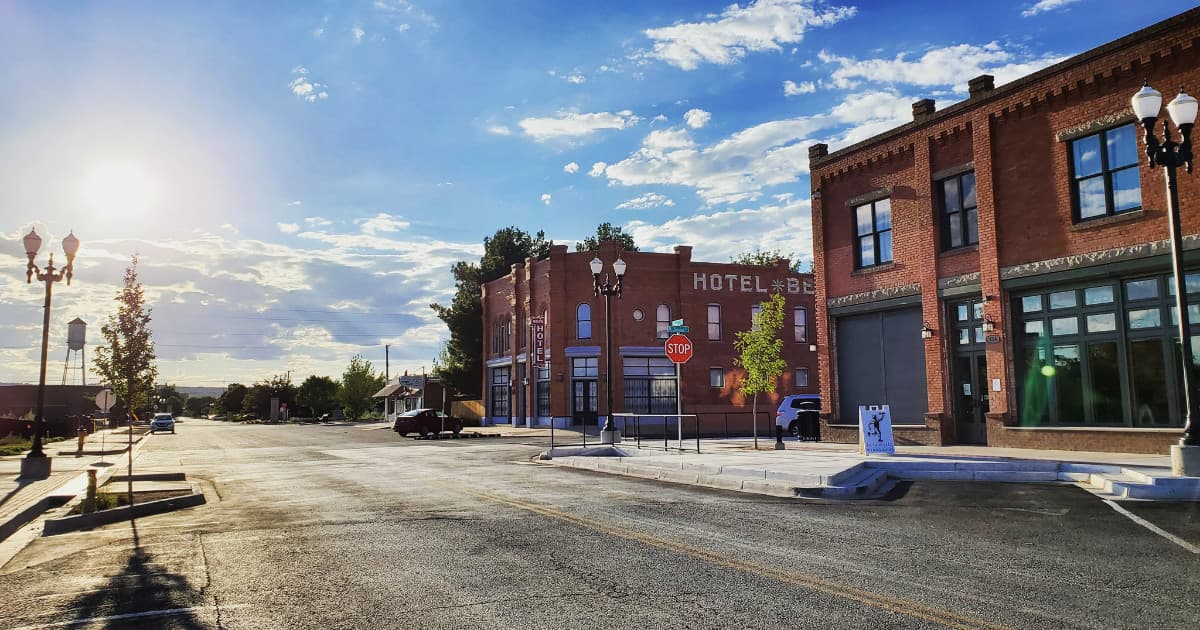
Becker Avenue is doing more than hosting murals and museums. In Belén, it is the place where heritage, small business, and downtown planning meet on a short walk that starts with railroad history and ends with contemporary art, secondhand books, and the question officials care about most: whether visitors keep spending after the festival crowd leaves.
A mapped corridor with a state-backed mandate
Belén’s arts-and-heritage district is not a vague marketing idea. The Belén Historic Downtown Partnership district runs from Reinken Avenue to Becker Avenue and from Main Street to First Street, including Castillo Avenue, giving the downtown a clear footprint that can be measured, promoted, and improved block by block.
That footprint sits inside New Mexico’s Arts & Cultural District framework, which dates to the 2007 Arts & Cultural District Act and was built as an economic-development strategy. Belén is listed as a start-up district in 2024, which matters because it places Becker Avenue inside a state-supported effort to turn culture into regular downtown activity rather than occasional event traffic.
Begin at the Harvey House Museum
The most natural first stop is the Belen Harvey House Museum at 104 North 1st Street. The City of Belen took over management in 2013, and the museum now operates as a branch of the Belen Public Library with a focus on Harvey House, railroad, and Southwest history.
Its hours make it a practical anchor for a day trip: Wednesday through Saturday from 12:00 noon to 5:00 p.m., with last entry at 4:00 p.m. The museum also includes a café Thursday through Saturday from 12:00 noon to 3:00 p.m., which gives the corridor a built-in place to pause before moving deeper into downtown.
Inside, the museum leans on postcard and archival displays that widen the story beyond trains alone. That makes it useful for readers who want more than nostalgia, because it shows how Belén’s railroad identity still shapes the way the city presents itself to visitors today.

The Becker Avenue core is the district’s commercial test
From the museum, the walk turns toward the blocks that carry the district’s economic hopes. At 509 Becker Avenue is the Belen Art League. The Grid Art Gallery sits at 512 Becker Avenue. Studio 508 is at 508 Becker Avenue. Solis Custom Design is at 212-A Becker Avenue. Through the Flower Art Space is at 107 Becker Avenue, and Books on Becker, a secondhand bookstore run by Friends of the Library, is at 513 Becker Avenue.
That cluster matters because it gives Becker Avenue more than one reason to draw people in. A gallery visit can turn into a bookstore stop, a design stop, or a museum stop, and that mix is what downtowns need if they want to move beyond one-day foot traffic. Explore Belen also points visitors to museums, art galleries, breweries, wineries, glass blowing, and other creative businesses, which broadens the corridor from a single attraction into a longer stay.
Books on Becker is especially important as a civic piece of the corridor. A used bookstore run by Friends of the Library gives the district an everyday retail use that is not dependent on special events, and it helps explain how a cultural district can function as both a neighborhood amenity and a visitor destination.
Through the Flower gives the district national reach
One of Becker Avenue’s strongest draws is Through the Flower Art Space at 107 Becker Avenue. The organization was founded by Judy Chicago in 1977 as a 501(c)(3) to support The Dinner Party, and the Belén space carries that legacy into a downtown storefront setting.
The art space features changing exhibitions, a video and book library, and a permanent exhibition about Judy Chicago’s life and work. It also serves as part of the New Mexico Women’s Cultural Corridor, linking a local district to a broader conversation about women’s history and contemporary art. The Belen space reopened in 2019 after an earlier closure, which shows how the corridor has been rebuilt as much as promoted.
For Belén, that national name recognition has a local effect: it creates a destination that can bring in visitors who might otherwise stop only for railroad history. It also gives the district a stronger identity than a generic downtown arts strip, because the corridor connects the city’s past to a nationally known artist’s ongoing project.

The district’s economic case depends on streets, not slogans
The question for Becker Avenue is not whether the area has character. It does. The harder issue is whether character translates into reliable commerce. Belén’s library strategic plan makes the connection explicit by calling for community relationships and engagement to support downtown revitalization, tourism, and designation of Becker Avenue as an Arts & Cultural District.
The city has also backed that idea with infrastructure. A Belen MainStreet Partnership and City of Belen project received $1.69 million for pedestrian improvements between First and Becker streets north to the Reinken Avenue bridge. City planning documents say Phase II, funded in December 2023, would include street improvements on First Street from Becker Avenue north to the Reinken Avenue bridge.
That kind of spending is the practical test for a cultural district. Wider sidewalks, safer crossings, and a more walkable downtown are the conditions that let museums, galleries, bookstores, and cafés capture repeat visits instead of relying only on special weekends.
Local identity still drives the story
Belén’s arts district is also rooted in local people, not just institutions. The city’s arts-district page highlights Rhona, a native of Belén who works with the Belén Main Street Partnership, and notes her family’s land grant connection dating to 1767 from Estremadura, Spain. That detail matters because it places the corridor inside a much older story of settlement, ownership, and continuity.
At the same time, the district gives that heritage a modern business frame. The Belén Historic Downtown Partnership, the library system, MainStreet planners, and the arts organizations on Becker Avenue are all working inside the same compact geography. That makes the corridor a rare local asset: small enough to walk in an afternoon, but broad enough to show whether arts-based revitalization can support steady downtown spending in Valencia County.
This article was produced by Prism’s automated news system from verified source data, official records, and press releases, then run through automated quality and moderation checks before publishing. The system is built and supervised by the people who set the standards it runs under. Read our full AI policy.
Did this article answer your question?


