Bosque Farms traces roots to Camino Real, Spanish land grants
Bosque Farms is small, but its roads, boundaries and growth still follow the Camino Real, land grants and a Civil War crossing point.
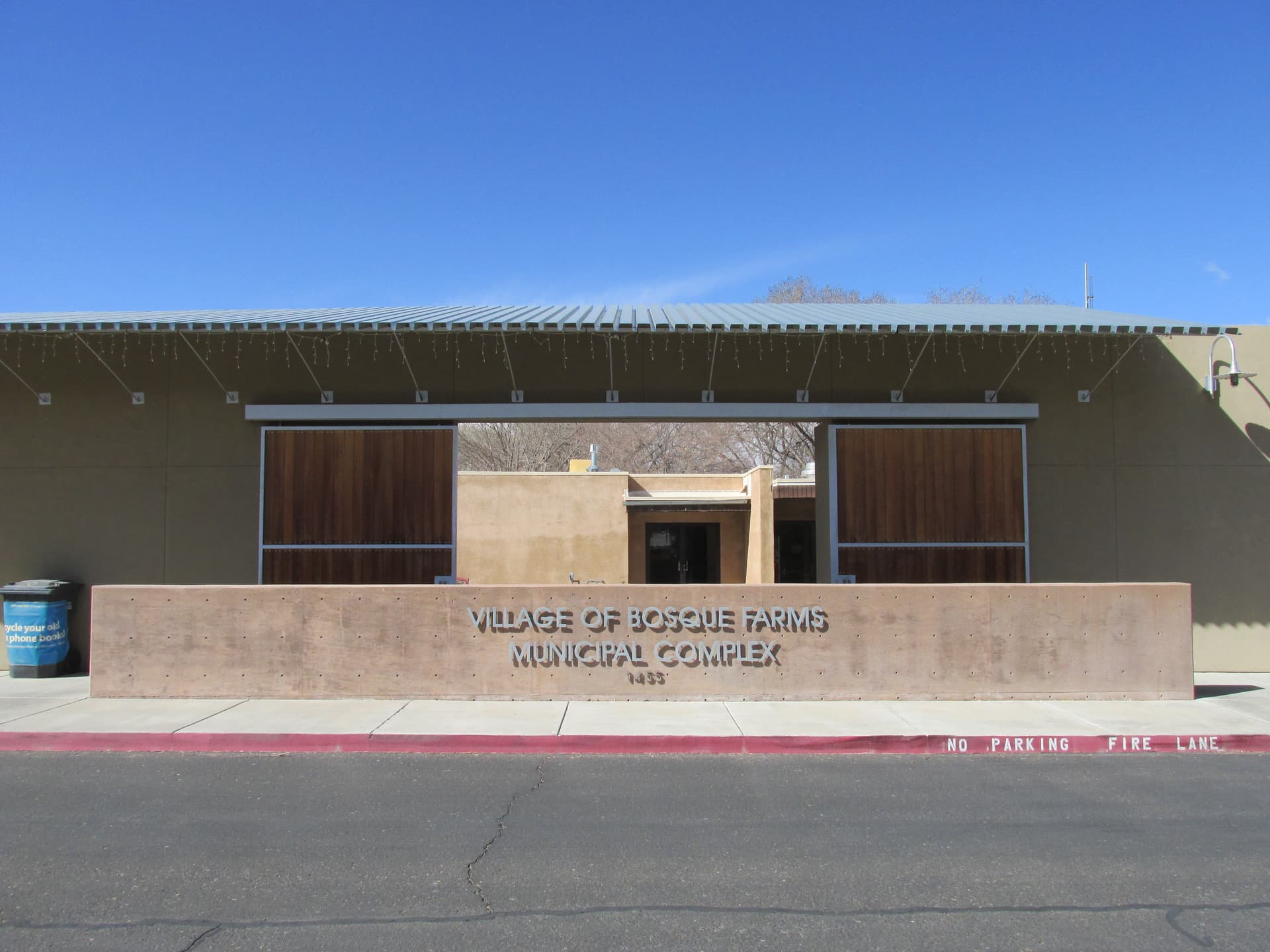
Bosque Farms sits on a landscape where a trade corridor, a river shift and a chain of Spanish land grants still shape where people live, build and govern today. About 18 miles south of Albuquerque, the village is close enough to the metro to feel its pull, but its identity still comes from the Rio Abajo, the lower Rio Grande valley, and the layered history that runs through it.
A village shaped by the Camino Real
Long before Bosque Farms became a municipality, the ground beneath it belonged to a much larger travel network. The village history places the community along the braided routes of the Camino Real, the Royal Road that linked trading centers through the Rio Grande valley, and the Bureau of Land Management identifies El Camino Real de Tierra Adentro as the earliest Euro-American trade route in the United States. That route stretched about 1,600 miles from Mexico City to New Mexico, making this corridor a working artery for movement, commerce and settlement for centuries.
The village also sits within a deeper Indigenous history. Before the Spanish arrived, Tiwa and Piros peoples lived in the area, and the nearby Isleta people became allies to the Spanish in the 1500s. That history matters now because Bosque Farms did not grow in isolation; it emerged from an older regional pattern of settlement, alliance and exchange that still influences how the valley is mapped and remembered.
Land grants, river changes and the origin of Los Pinos
Bosque Farms’ earliest land-tenure story begins with the Antonio Gutierrez and Joaquin Sedillo land grant of 1716. The village history says the Gutierrez and Sedillo properties were sold to Nicolas Duran de Chaves in 1736, later to Clemente Gutierrez, and then to Francisco Xavier Chavez in 1819. Those transfers show how land here passed through successive ownerships even as the larger Spanish colonial and post-colonial order changed around it.
The river itself redrew the landscape. In 1739, a flood shifted the Rio Grande roughly two miles west, and the area became known as Bosque de Los Pinos, or Los Pinos. That kind of movement was not just a geographic detail. It changed where people farmed, where they lived and how the corridor between river, bosque and settlement evolved, leaving a footprint that still helps explain the village’s pastoral layout.
Civil War history at Peralta still marks the valley
Bosque Farms also sits close to one of the New Mexico Civil War’s most consequential skirmishes. On April 15, 1862, Confederate soldiers occupied Los Pinos and later camped at the hacienda of Governor Henry Connelly near Peralta while retreating from Glorieta Pass. Historical summaries describe the Battle of Peralta as one of the last Civil War skirmishes in New Mexico, and the village history says the Confederate force was driven across the river toward what is now Los Lunas.
The local toll was small but real. The village describes the action as the last Civil War skirmish of any significance in New Mexico, with three Union deaths and four Confederate deaths. For Bosque Farms and the communities around Peralta, that episode ties the valley to a national conflict that did not stay distant. It passed directly through the same river corridor that had already been shaped by trade, land grants and river movement.
Why incorporation changed the village’s future
Bosque Farms became a municipality in 1974, a turning point that still affects how the village functions. Incorporation allowed residents to elect their own governing body, giving local people direct control over decisions that had previously been folded into broader county or territorial arrangements. In a place where historic land patterns still define boundaries, that shift mattered because it gave the village a stronger hand in directing its own future.
The village describes itself as a rural community with a blend of suburban, rural and agricultural venues. It also says housing and commercial development are the primary source of village revenue, while residents remain proud of the area’s agricultural heritage and pastoral character. That tension helps explain the landscape today: Bosque Farms has grown, but it has not shed the farm identity that gives the community its name and much of its appeal.
Boundaries, growth and what they mean now
Modern Bosque Farms still reflects older lines on the map. The village is only about a 20-minute drive from downtown Albuquerque, which keeps it tied to the metro economy while preserving a quieter, more rural feel. The 2020 Census recorded 4,020 residents, a small population for a village with such a long historical reach.
Its setting also carries political and geographic significance. A New Mexico water-utility planning document notes that Bosque Farms is bordered on the north and east by the Isleta Indian Reservation. That boundary is a reminder that local development sits beside, not apart from, neighboring Indigenous land and governance. For Valencia County, that means roads, water planning, land use and residential growth all unfold inside a much older regional framework, one still shaped by the Camino Real, the Río Grande valley and the decisions that followed.
Why the history still matters
Bosque Farms is easy to misunderstand as a simple bedroom village south of Albuquerque. Its deeper story shows something more specific: a community whose present-day boundaries, development pattern and identity were all influenced by trade routes, colonial land transfers, river changes, Civil War movement and modern incorporation. In Valencia County, that is why Bosque Farms looks the way it does now, and why its local identity remains rooted in land and history rather than in sprawl alone.
This article was produced by Prism’s automated news system from verified source data, official records, and press releases, then run through automated quality and moderation checks before publishing. The system is built and supervised by the people who set the standards it runs under. Read our full AI policy.
Did this article answer your question?


