Inmate road crew finds human remains near Casa Blanca on I-40
A six-member inmate cleanup crew from Los Lunas found human remains on westbound I-40 near Casa Blanca, sending the case to federal investigators on Laguna Pueblo lands.
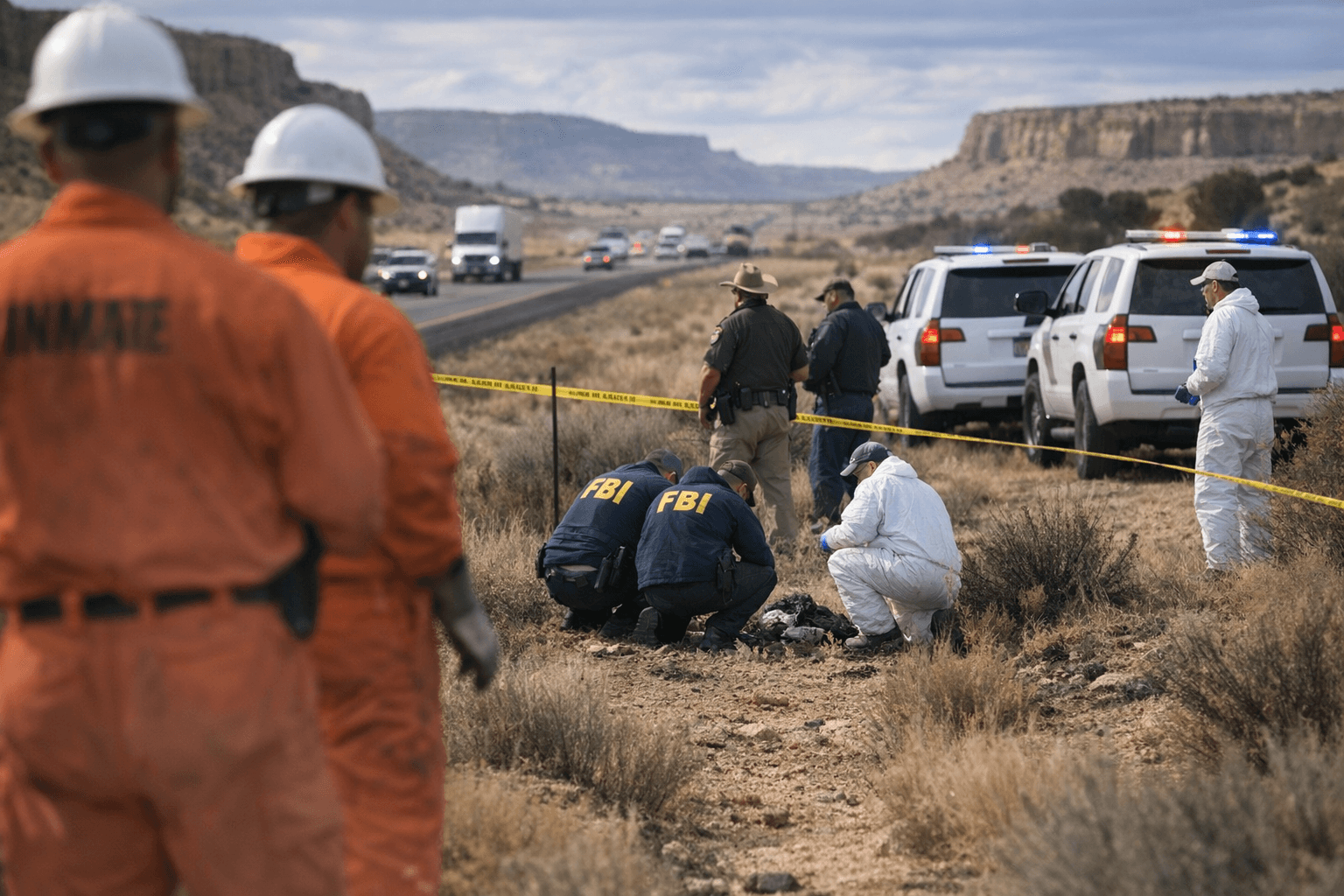
A routine roadside cleanup on westbound Interstate 40 turned into a death investigation when a six-member inmate crew from Central New Mexico Correctional Facility in Los Lunas found human remains near Casa Blanca in Cibola County. The discovery happened on Tuesday, April 21, on land within Laguna Pueblo, immediately shifting the scene from a litter pickup to a law-enforcement matter with tribal and federal jurisdiction.
The men were part of a minimum-security crew assigned to one of the Corrections Department’s regular cleanup runs along I-40 and I-25, work the state says is done in partnership with the New Mexico Department of Transportation. The unusual local-government angle is that the find came from a program built for roadside maintenance and rehabilitation, not from a police search. New Mexico Corrections Department has described those inmate crews as part of a broader community-service system tied to its anti-litter campaign and Corrections Industries.
Central New Mexico Correctional Facility, where the crew was housed, is New Mexico’s largest state prison. Opened in 1980, the Los Lunas facility houses more than 1,050 inmates, making it a major source of the state’s work crews for public-space cleanup.
After the remains were discovered, the Corrections Department said it provided behavioral health support to the crew members and staff. The Bureau of Indian Affairs is now leading the investigation and has already interviewed the people involved. Because the site sits on Laguna Pueblo land, the case falls into a jurisdictional framework that puts tribal sovereignty and federal authority at the center of the response. The Bureau of Indian Affairs says its Office of Justice Services exists to protect life and property in Indian communities.
For travelers along I-40 and communities watching the case from Valencia County, the immediate public concern is the pace of identification and the possibility of updates as investigators sort out what was found. Human remains cases often move slowly because forensic examination, jurisdictional coordination and next-of-kin notification can take time, especially when the location is on tribal land and multiple agencies are involved. For now, the New Mexico Corrections Department has directed further questions to the Bureau of Indian Affairs, which has taken over the investigation.
This article was produced by Prism’s automated news system from verified source data, official records, and press releases, then run through automated quality and moderation checks before publishing. The system is built and supervised by the people who set the standards it runs under. Read our full AI policy.
Did this article answer your question?


