Record-low snowpack brings early Rio Grande drying to Valencia County
Record-low snowpack has already left dry pockets on the Rio Grande in Valencia County, weeks early, and irrigators are bracing for tighter spring water deliveries.
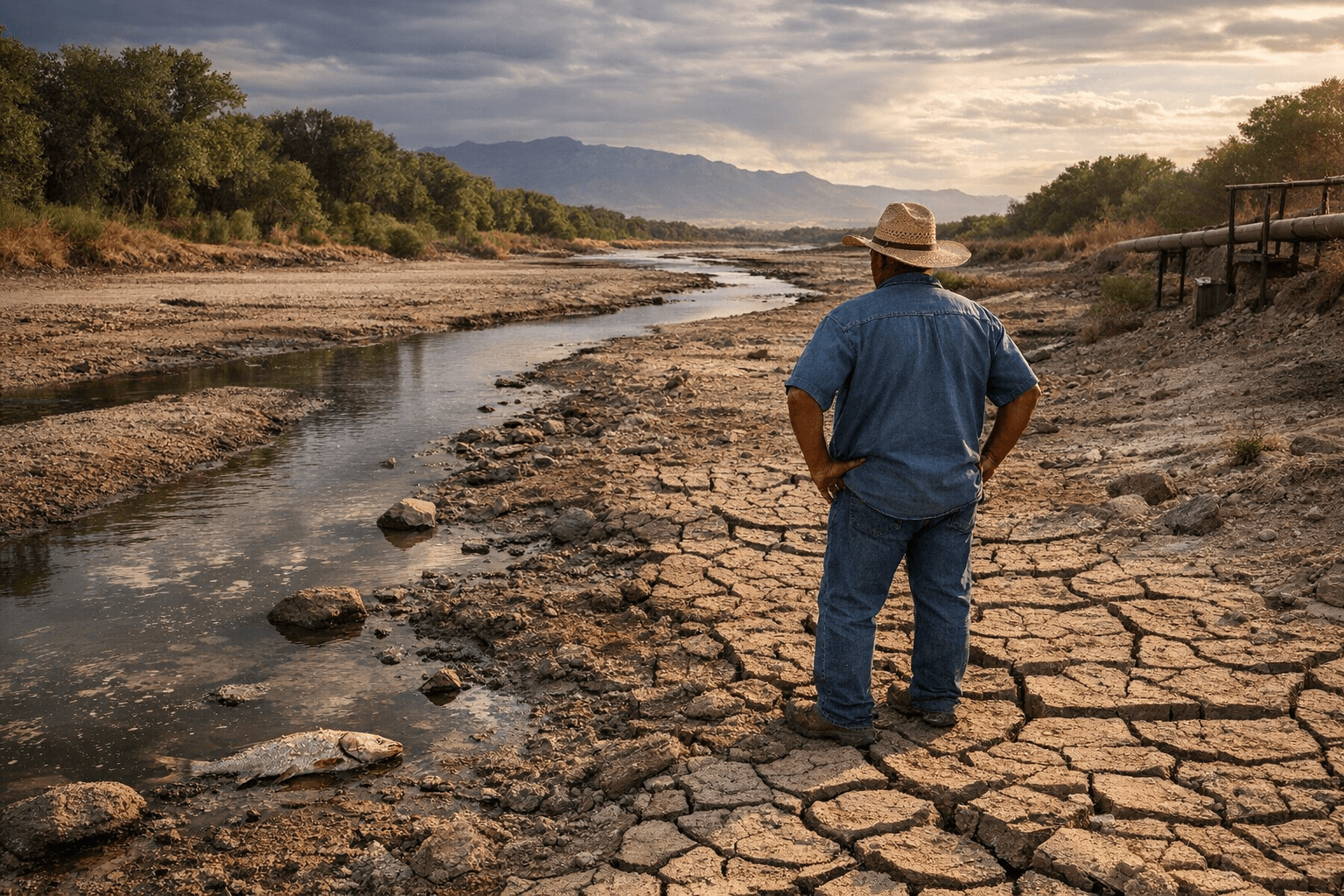
Record-low snowpack has already left dry spots on the Rio Grande in Valencia County, with open pockets of water near the Los Lunas crossing and dry stretches farther south before summer even began.
The early drying matters because the river is the backbone of spring and summer irrigation in the middle valley. Middle Rio Grande Conservancy District River Operations Manager Anne Marken said the first drying in the San Acacia reach near Socorro showed up at the end of March, much earlier than normal. In an average year, she said, that kind of drying does not usually appear until June.
For farmers and other irrigators, that shift could mean less certainty about when water arrives. Marken said when the river cannot carry enough water to meet demand, the district has to move into rotations, sending water through the canal system when it is available instead of keeping it flowing continuously. That puts more pressure on growers trying to plan planting, field work and irrigation timing across Valencia County and the rest of the middle valley.
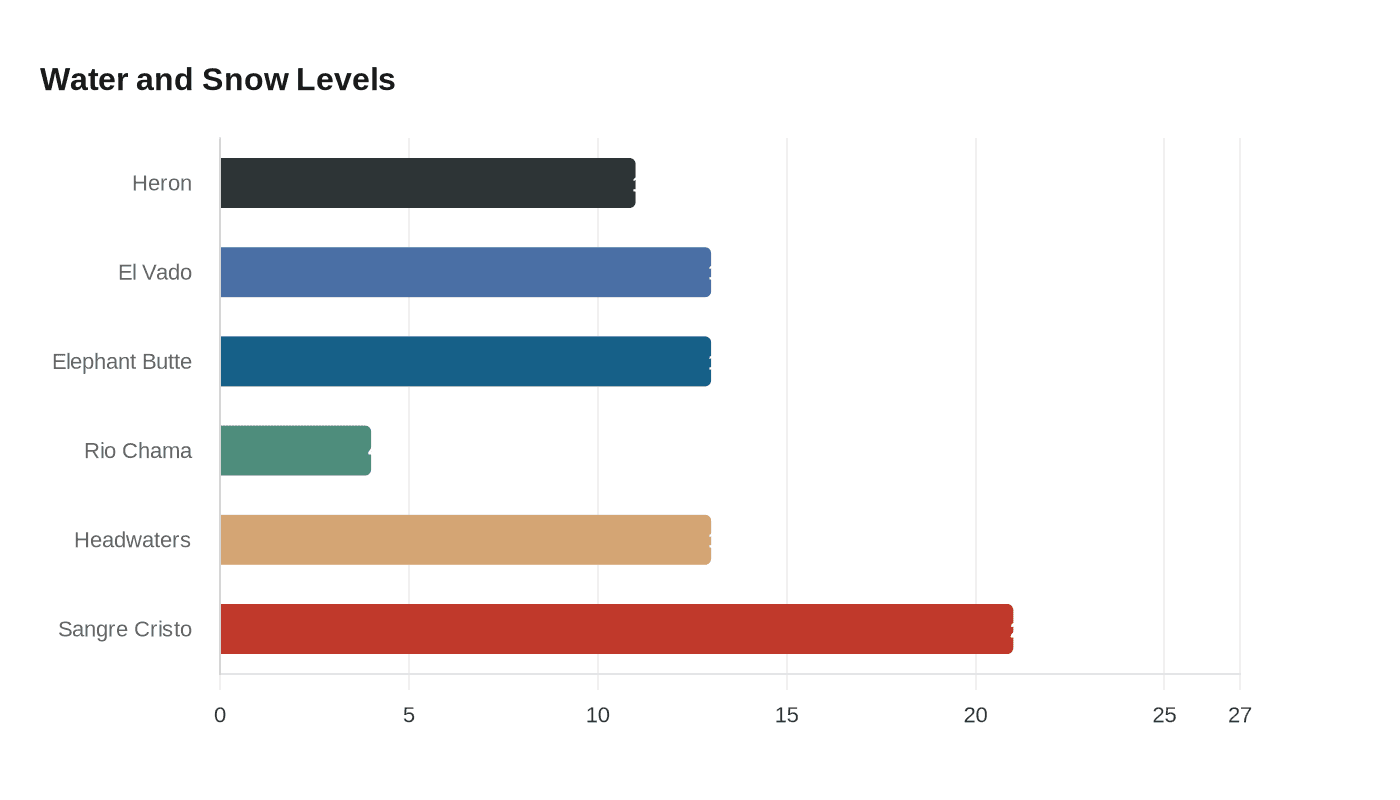
The concern is being driven by numbers that are unusually bleak. The U.S. Bureau of Reclamation said water managers on the Rio Grande were dealing with the earliest snowmelt on record, one of the lowest snowpacks on record and already low reservoir storage. In mid-April, Heron Reservoir was at 11 percent capacity, El Vado Reservoir at 13 percent and Elephant Butte Reservoir at 13 percent. The Natural Resources Conservation Service figures cited in reporting showed snow-water equivalent at just 4 percent of median in the Rio Chama Basin, 13 percent in the Rio Grande headwaters and 21 percent in the Sangre de Cristo range, while snow in the Jemez had already melted out.
John Irizarry, the acting area manager for Reclamation’s Albuquerque Area Office, said facing a third dry year in a row was a major challenge. If monsoon rains do not arrive, Reclamation projected Elephant Butte could fall to 1 percent or 2 percent capacity by late August, a level that would deepen pressure on irrigation deliveries and water planning across the Rio Grande Project.
That risk has already rippled beyond Valencia County. On April 9, the Middle Rio Grande Conservancy District warned Corrales irrigators to take water when offered because flows were dropping close to none, and pump operations could fail if the river gets too low. Corrales now depends on pumps after a siphon was found compromised in 2022.
The broader history is sobering too. The Middle Rio Grande first went dry in Albuquerque in 2022 and saw stretches without water again in 2025. With the Rio Grande Project serving about 178,000 acres of irrigation land, officials are treating this as an early warning, not a distant threat.
This article was produced by Prism’s automated news system from verified source data, official records, and press releases, then run through automated quality and moderation checks before publishing. The system is built and supervised by the people who set the standards it runs under. Read our full AI policy.
Did this article answer your question?


