Irrigation water update brings mixed news for Valencia County growers
More than 60 people packed Los Lunas for a blunt warning: irrigators should expect short-notice deliveries as drought and compact debt tighten supplies.

More than 60 people crowded into the Los Lunas Transportation Center to hear whether irrigation water would last long enough for Valencia County farms and ranches to get through the season. Middle Rio Grande Conservancy District officials brought mixed news, with short-notice deliveries still possible if rainfall improves supplies, but the 2026 irrigation season facing exceptionally low runoff, limited water supplies and persistent drought.
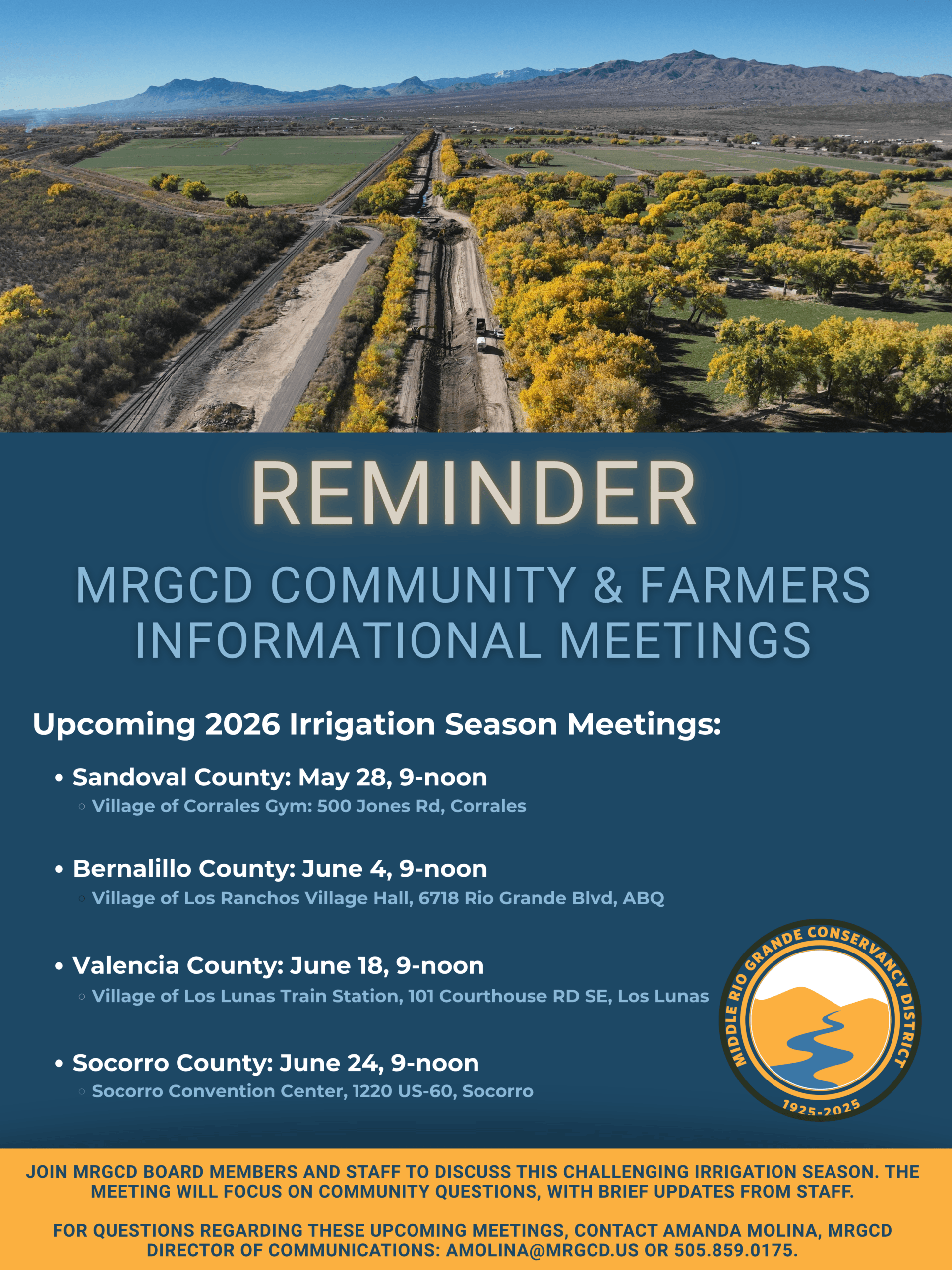
The district held its Community and Farmers Informational Meeting in Valencia County on June 18 at the Village of Los Lunas Train Station Auditorium, part of a broader outreach effort that also included a June 24 meeting in Socorro County. The Middle Rio Grande Conservancy District operates and maintains irrigation, drainage and river flood control systems across the Middle Rio Grande Valley and serves about 11,000 irrigators, six pueblos and 100,000 parcels of land.

In May, the district warned that, unless hydrologic conditions improved, the spring was on pace to become one of the most difficult spring seasons on record for the Middle Rio Grande Conservancy District. Irrigators should expect challenging water-supply conditions and should be ready for delivery opportunities that can open on short notice if rainfall helps. The pressure also runs through the Rio Grande Compact. New Mexico’s compact debt stood at about 121,500 acre-feet in one district example and 123,500 acre-feet in district water update materials. If the debt is 121,500 acre-feet, New Mexico must first store and hold 121,500 acre-feet for Texas in upstream reservoirs.
The Water Bank promotes beneficial use of water for agriculture, protects water rights and water supply, ensures adequate carriage water and supports aquifer recharge, but those tools have limits when river flows are poor.
This article was produced by Prism’s automated news system from verified source data, official records, and press releases, then run through automated quality and moderation checks before publishing. The system is built and supervised by the people who set the standards it runs under. Read our full AI policy.
Did this article answer your question?